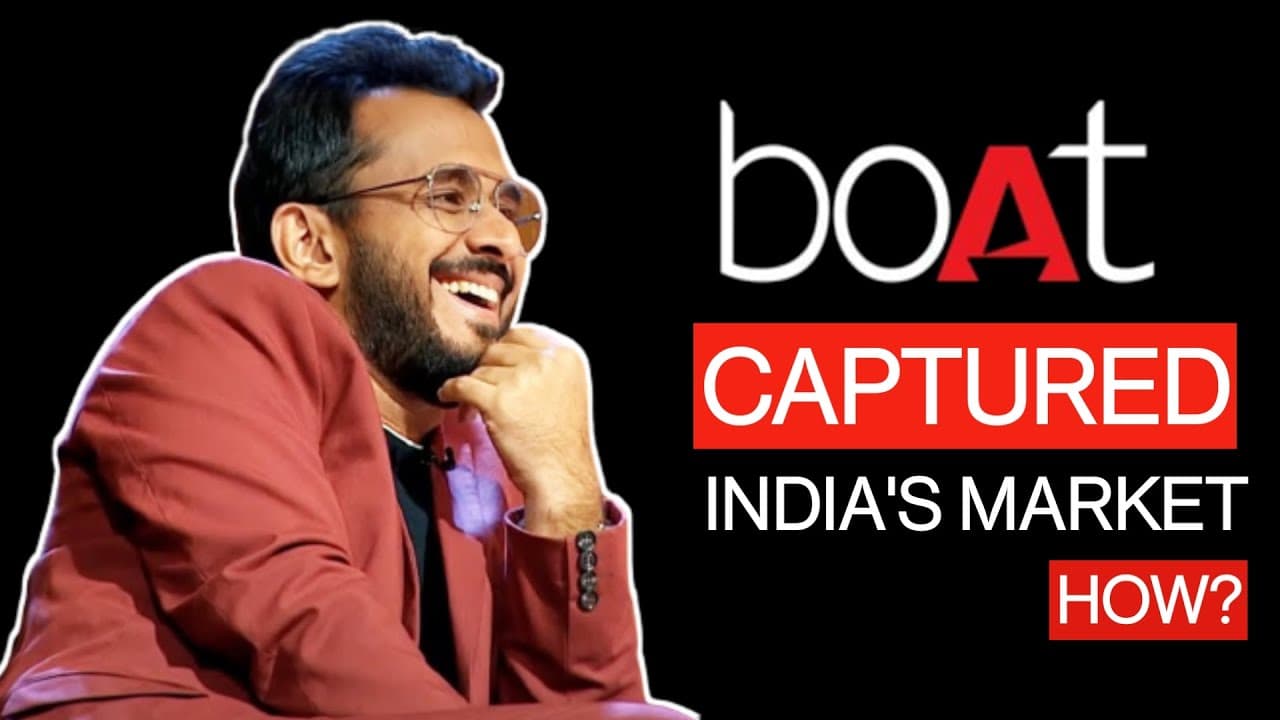
How Did Boat Become India's Hearables Leader?
TL;DR
Boat became a hearables leader by occupying an underserved affordable price segment, building aspirational value through celebrity endorsements and lifestyle collaborations, and offering products customers considered genuinely strong. Its strategy combined perceived value with tangible product quality, helping familiarity drive initial purchases and positive word of mouth support continued growth.
Transcript
hi everybody board is one of the most incredible brands in the indian startup ecosystem and the most astonishing thing about this company is that within just five years they have achieved such a strong position in the market that if you look at the tws or true wireless stereo market as of q3 of 2021 while bolt stands at five point three percent noi... Read More
Key Insights
- Boat’s market position was built around an underserved price segment below established premium audio brands. Bose, Apple, JBL, and Sennheiser occupied higher price categories, while Boat entered a more affordable range where customer demand existed but no giant brand had established clear dominance.
- India’s hearables opportunity expanded after wireless earphones gained attention, the Jio wave increased screen time, and smartphone manufacturers stopped bundling earphones or supplied only basic models. Together, these developments created demand for separate audio accessories and encouraged multiple companies to enter the category.
- Celebrity endorsement is a mechanism for building familiarity and aspirational value. Boat’s association with Hardik Pandya made the brand more recognizable than several similarly priced competitors, increasing the likelihood that customers would trust its products even when they were not devoted fans of the celebrity.
- Perceived value is the customer’s judgment of a product based on how it is presented. In audio categories, many ordinary listeners cannot identify intricate quality differences, so branding, design, endorsements, and product presentation can strongly influence which otherwise similar device appears more trustworthy.
- Tangible value is the product’s actual functional performance, such as whether an earphone sounds good. The transcript argues that marketing can attract initial attention, but strong technology and product quality encourage satisfaction and positive word of mouth after customers make a purchase.
- Boat is positioned as a lifestyle brand rather than merely an electronics seller. Partnerships with athletes, actors, musicians, designer Masaba Gupta, and Bira connected its products with sports, fashion, entertainment, and millennial culture, helping the company stand apart in a crowded market.
- The OnePlus comparison shows how an affordable product can appear premium without matching the highest market price. OnePlus occupied a gap between mass-market phones and expensive flagships, then used Robert Downey Jr. to strengthen aspiration, a pattern the transcript compares with Boat’s positioning strategy.
- Boat Stone speakers demonstrate that the company’s appeal was not based entirely on endorsements. The transcript describes these portable Bluetooth speakers as strong products that became popular without celebrity promotion or a fancy marketing strategy, indicating that product performance helped establish the brand’s foundation.
Install to Summarize YouTube Videos and Get Transcripts
Explore YouTube Video Summarizer or Get YouTube Transcript Extractor
Questions & Answers
Q: How did Boat become a leader in India’s hearables market?
Boat combined an underserved price position with high brand familiarity, aspirational marketing, lifestyle collaborations, and products customers considered strong. It entered below expensive established audio brands, then used celebrity associations to appear more trustworthy than lesser-known competitors. Product quality supported the image by encouraging customer satisfaction and positive word of mouth after the initial purchase.
Q: Why was India’s hearables market attractive to Boat?
The market became attractive because wireless earphones were drawing greater interest, the Jio wave increased Indians’ screen time, and many smartphone manufacturers stopped including earphones or supplied only basic versions. Meanwhile, established brands largely occupied expensive categories. This combination created substantial demand for affordable standalone audio products and left room for a recognizable new brand.
Q: How did celebrity endorsements help Boat’s marketing strategy?
Celebrity endorsements gave Boat familiarity and aspirational value in a category where competing devices could appear functionally similar to ordinary customers. Hardik Pandya helped establish that positioning, and Boat later worked with additional athletes, musicians, and actors. These associations made the brand feel more credible and culturally relevant, increasing trust even among customers who were not dedicated celebrity fans.
Q: What is perceived value in Boat’s brand strategy?
Perceived value is the judgment customers form from a product’s presentation rather than its measurable performance alone. Because many listeners cannot detect intricate differences between audio devices, they may rely on branding, design, endorsements, and familiarity. Boat strengthened these signals so its earphones appeared more desirable and trustworthy than products from less familiar brands in similar price categories.
Q: What is the difference between tangible and perceived value?
Tangible value is the product’s actual functional quality, such as whether an audio device sounds good. Perceived value comes from how customers interpret its branding, appearance, endorsement, and presentation. Boat used perceived value to attract attention and distinguish itself, while strong products supplied tangible value that could validate the purchase and generate favorable word of mouth.
Q: Why did Boat present itself as a lifestyle brand?
Boat presented itself as a lifestyle brand because audio accessories in a crowded market can be difficult for ordinary customers to distinguish through sound quality alone. Associations with sports figures, actors, musicians, fashion designer Masaba Gupta, and Bira gave the brand a broader cultural identity. That identity created aspiration, familiarity, and differentiation beyond basic technical specifications.
Q: How is Boat’s strategy similar to OnePlus’s strategy?
Both brands targeted gaps between expensive premium products and lower-priced alternatives, then strengthened their positioning with recognizable celebrity associations. OnePlus used Robert Downey Jr. to reinforce a premium image, while Boat used Hardik Pandya and other collaborators to build aspiration. In both cases, perceived value encouraged trial, and strong product performance could then support positive word of mouth.
Q: Did Boat’s success depend entirely on celebrity marketing?
Boat’s success did not depend entirely on celebrity marketing. The transcript identifies Boat Stone portable Bluetooth speakers as a particularly strong product that became popular without celebrity endorsements or a fancy marketing strategy. That example indicates that tangible product value formed an important foundation, while endorsements and collaborations helped amplify familiarity, aspiration, and customer trust across the broader brand.
Summary & Key Takeaways
-
Boat entered India’s hearables market when wireless earphones were gaining attention, screen time was rising, and many smartphone manufacturers had stopped including useful earphones. Established audio brands concentrated on expensive categories, leaving substantial demand below their price points. Boat positioned affordable products within this underserved space and became more recognizable than nearby competitors.
-
Celebrity endorsements helped Boat turn relatively commoditized audio accessories into aspirational lifestyle products. Hardik Pandya established early familiarity, while later partnerships with athletes, musicians, actors, designer Masaba Gupta, and Bira broadened the brand’s cultural relevance. These associations increased perceived value, giving customers another reason to trust Boat when technical differences were difficult to identify.
-
Boat’s strategy depended on more than promotional visibility. The transcript highlights Boat Stone speakers as strong products that became popular without celebrity endorsements or an elaborate marketing strategy. This suggests that tangible product value supported the brand beneath its aspirational image, creating conditions for customer satisfaction, positive word of mouth, and sustained market leadership.
Read in Other Languages (beta)
Share This Summary 📚
Summarize YouTube Videos and Get Video Transcripts with 1-Click
Try YouTube Summary with ChatGPT & Claude or YouTube Transcript Generator
Explore More Summaries from Think School 📚



Summarize YouTube Videos and Get Video Transcripts with 1-Click
Try YouTube Summary with ChatGPT & Claude or YouTube Transcript Generator