How Does India’s Digital Rupee Change Payments?
TL;DR
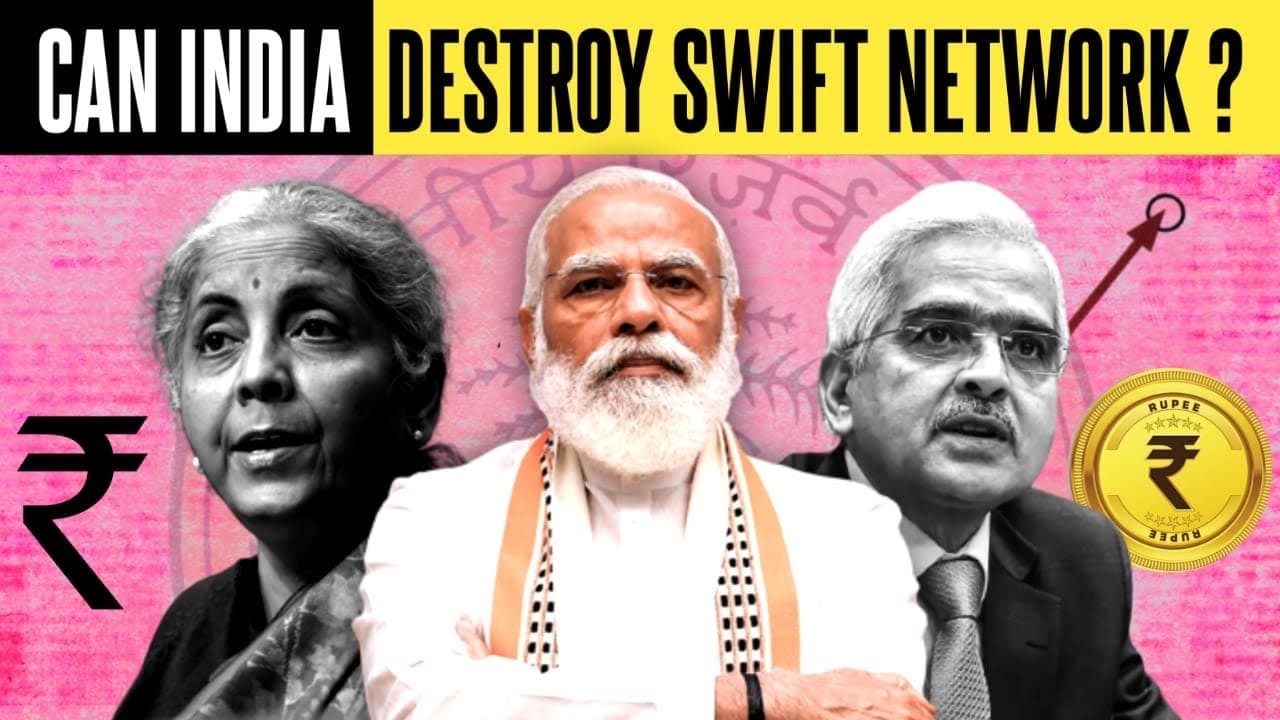
India’s digital rupee is central bank money issued electronically, making it exchangeable with physical rupees while allowing transactions to be recorded directly on the RBI’s ledger. The initiative could enable near-immediate settlement, programmable subsidies through smart contracts, broader financial inclusion, offline payments, and access without a traditional bank account.
Transcript
India is working towards introducing what is known as digital currency the currency will be referred to as the erupy that is intended to make payments much more efficient digital transaction code China has created its own form of digital currency known as the digital Yuan the Federal Reserve announcing is taking another step at looking at the possi... Read More
Key Insights
- India’s digital rupee is a central bank digital currency issued electronically by the RBI. It performs the functions of money as a medium of exchange and store of value, and users can exchange 100 digital rupees for a physical 100-rupee note.
- Central bank digital currency is backed by the government that issues it, not by a physical commodity such as gold or silver. Instead of printing physical notes, the central bank issues electronic coins or accounts supported by the government’s faith and credit.
- Conventional digital payments can separate the visible transaction from final bank settlement. A customer and merchant may receive instant notifications, while their banks settle only the net difference between accumulated incoming and outgoing transactions at the end of a day or another period.
- Digital rupee transactions can place both payment and settlement directly on the RBI’s ledger. In the example presented, money moves from the buyer’s RBI account to the grocery owner’s RBI account, making the front-end action and back-end transfer nearly immediate and simultaneous.
- Central bank digital currencies have wholesale and retail forms. Wholesale CBDC is intended for banks, while retail CBDC is designed for ordinary consumers, allowing the same underlying digital currency concept to support institutional settlement and everyday purchases.
- Smart contracts are self-executing agreements whose terms are written into code. Applied to digital currency, they can automatically change subsidy rates, restrict benefits to designated purchases, or revoke assistance when a recipient’s income meets programmed conditions.
- Programmable financial records can help people without an established credit history. The Finland example describes transactions, repayments, identity records, subsidies, loans, and salary disbursements being documented so refugees can build credit scores and potentially qualify for institutional loans.
- Financial inclusion through CBDC can extend beyond bank branches and difficult geography. The Bahamas introduced the Sand Dollar in 2020 to improve access across 700 scattered islands, where reaching a bank may require a half-day or full-day trip, and users do not require bank accounts.
Install to Summarize YouTube Videos and Get Transcripts
Explore YouTube Video Summarizer or Get YouTube Transcript Extractor
Questions & Answers
Q: What is India’s digital rupee?
India’s digital rupee is a central bank digital currency issued by the Reserve Bank of India in electronic form. It serves the same basic monetary functions as physical rupees, including acting as a medium of exchange and store of value. It is backed by the issuing government rather than gold or silver, and digital rupees can be exchanged for physical currency of equal value.
Q: How is the digital rupee different from UPI payments?
A conventional digital payment can update the sender’s and receiver’s records immediately while the participating banks settle their net obligations later. With the digital rupee model described, value moves directly between accounts recorded on the RBI’s ledger. This allows the visible payment and the underlying settlement to occur almost simultaneously instead of depending on periodic net settlement between separate banks.
Q: How do banks settle ordinary digital payments?
Banks can aggregate transactions flowing in both directions and transfer only the net difference during periodic settlement. The transcript gives an example in which HDFC customers send 250 crores to ICICI merchants while ICICI customers send 100 crores to HDFC merchants. Rather than transferring every payment separately, HDFC sends the 150-crore difference to settle the accumulated obligations.
Q: What are wholesale and retail central bank digital currencies?
Wholesale CBDC is the form intended for use by banks, while retail CBDC is intended for consumers making everyday transactions. This distinction allows central bank-issued digital money to serve different participants within the financial system. Banks can use the wholesale form for institutional activity, while individuals can use the retail form for purchases and transfers resembling ordinary digital payments.
Q: How can smart contracts improve government subsidies?
Smart contracts can encode subsidy rules directly into a digital payment instrument and execute them automatically. A recipient could receive different discounts for essential goods and fuel, with those rates changing over time. The contract could also withdraw support after income exceeds a programmed threshold for a specified period, reducing the need for repeated manual reviews and separate administrative updates.
Q: How could the digital rupee help people without credit histories?
Programmable digital transactions can create records of borrowing, lending, and repayment behavior. The Finland example describes a system in which refugees can build credit scores based on whether they repay money borrowed from friends. Such documented behavior can give banks useful information about applicants who arrived without prior financial records, potentially helping them qualify for loans and eventually finance businesses.
Q: How can central bank digital currency improve financial inclusion?
Central bank digital currency can provide digital access to money where bank branches or physical cash are difficult to reach. The Bahamas example highlights residents spread across 700 islands, some of whom face a half-day or full-day journey to a bank. Its Sand Dollar transfers cash digitally, and the described system does not require every user to maintain a conventional bank account.
Q: When did the RBI launch the digital rupee pilot?
The Reserve Bank of India launched the pilot for its central bank-backed digital rupee on November 1, 2022. The initiative was presented as a step toward a next-generation financial system for India. The transcript places it within a broader international effort in which China, France, Switzerland, and America are also exploring how central bank digital currencies could operate.
Summary & Key Takeaways
-
The RBI launched the pilot for India’s central bank-backed digital rupee on November 1, 2022. Like a physical currency note, it functions as legal tender, a medium of exchange, and a store of value. Its distinguishing feature is its digital form and direct backing by the issuing government.
-
Conventional digital payment systems display transfers immediately, but banks may settle the net difference between their transactions periodically. A digital rupee transaction can instead move value between accounts on the RBI’s ledger, allowing the front-end payment and back-end settlement to occur almost simultaneously. Wholesale CBDC serves banks, while retail CBDC serves consumers.
-
Programmable digital currency could automate conditional subsidies, identity processes, credit records, loans, and salary disbursements. It could also extend financial access beyond geographic and banking limitations. The Bahamas’ Sand Dollar illustrates how digital central bank money can help people across scattered islands access funds without traveling to a bank or holding a bank account.
Read in Other Languages (beta)
Share This Summary 📚
Summarize YouTube Videos and Get Video Transcripts with 1-Click
Try YouTube Summary with ChatGPT & Claude or YouTube Transcript Generator
Explore More Summaries from Think School 📚




Summarize YouTube Videos and Get Video Transcripts with 1-Click
Try YouTube Summary with ChatGPT & Claude or YouTube Transcript Generator