How Did Milky Mist Build a 2,000 Crore Brand?
TL;DR
Milky Mist escaped the low margins and short shelf life of liquid milk by converting it into value-added products such as paneer, curd, ghee, and ice cream. Founder Satish Kumar also benefited from operating near the Erode milk belt, where water, agriculture, cattle feed, and dairy farming supported procurement, although fragmented supply, inconsistent quality, and weak farmer loyalty remained serious challenges.
Transcript
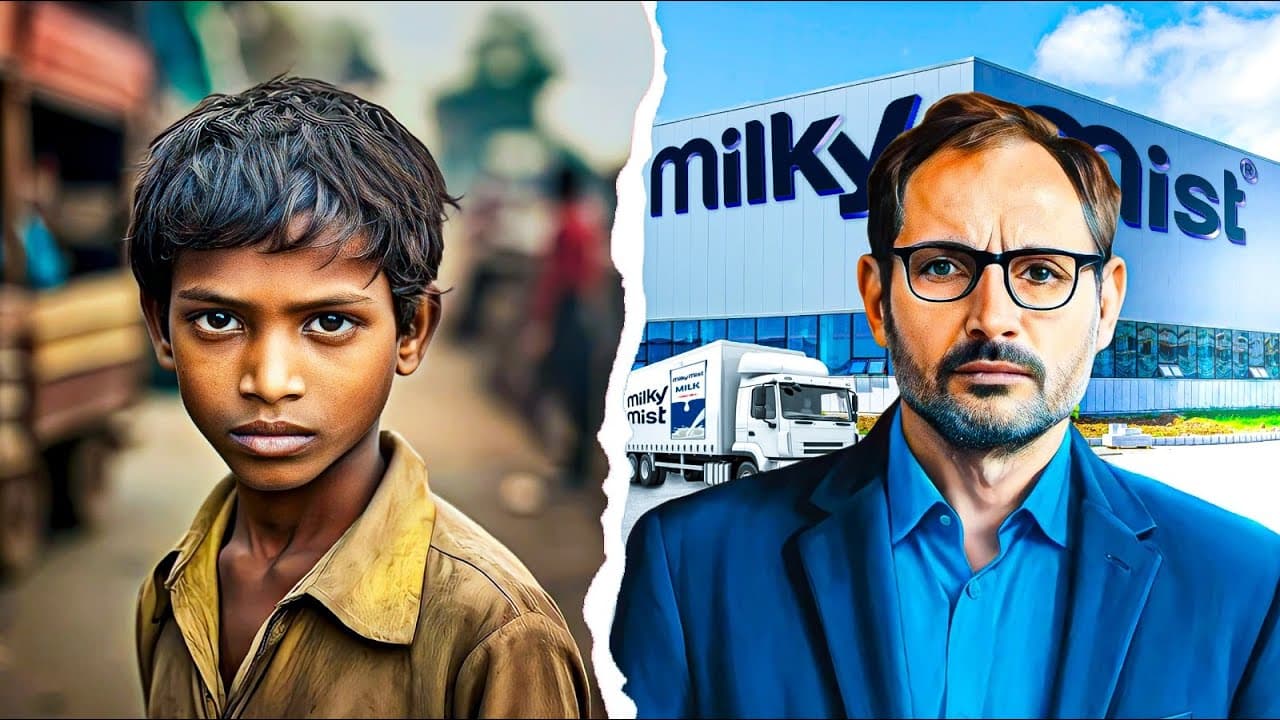
hi everybody if you're someone who wants to learn how to build a legendary brand in a market full of sharks then this episode is for you because the story that I'm about to tell you today is the story of a 17-year-old boy who had no money no brand value and no investor backing at all and yet he went on to build a 2,000 CR Dair business and that to ... Read More
Key Insights
- Liquid milk is a difficult commodity business because its reported margins are only 3 to 5%, its shelf life is short, and inventory must move rapidly. Satish Kumar recognized that these combined constraints were causing losses, complicating logistics, and preventing his family’s business from expanding.
- Value addition is a way to escape commodity price competition because processing creates a more differentiated and useful product. The case study illustrates this principle by showing how rice can become higher-margin batter and idli, even though the original commodity remains a central ingredient.
- Milky Mist improved its business model by converting procured milk into curd, paneer, ghee, and other processed products. The transcript reports margins of about 20% for curd and paneer, 22% for ghee, and more than 35% for ice cream, compared with less than 5% for milk.
- Longer shelf life is a major operational benefit of dairy processing because it provides more time to distribute and sell inventory. The case study states that dairy shelf life can increase from days to months, and even one year, as milk is transformed into certain value-added categories.
- Paneer offered Milky Mist a less crowded market because South Indian cooperatives and other businesses were not described as strongly focused on paneer, curd, and ghee at the time. Entering these categories therefore improved margins while reducing the intensity of direct competition faced in liquid milk.
- Paneer demand grew as India’s middle class became more affluent and more aware of nutrition and food. The case study presents paneer as an important protein source for vegetarians and says its consumption expanded in South India after previously being associated mainly with wealthier consumers.
- Milk procurement is structurally difficult because supply comes from many small dairy farmers. The transcript describes 7.5 lakh small farmers with an average of two cows or buffaloes, creating significant coordination and logistics problems, particularly when internet, highway, and logistics infrastructure were limited.
- Erode’s dairy ecosystem supported Milky Mist’s procurement because Cauvery water helped agriculture prosper, which increased the availability of cattle feed and fodder. Greater cattle ownership in Erode and adjoining areas made milk sourcing somewhat easier, although supply loyalty and quality consistency still required attention.
Install to Summarize YouTube Videos and Get Transcripts
Explore YouTube Video Summarizer or Get YouTube Transcript Extractor
Questions & Answers
Q: How did Milky Mist escape the low margins of milk?
Milky Mist escaped the low-margin liquid milk business by processing milk into value-added products such as curd, paneer, ghee, and ice cream. The transcript places milk margins below 5%, compared with about 20% for curd and paneer, 22% for ghee, and more than 35% for ice cream. Processing also extended shelf life and reduced direct competition.
Q: Why was selling liquid milk difficult for Satish Kumar?
Selling liquid milk was difficult because the family earned only about 30 paise to 1 rupee per liter, representing margins of roughly 3 to 5%. Milk had a shelf life of only two days in the account, and it needed to be dispatched within ten hours of milking. Low margins, perishability, and demanding logistics restricted expansion.
Q: What is value addition in a commodity business?
Value addition means processing or combining a basic commodity to create a product that offers customers greater usefulness and supports higher margins. The transcript illustrates this with rice transformed first into batter and then into idli. It applies the same reasoning to milk, which becomes more profitable and easier to distribute when converted into products such as paneer or ghee.
Q: Why did Milky Mist begin selling paneer and ghee?
Milky Mist began selling paneer and ghee because liquid milk itself was the source of several business constraints. Milk offered very low margins, spoiled quickly, and imposed severe logistics requirements. Processed products provided higher reported margins, longer shelf lives, and fewer competitors. These advantages made the family’s dairy operation more viable and created room for growth.
Q: Why did paneer demand rise in South India?
The case study links rising paneer demand to the economic changes that followed India’s 1991 reforms. As markets opened, employment and per capita income increased, and the middle class became more affluent and nutritionally aware. Paneer gained importance as a protein source, especially for vegetarians, and began selling more strongly after previously being consumed mainly by wealthier people.
Q: What supply problems did Milky Mist face?
Milky Mist faced a fragmented milk supply, uncertain farmer loyalty, inconsistent milk quality, and inadequate logistics infrastructure. Farmers could not easily be bound to sell to one company and might switch when another buyer offered a higher price. Differences in cattle feed and hygiene also produced inconsistent milk, so neither supply volume nor quality was reliably guaranteed.
Q: How did Erode’s location help Milky Mist source milk?
Erode helped Milky Mist because it was described as a major milk-producing region. Cauvery water supported local agriculture, which made good-quality cattle feed and fodder more available. These conditions encouraged cattle ownership in Erode and surrounding areas. Locating near that milk belt reduced some procurement difficulty, although it did not eliminate loyalty, quality, or logistics challenges.
Q: What business lessons come from Milky Mist’s growth?
Milky Mist’s growth shows that a company in a commodity market can improve its economics by adding value instead of competing mainly on price. Processing milk created higher-margin products, extended the time available to sell inventory, and reduced competition. The case also shows why sourcing location, changing consumer demand, supply relationships, and consistent input quality matter alongside product strategy.
Summary & Key Takeaways
-
Satish Kumar joined his father’s struggling milk business after leaving school at age 17. Liquid milk generated margins of only 3 to 5%, sometimes sold at a loss, and had to be dispatched quickly because of its short shelf life. These constraints made logistics difficult and prevented meaningful business expansion.
-
Milky Mist changed its economics by processing milk into products such as curd, paneer, ghee, and ice cream. According to the case study, these categories offered higher margins and longer shelf lives than milk. Value addition also reduced direct competition and helped the company avoid the price pressure associated with commodity markets.
-
Growing incomes, greater nutritional awareness, and rising demand for paneer created an opportunity in South India. Milky Mist still faced fragmented milk procurement, unreliable farmer loyalty, inconsistent quality, and weak logistics infrastructure. Its location near Erode helped because water availability supported agriculture, cattle feed, cattle ownership, and regional milk production.
Read in Other Languages (beta)
Share This Summary 📚
Summarize YouTube Videos and Get Video Transcripts with 1-Click
Try YouTube Summary with ChatGPT & Claude or YouTube Transcript Generator
Explore More Summaries from Think School 📚



Summarize YouTube Videos and Get Video Transcripts with 1-Click
Try YouTube Summary with ChatGPT & Claude or YouTube Transcript Generator