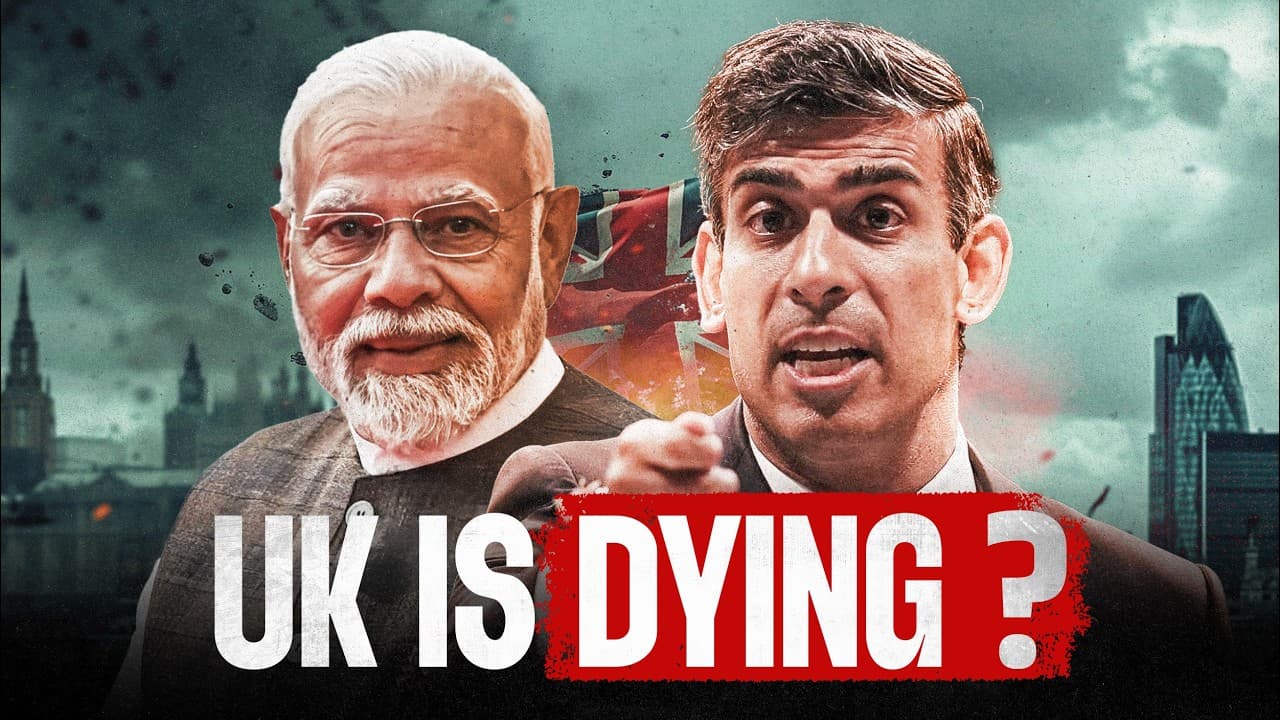
Why is UK heading toward recession and poverty?
TL;DR
The video argues that Brexit and EU relations changed UK bargaining power, leading to economic strain. It highlights high debt, stagnant productivity since 2008, nurse shortages, long emergency wait times, truck driver shortages, rising prices and poverty, and questions what mistakes caused the crisis and what India can learn from it.
Transcript
hi everybody the United Kingdom was once the symbol of power and Heritage because of their 200 years of looting colonies like India the West in its predatory form came into India uh in the mid 18th century but in spite of all the treasure hunting now the UK is going through the worst economic and social crisis in its history as of 2024 while the de... Read More
Key Insights
- UK debt is stated as 99.5% of GDP, a key metric used to frame the crisis.
- UK productivity has remained stagnant since the 2008 crisis, signaling long term structural issues.
- There is a reported labor shortage in the UK, including over 100,000 truck drivers, indicating tight labor markets.
- Healthcare strain is highlighted by nurse shortages and 45% of patients waiting four hours in emergencies.
- The video links Brexit to shifts in economic power and bargaining with the EU as a critical factor.
- Brexit is presented as driven by concerns over budget contributions and perceived net loss from EU membership.
- EU formation is explained as a move to gain free movement of people and goods across borders, amplifying negotiating power for larger entities.
- The narrative frames poverty rise and inflation as direct consequences of policy and economic shifts post-Brexit.
- More videos from this channel:
- More from this channel: Think School
Install to Summarize YouTube Videos and Get Transcripts
Explore YouTube Video Summarizer or Get YouTube Transcript Extractor
Questions & Answers
Q: What is the direct premise of the video regarding the UK economy today?
The video argues that the United Kingdom is experiencing the worst economic and social crisis in its history as of 2024, marked by high debt levels, stagnant productivity since 2008, hospital nurse shortages, long emergency wait times, labor shortages including over 100,000 truck drivers, rising poverty, and high inflation. It frames these as interconnected outcomes of policy choices and Brexit related dynamics.
Q: What reasons does the video give for the UK exiting the European Union?
The video cites three main reasons: first, the UK felt it contributed more to the EU budget than it received back, with a large net contribution. Second, immigration concerns grew as EU expansion allowed more workers into the UK, straining public services and housing. Third, the UK believed it could negotiate better deals with other countries like India outside the EU. These perceptions are presented as drivers of Brexit.
Q: How does the video describe the EU’s bargaining power before Brexit?
The video explains that the EU allows member states to negotiate as a single entity, creating greater bargaining power. It uses the example of market access and population size, noting that while India has 1.4 billion people, the EU represents about 450 million with higher per capita income, enabling stronger terms in trade negotiations compared to individual countries.
Q: What labor market issues are highlighted in the UK according to the video?
The video highlights a labor shortage including more than 100,000 truck drivers, a trend of workers leaving due to long term sickness, and overall difficulties sustaining workforce growth. These points are presented as indicators of structural labor market weaknesses contributing to economic stress in the UK.
Q: What healthcare challenges does the video attribute to the UK crisis?
The video notes hospitals are short of nurses and that 45% of patients wait four hours or more in emergency cases. These healthcare service strains are described as part of the broader economic and social crisis facing the UK, reflecting resource gaps in public services.
Q: What does the video claim about UK debt and its relation to fiscal policy?
The video states that UK debt stands at 99.5% of GDP and argues that raising taxes or letting debt rise further are constrained by this high level. It presents the debt level as a central factor shaping policy choices and the overall economic vulnerability of the UK in the described crisis.
Q: How does the video link Brexit to changes in trade and immigration policy?
The video links Brexit to shifts in trade and immigration by arguing that leaving the EU altered the UK’s ability to leverage collective EU bargaining power and control migration flows. It suggests these changes contributed to perceived disadvantages in trade deals and public service pressures, which fed into the broader economic crisis narrative.
Q: What lessons does the video propose India should learn from the UK crisis?
The video suggests that India should study the UK crisis to understand the dangers of high debt, stagnant productivity, and labor shortages, and how policy responses to migration and trade negotiations can influence economic outcomes. It frames these lessons as cautionary for managing debt, workforce dynamics, and strategic international trade relationships.
Summary & Key Takeaways
-
The video outlines how Brexit altered UK trade and fiscal dynamics, contributing to the current crisis. It discusses debt, productivity stagnation, healthcare staffing shortages, and rising poverty and prices, presenting a critical view of UK policy decisions since 2016.
-
It explains the EU formation context and why the UK felt disadvantaged in budget contributions and immigration, arguing these issues fed into the Brexit decision and subsequent economic challenges.
-
The episode then pivots to lessons for India, framing the UK collapse as a cautionary tale about managing debt, productivity, and labor supply within a global trade system.
Read in Other Languages (beta)
Share This Summary 📚
Summarize YouTube Videos and Get Video Transcripts with 1-Click
Try YouTube Summary with ChatGPT & Claude or YouTube Transcript Generator
Explore More Summaries from Think School 📚



Summarize YouTube Videos and Get Video Transcripts with 1-Click
Try YouTube Summary with ChatGPT & Claude or YouTube Transcript Generator