10 Best 3Blue1Brown Videos to Actually Understand Math

Jul 27, 2026
11 min read
151 views
Last updated: July 2026
This is a curated path through 3Blue1Brown's math videos, sequenced so each idea builds on the one before it. It is for founders and builders who want the intuition behind calculus, linear algebra, and probability, not just formulas to memorize.
The ten videos run about 167 minutes total, roughly two and a half hours. Grant Sanderson's visual, geometry-first explanations have become the reference point for learning these subjects, drawing tens of millions of views across the channel.
The videos on this list, in the order to watch them, are:
Where Do Calculus Ideas Come From? (3Blue1Brown)
What Is a Vector, Really? (3Blue1Brown)
How Do Matrices Move Space? (3Blue1Brown)
What Does a Determinant Measure? (3Blue1Brown)
What Are Eigenvectors and Eigenvalues? (3Blue1Brown)
How Do Polynomials Approximate Anything? (3Blue1Brown)
How Do Circles Draw Any Shape? (3Blue1Brown)
How Should You Update Your Beliefs? (3Blue1Brown)
Can a Shape Have a Fractional Dimension? (3Blue1Brown)
What Is the Riemann Zeta Function? (3Blue1Brown)
Total: 10 videos, 167 minutes of watch time (about 3 hours), and 80.9M combined views.

1. Where Do Calculus Ideas Come From?
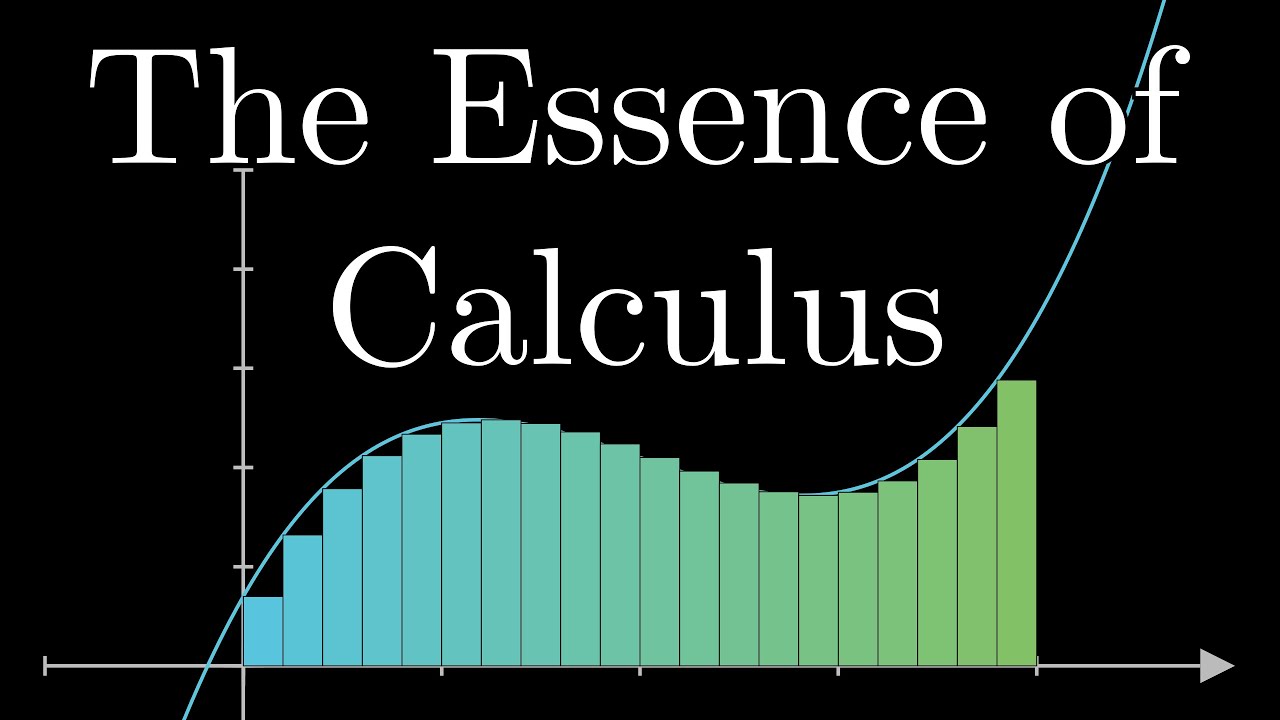
3Blue1Brown · 17 min · 11.4M views · 2017
In short: Calculus makes sense when you rebuild its core ideas from a simple question like a circle's area, rather than memorizing formulas.
Start here because it sets the whole approach for the channel: understanding over memorization. It shows how the idea of area under a graph emerges naturally from summing many thin pieces, so later topics feel discovered rather than handed down.
Key takeaways
Grant approximates a circle's area with thin rings, showing how the concept of area under a graph emerges from summing many small pieces.
Choosing smaller values for the approximation parameter increases accuracy, and the sum converges toward the exact value as the pieces shrink.
Calculus is best learned by understanding where its core ideas come from, rather than memorizing formulas and repeating procedures.
The video treats calculus as something you could reinvent yourself, starting from a concrete geometric question about a circle.
Watch on YouTube · Read the summary and Q&A
2. What Is a Vector, Really?

3Blue1Brown · 9 min · 12M views · 2016
In short: A vector can be seen as an arrow in space, an ordered list of numbers, or an abstract mathematical object.
This opens the linear algebra series and gives you the object everything else is built on. It answers why vectors are drawn from the origin and how the same thing can be both a picture and a list of numbers.
Key takeaways
A vector can be viewed three ways: as an arrow in space, an ordered list of numbers, or an abstract mathematical object.
Vectors in linear algebra are typically rooted at the origin of a coordinate system for easier representation and visualization.
Vector addition works by placing vectors tip to tail, while scalar multiplication scales a vector's length by a number.
Translating between geometric arrows and numerical lists is a core skill that connects linear algebra to physics, graphics, and data analysis.
Watch on YouTube · Read the summary and Q&A
3. How Do Matrices Move Space?
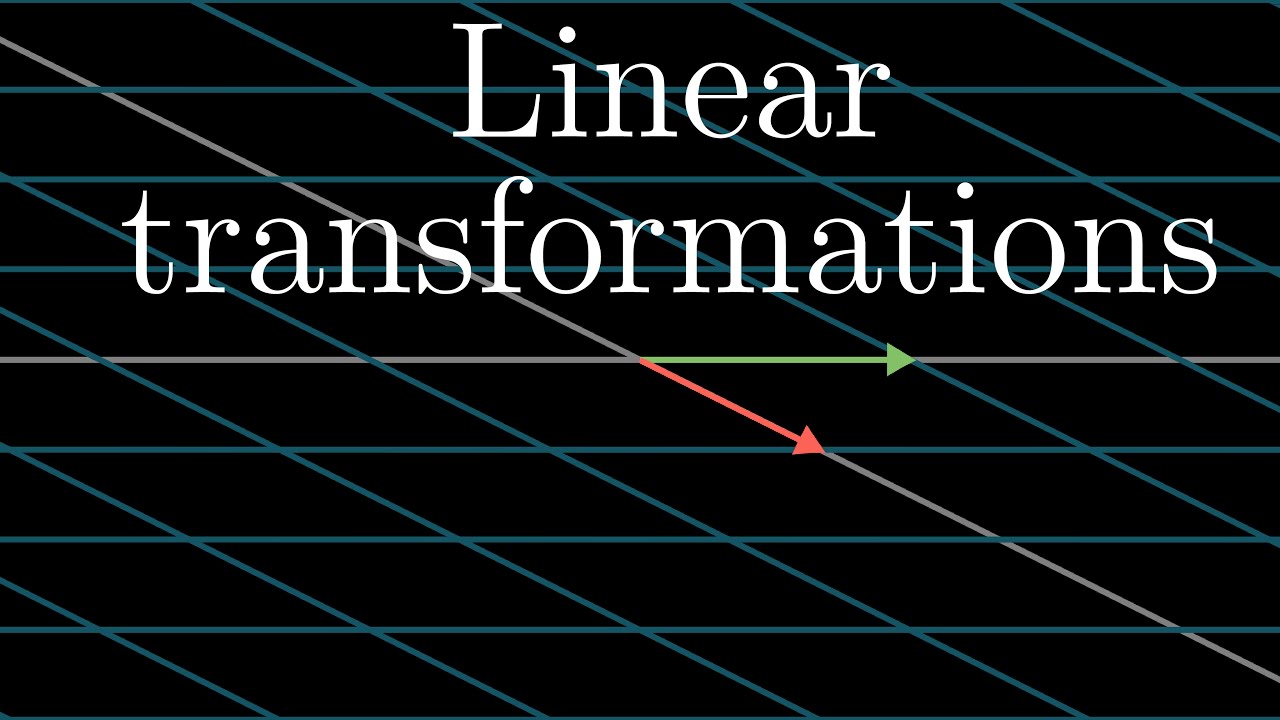
3Blue1Brown · 10 min · 7M views · 2016
In short: A matrix describes a linear transformation, with each column showing where a basis vector lands after space is moved.
This is the conceptual turning point of the series: matrices stop being grids of numbers and become movements of space. Once you see them this way, matrix multiplication and eigenvalues become far less mysterious.
Key takeaways
A linear transformation maps input vectors to output vectors while keeping lines straight and fixing the origin in place.
In two dimensions a linear transformation is captured by a 2x2 matrix, where each column shows where a basis vector lands.
Matrix-vector multiplication computes where any vector goes after a transformation, using the recorded landing spots of the basis vectors.
Seeing matrices as movements of space, rather than grids of numbers, makes ideas like matrix multiplication and eigenvalues easier to grasp.
Watch on YouTube · Read the summary and Q&A
4. What Does a Determinant Measure?

3Blue1Brown · 10 min · 4.8M views · 2016
In short: A determinant measures how much a linear transformation scales areas or volumes, and whether it flips the orientation of space.
Building on transformations, this gives one number a clear geometric meaning. It explains why a determinant of zero signals a collapse into a lower dimension, which matters far more than the computation.
Key takeaways
A determinant measures how much a linear transformation scales areas in two dimensions or volumes in three dimensions.
A determinant of zero means the transformation collapses space into a lower dimension, such as a line or a single point.
A negative determinant indicates the transformation flips the orientation of space, while its magnitude gives the scaling factor.
For a 2x2 matrix the determinant equals ad minus bc, representing the area of the transformed unit square.
Watch on YouTube · Read the summary and Q&A
5. What Are Eigenvectors and Eigenvalues?
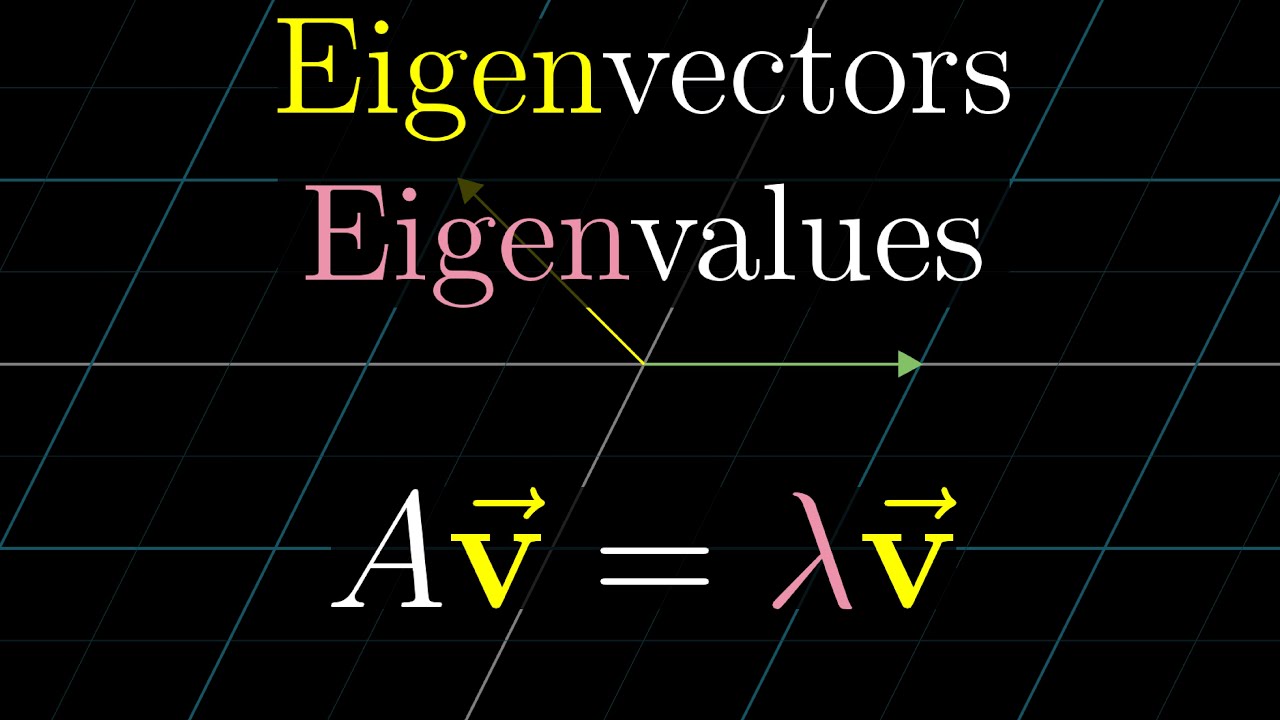
3Blue1Brown · 17 min · 6.2M views · 2016
In short: An eigenvector stays on its own span during a transformation, only getting stretched or squished by a scalar called its eigenvalue.
This is the payoff of the linear algebra journey, and it only lands if the earlier pieces are in place. It reveals what a transformation does independent of coordinates, which is why it appears everywhere from rotations to machine learning.
Key takeaways
An eigenvector stays on its own span during a transformation, only getting stretched or squished by a scalar called its eigenvalue.
You find eigenvalues by solving where the determinant of A minus lambda times the identity equals zero.
For a 3D rotation the eigenvector reveals the axis of rotation, and its eigenvalue must be one since rotations preserve length.
Confusion about eigenvectors usually traces to shaky foundations in matrices, determinants, and change of basis, not the eigen-concepts themselves.
Watch on YouTube · Read the summary and Q&A
6. How Do Polynomials Approximate Anything?
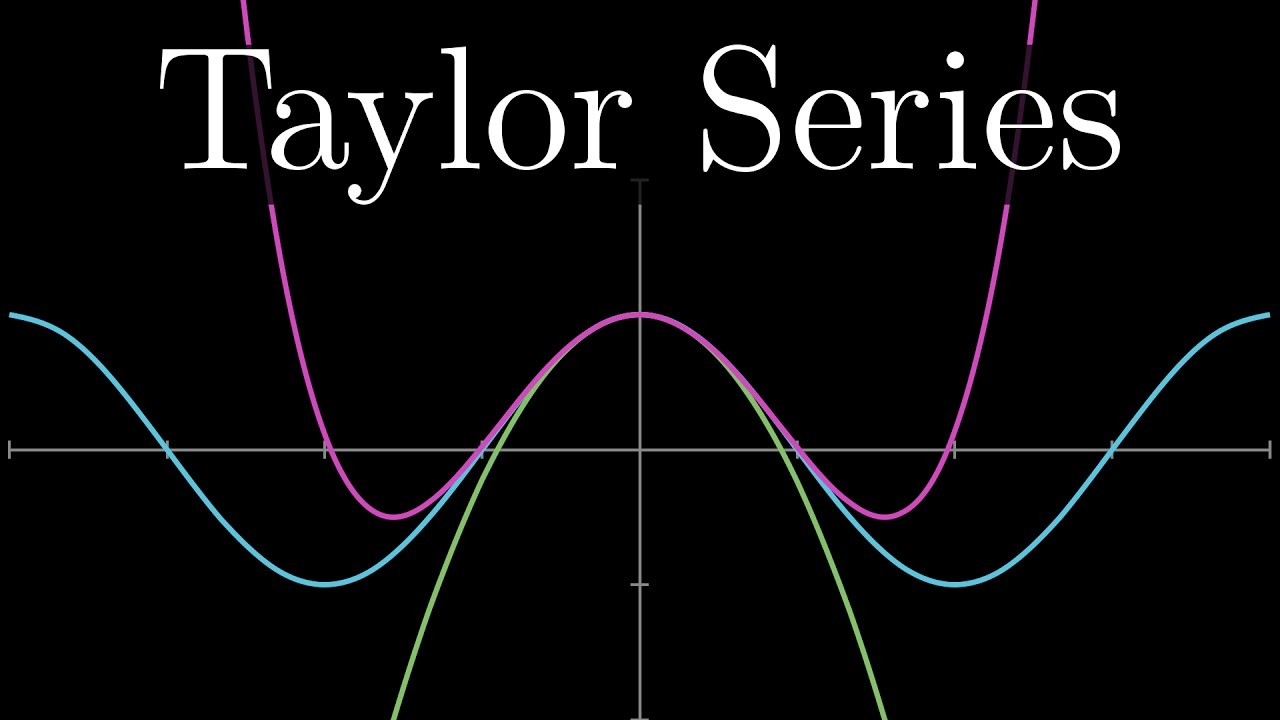
3Blue1Brown · 22 min · 5.1M views · 2017
In short: A Taylor series approximates a non-polynomial function using polynomials that match its value and derivatives near a chosen input.
With calculus and linear algebra in hand, this returns to calculus at a deeper level. It shows how hard functions get replaced by friendly polynomials, a trick used constantly in physics and engineering.
Key takeaways
A Taylor series approximates a non-polynomial function using polynomials that match its behavior near a specific input point.
The coefficients come from the function's derivatives at the chosen input, each divided by the appropriate factorial.
Adding more terms to a Taylor series gives a closer approximation, though it also increases the polynomial's complexity.
A Taylor series may only converge within a certain radius of convergence around the chosen input, depending on the function.
Watch on YouTube · Read the summary and Q&A
7. How Do Circles Draw Any Shape?

3Blue1Brown · 24 min · 18.8M views · 2019
In short: A Fourier series represents a function as a sum of sine waves, and its complex form uses rotating vectors to trace shapes.
This connects calculus to differential equations through one of the most visually striking ideas on the channel. It answers how rotating circles can approximate any shape and why the heat equation gave rise to the whole idea.
Key takeaways
A Fourier series represents a function as a sum of simple sine waves that add up to approximate any shape.
The complex Fourier series uses rotating vectors whose sizes and angles combine to trace out complex drawings.
Fourier series grew out of the heat equation and remain crucial for solving linear differential equations.
Infinite sums of sine waves can approximate even discontinuous functions and describe complex natural phenomena mathematically.
Watch on YouTube · Read the summary and Q&A
8. How Should You Update Your Beliefs?

3Blue1Brown · 15 min · 5.8M views · 2019
In short: Bayes' theorem updates a prior belief into a posterior by weighing new evidence against how likely that evidence was.
This shifts from continuous math to probability, the reasoning behind science and machine learning. It reframes Bayes geometrically so updating beliefs on evidence becomes intuitive rather than a formula to plug into.
Key takeaways
Bayes' theorem updates a prior belief into a posterior belief by weighing new evidence against how likely that evidence was.
The theorem's value lies in systematizing how beliefs should change quantitatively when new data arrives.
Thinking with representative samples, rather than raw probabilities, makes Bayesian reasoning far more intuitive.
Bayes' theorem is central to scientific discovery and machine learning, where models constantly update on new evidence.
Watch on YouTube · Read the summary and Q&A
9. Can a Shape Have a Fractional Dimension?
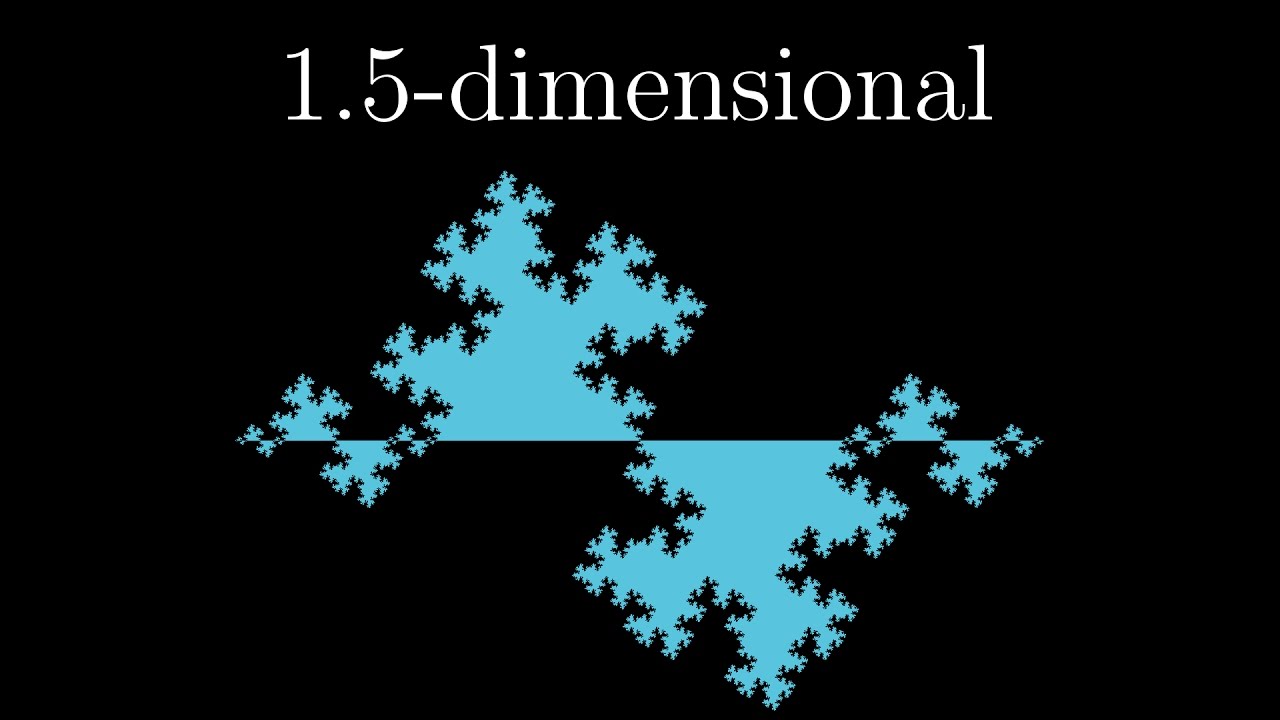
3Blue1Brown · 21 min · 4.5M views · 2017
In short: Fractal dimension measures roughness by tracking how a shape's detail changes with scale, and it can take fractional values.
This stretches your idea of what dimension even means, a payoff that only makes sense once you are comfortable with scaling and measurement. It also corrects the common myth that fractals are always self-similar.
Key takeaways
Fractal dimension is a measure of roughness that quantifies how a shape's detail changes as you zoom in on it.
Fractal dimensions can be fractional rather than whole numbers, which is how they capture complexity that traditional geometry overlooks.
The box-counting method finds a fractal's dimension by relating the scaling factor to the number of boxes covering the shape.
Not all fractals are perfectly self-similar, though the Sierpinski triangle and Koch curve are classic self-similar examples.
Watch on YouTube · Read the summary and Q&A
10. What Is the Riemann Zeta Function?
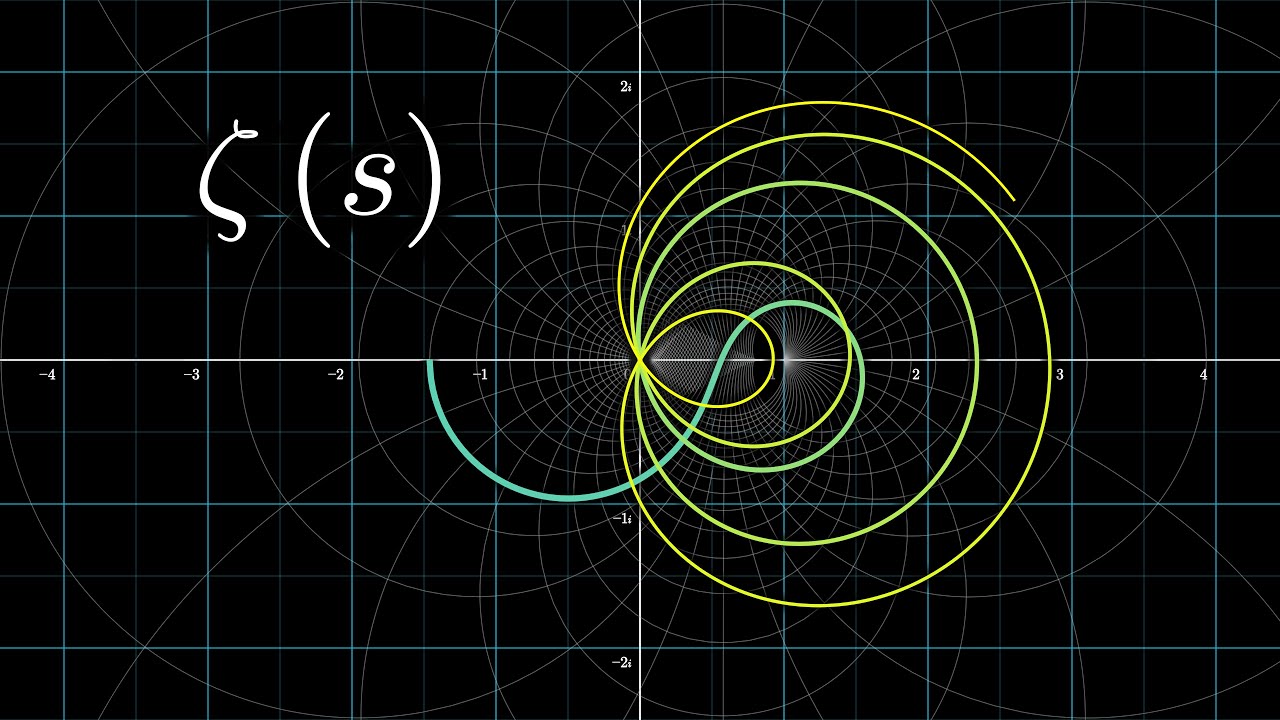
3Blue1Brown · 22 min · 5.3M views · 2016
In short: The Riemann zeta function sums reciprocals of natural numbers raised to a complex power, then extends across the complex plane.
This is the capstone, the hardest and most abstract video, meant for after the earlier intuitions are solid. It visualizes analytic continuation and connects to one of the great unsolved problems in mathematics.
Key takeaways
The Riemann zeta function sums the reciprocals of natural numbers raised to a complex power, converging when the real part exceeds one.
Analytic continuation extends the zeta function beyond its region of convergence to the entire complex plane while preserving angles.
The Riemann hypothesis concerns where the non-trivial zeros of the zeta function lie on the critical line.
The extended zeta function has deep implications in number theory and the distribution of prime numbers.
Watch on YouTube · Read the summary and Q&A
Frequently asked questions
Which 3Blue1Brown series should I start with to learn math?
Start with The Essence of Calculus or the linear algebra videos on vectors and transformations, since both rebuild core ideas from intuition so later topics make sense.
What is the best way to actually understand eigenvectors?
Get comfortable with matrices as transformations, determinants, and change of basis first, because most confusion about eigenvectors comes from shaky prerequisites, not the eigen-concept itself.
What does a determinant of zero mean?
A determinant of zero means the linear transformation collapses space into a lower dimension, such as squishing a plane onto a line or a single point.
What is a Fourier series in simple terms?
A Fourier series represents any function as a sum of simple sine waves, and its complex form uses rotating vectors that can trace out complex shapes.
How long does it take to watch these 3Blue1Brown videos?
The ten videos total roughly 167 minutes, about two and a half hours, and each one stands alone so you can watch them in any order.
Do I need a math background before watching 3Blue1Brown videos?
No advanced background is required to start, because the collection opens with foundational questions like where calculus ideas come from and what a vector really is before moving on to harder topics such as the Riemann zeta function. Beginners can watch in order and stop wherever the material stops being useful.
Who are 3Blue1Brown videos actually for?
They suit anyone who can already push symbols around but never learned what the symbols mean, since the videos answer questions like what a determinant measures, how matrices move space, and what eigenvectors and eigenvalues really are. Students, self learners, and professionals brushing up all get value from the same explanations.
Does 3Blue1Brown cover anything beyond calculus and linear algebra?
Yes. Alongside calculus and linear algebra, the topics include how to update your beliefs with new evidence, whether a shape can have a fractional dimension, and what the Riemann zeta function is.
Is watching math videos enough to learn math, or do I still need to practice?
Watching builds intuition for what an idea means, such as why polynomials can approximate almost anything or how circles can trace any shape, but that intuition is not the same as fluency. Working problems by hand after each video is what turns the visual understanding into something you can use on an exam or in real work.
How to use this list
Watch these in order to build intuition layer by layer, or jump to any single video since each stands on its own. If you only have time for one, start with The Essence of Calculus: it models the whole channel's approach, teaching you to rebuild math ideas from a simple question instead of memorizing them. From there the linear algebra videos give you the language for everything from computer graphics to machine learning, and the later videos on Bayes, fractals, and the Riemann zeta function show how far that intuition can carry you.
Related lists
💡 Want summaries and transcripts for any YouTube video? Try YouTube Summary with ChatGPT & Claude.