How to Use ChatGPT to Tailor Job Applications
TL;DR
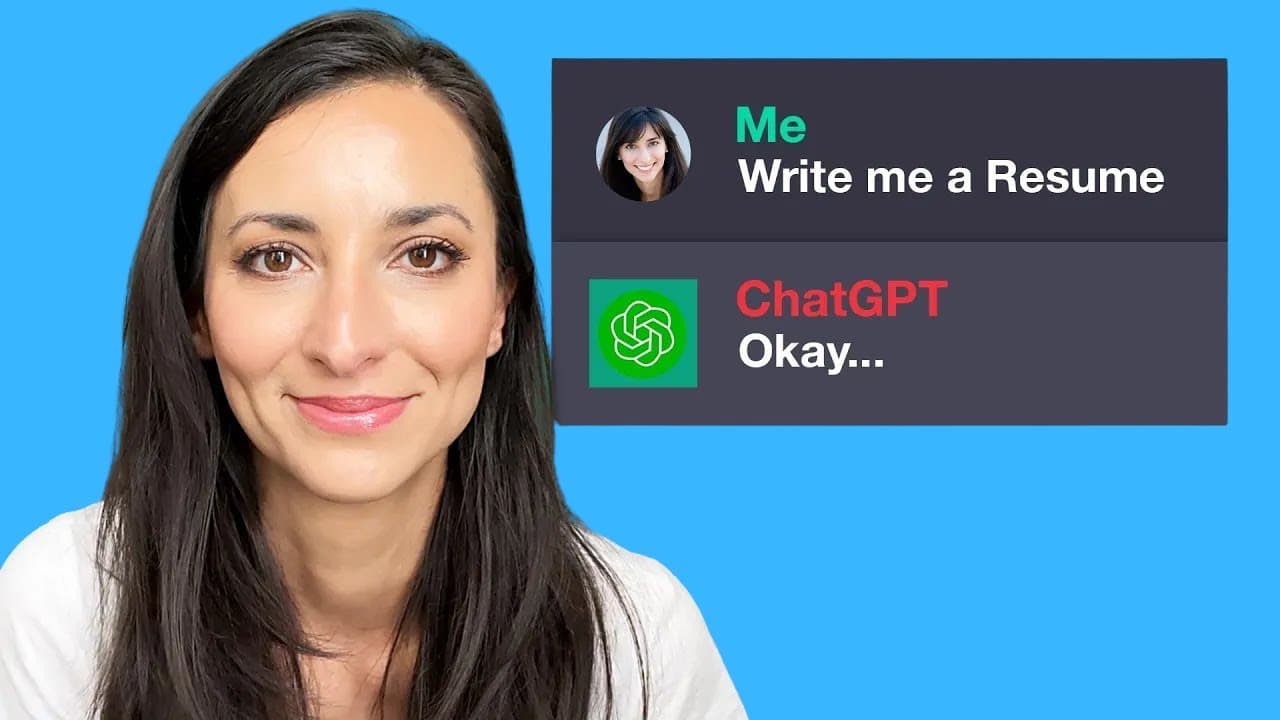
Use ChatGPT in layers: research the employer, rank keywords from the job description, draft application materials, add your experience, and refine the language. For resumes, request several achievement bullets that incorporate priority keywords and measurable results, then keep only relevant options and replace any invented or inaccurate figures with truthful data from your actual work.
Transcript
if you're on the job market and you want to get more job interviews then you need to be using AI to help save you time and get you that much closer to getting your dream job so in this video I'm going to show you how to use chat GPT to help you write your cover letter and resume seems like everybody these days is using AI to help them myself includ... Read More
Key Insights
- Employer research is the first layer of a tailored cover letter because the company's mission and values can be connected to the applicant's background. Asking ChatGPT to summarize this information can save research time, but the resulting details should guide later prompts rather than remain isolated.
- Keyword ranking is a method for interpreting the priorities expressed in a job description. ChatGPT can extract the terms and order them from greatest to least importance, giving the applicant a practical list to reuse when drafting both the cover letter and the resume.
- A first cover-letter draft is only a starting point when it is based solely on the job description. The next prompt should incorporate relevant work experience from the applicant's resume so the letter connects the employer's needs with evidence from the applicant's background.
- Layered prompting is the central technique for improving AI-generated application materials. Separate prompts can add employer research, job keywords, personal experience, conversational language, specific business examples, empathy for the hiring manager, appropriate humor, and quantifiable evidence.
- Resume prompts require accurate background information, including work experience, skills, education, internships, volunteer work, and awards when relevant. A recent graduate can ask for a one-page resume and place education at the top, while an experienced applicant can provide an existing resume for revision.
- Multiple achievement options make resume editing more selective because ChatGPT can generate five bullet points even when only three or four will be retained. Each section can include at least one priority keyword, while the applicant chooses only statements that genuinely fit the work performed.
- Quantifiable data must be verified because ChatGPT may insert figures that do not accurately reflect the applicant's experience. Every generated metric should be reviewed, removed, or replaced with truthful numbers before the resume or cover letter is used.
- Role-specific quantification prompts can help applicants identify measurable aspects of past work. Asking for quantifiable skills and examples associated with a particular job title can suggest useful directions, but all examples and numbers still need to be adapted to the applicant's actual record.
- More videos from this channel:
- More from this channel: Farah Sharghi
Install to Summarize YouTube Videos and Get Transcripts
Explore YouTube Video Summarizer or Get YouTube Transcript Extractor
Questions & Answers
Q: How do you use ChatGPT to write a tailored cover letter?
Start by asking ChatGPT about the employer's mission and values. Next, paste the job description and request a ranked list of its keywords. Ask for a cover letter based on that description, then provide relevant experience from your resume and request an updated draft. Finally, refine the language, examples, tone, humor, and quantifiable evidence, checking every detail before using it.
Q: How can ChatGPT identify important resume keywords?
Paste the complete job description into ChatGPT and ask it to identify the keywords and rank them from greatest importance to least importance according to the description. Keep the resulting list for both the resume and cover letter. The ranked terms help show what the hiring manager prioritizes, and the five highest-ranked keywords can guide later resume revisions.
Q: Why should ChatGPT prompts be used in layers?
Layered prompts allow each stage to add information or refine a specific part of the application. One prompt can research the employer, another can rank job-description keywords, and later prompts can create a draft, incorporate work experience, and adjust the voice. This process produces a more customized result than relying on a single prompt with limited context.
Q: How can a recent graduate create a resume with ChatGPT?
A recent graduate can ask ChatGPT to write a one-page resume using the school's name, major, optional minor, and years of relevant experience. The prompt should also include internships, work experience, volunteer work, skills, and awards. The education section should appear at the top, and every generated statement should be checked against the graduate's actual background.
Q: How should an existing resume be optimized with ChatGPT?
Copy the information from the existing resume and ask ChatGPT to create a resume from it. Then provide the five highest-priority keywords previously extracted from the target job description. Request five bullet-pointed achievements for each experience section, with metrics and quantifiable data, and at least one job-description keyword in each section. Retain only the relevant, accurate options.
Q: How many bullet points should each work experience include?
Each work experience should generally contain around three to four bullet points, while ChatGPT can initially generate five options. Requesting five creates a larger selection because some suggestions may be relevant and others may not match the applicant's experience. The final resume should keep only the strongest truthful achievements and remain one page when possible.
Q: How should AI-generated resume metrics be verified?
Review every number that ChatGPT adds and compare it with the results you actually produced. The generated figures may not accurately represent your work experience, so they must be corrected, replaced, or removed. Quantifiable data is useful only when it truthfully reflects your background. The same verification applies to metrics placed in a cover letter.
Q: How can ChatGPT help quantify accomplishments without existing numbers?
Ask ChatGPT, "What are quantifiable skills of a" followed by the title of a role you held, and request an example for each skill. The response can suggest measurable aspects of that role and possible ways to describe them. Treat those examples as prompts for reflection, then replace any suggested figures with data that accurately represents your own work experience.
Summary & Key Takeaways
-
Begin a tailored cover letter by asking ChatGPT about the employer's mission and values, then have it identify and rank keywords from the job description. These outputs reveal the employer's stated priorities and provide source material for aligning the letter with both the organization and the specific role.
-
Generate an initial cover letter from the job description, then update it with relevant experience copied from your resume. Refine the result through additional prompts requesting conversational language, specific examples, empathy for the hiring manager, business-appropriate humor, and quantifiable evidence, while manually correcting anything inaccurate or unsuitable.
-
For resumes, provide ChatGPT with your education, skills, experience, awards, and other relevant details. Ask it to incorporate the five highest-priority job-description keywords and produce five achievement options for each experience section. Select approximately three to four relevant bullets, verify every metric, and keep the finished resume to one page when possible.
Read in Other Languages (beta)
Share This Summary 📚
Summarize YouTube Videos and Get Video Transcripts with 1-Click
Try YouTube Summary with ChatGPT & Claude or YouTube Transcript Generator
Explore More Summaries from Farah Sharghi 📚


Summarize YouTube Videos and Get Video Transcripts with 1-Click
Try YouTube Summary with ChatGPT & Claude or YouTube Transcript Generator