How to Frame Your Resume Honestly and Strategically
TL;DR
Translate your experience into language hiring managers recognize, but never fabricate verifiable facts such as degrees, employers, dates, skills, languages, reporting lines, or management duties. Emphasize relevant impact, decisions, leadership, and real gap-period work, while omitting irrelevant roles, short stints, and older graduation dates when they do not strengthen your candidacy.
Transcript
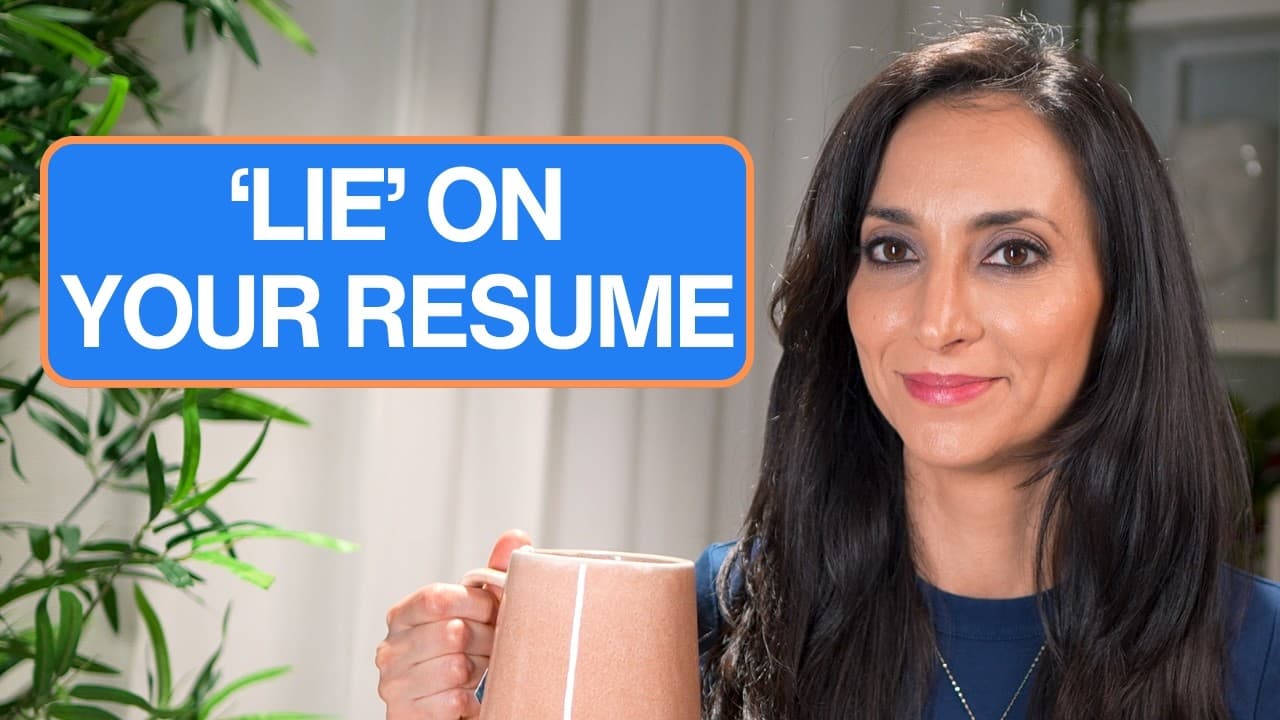
These are lies you can write on your resume. At least that's what it feels like when you're the one writing them. Because what I'm going to share are the moments where your honest answer could hurt you even though it shouldn't. And the version you write instead, it's not fake. It's telling the version of your experience to help you get an interview... Read More
Key Insights
- • Verifiable resume facts must be accurate because education, degree completion, employers, employment dates, management responsibility, and claimed job history may be checked. Falsifying these details can end the hiring conversation or cause an offer to be withdrawn.
- • Job titles can be translated when an internal HR title does not clearly describe the actual work. The replacement should help hiring managers recognize the function without inflating seniority, inventing leadership authority, or turning a coordinator-level position into a director-level role.
- • Quantified accomplishments communicate business impact more effectively than task descriptions. Candidates can use reasonable estimates and rounded figures to represent their contributions, but the numbers must remain believable relative to the company, budget, project, and scope of responsibility.
- • Project leadership is broader than formal people management. A candidate who genuinely led work, owned outcomes, made decisions, coordinated execution, or presented results can state those contributions without claiming direct reports or a management title that never existed.
- • Short jobs can be omitted because candidates control which experiences appear on a resume. If a brief role is removed, it should also be removed from LinkedIn, since recruiters may notice inconsistencies between the two sources during their initial review.
- • Graduation dates can be omitted after more than 5 or 6 years. Candidates may still list the degree and institution while withholding a date that could distract from their relevant qualifications or influence how their seniority and expected cost are perceived.
- • Irrelevant work history consumes space that could demonstrate fitness for the target role. Candidates with more than 10 years of experience do not need to list every early position and should prioritize recent work that directly supports their application.
- • Employment gaps can include real consulting, freelance, unpaid, or business activity when such work actually occurred. Generous framing is acceptable, but inventing a company or fabricating employment crosses the line between strategic presentation and false information.
- More videos from this channel:
- More from this channel: Farah Sharghi
Install to Summarize YouTube Videos and Get Transcripts
Explore YouTube Video Summarizer or Get YouTube Transcript Extractor
Questions & Answers
Q: What information should you never lie about on a resume?
Never falsify your education, degree completion, employers, employment dates, reason for leaving, software abilities, foreign-language fluency, job level, direct reports, or management responsibilities. The transcript says education and employment details can be checked, while claimed skills or languages can be tested during interviews or work. Discovery can end the hiring process, withdraw an offer, or expose the employee soon after starting.
Q: Can you change your official job title on a resume?
You can translate an internal title into a clearer external title when the new wording accurately describes the work you performed. For example, a project coordinator whose actual work centered on operations could use operations coordinator. The change must not inflate level or authority. Moving from coordinator to director, claiming senior status without holding it, or inventing management responsibility would be misrepresentation rather than translation.
Q: How should you use numbers in resume achievements?
Use numbers to show how your work affected engagement, revenue, costs, or another business result, since a quantified impact communicates more than a task such as managing engagement. The transcript recommends estimating and rounding upward within a believable range. Do not present revenue greater than the company could plausibly generate or savings larger than the budget you handled, because implausible claims can immediately undermine trust.
Q: How can you describe leading a project without being a manager?
Describe the work you genuinely led, the outcomes you owned, the decisions you made, and the execution you drove. A marketing coordinator who led an email campaign could explain responsibility for strategy, design coordination, implementation, and presenting the engagement result to leadership. This communicates leadership without falsely stating that the candidate managed employees, held a management title, or had direct reports.
Q: Can you leave a short-term job off your resume?
A brief job that was not a good fit can be left off because a resume does not have to include every position ever held. The transcript notes that employment verification generally relies on the information the candidate supplies. However, the same role should also be removed from LinkedIn. Keeping it there while excluding it from the resume creates an inconsistency recruiters may notice.
Q: Should you include your graduation date on a resume?
If graduation occurred more than 5 or 6 years ago, the date can be omitted while the degree and institution remain listed. The date is not presented as required information in the transcript. Leaving it out can help keep the initial review focused on qualifications when a candidate worries about being perceived as too senior, too expensive, or otherwise categorized based on timing.
Q: How much work history should a resume include?
A resume should prioritize recent experience that is relevant to the position rather than document an entire career. A college coffee-shop job, for example, does not support an application for a senior marketing position and uses space that could highlight applicable work. Candidates with more than 10 years of experience can let older, less relevant roles fall off without listing every early job.
Q: How can you explain an employment gap on a resume?
Include real work performed during the gap when it has the shape of employment, even if it was freelance, consulting, unpaid, or connected to a business you started. Helping a friend with a company can be described as consulting if that work genuinely happened. Do not invent a company or fabricate a position. If an employer offered an interview after seeing the gap, the response matters more than the gap itself.
Summary & Key Takeaways
-
A strategic resume presents the most relevant and recognizable version of genuine experience. Internal job titles may be translated to reflect actual duties, project contributions can be described through leadership and ownership, and accomplishments should show business impact. The boundary is clear: improve how real work is communicated, but never invent experience or authority.
-
Verifiable information must remain accurate because education, employment dates, employers, management responsibility, and claimed capabilities may be checked or tested. A missing degree, false seniority, invented direct reports, unsupported language fluency, or software expertise can damage credibility and lead to a withdrawn offer or quick exposure after starting the role.
-
Candidates may omit irrelevant positions, brief mismatched jobs, and older graduation dates because a resume is a selective highlight reel rather than a complete autobiography. Real consulting, freelance, unpaid, or business work can help explain an employment gap. Resume and LinkedIn details should remain consistent to avoid creating noticeable contradictions.
Read in Other Languages (beta)
Share This Summary 📚
Summarize YouTube Videos and Get Video Transcripts with 1-Click
Try YouTube Summary with ChatGPT & Claude or YouTube Transcript Generator
Explore More Summaries from Farah Sharghi 📚



Summarize YouTube Videos and Get Video Transcripts with 1-Click
Try YouTube Summary with ChatGPT & Claude or YouTube Transcript Generator