Why Qualified Candidates Fail to Get Job Offers

TL;DR
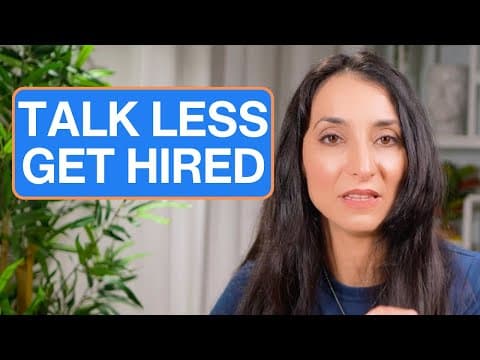
Getting hired depends on aligning your demonstrated skills with the hiring team's needs, not on being the most likable or broadly qualified applicant. A strong resume presents the business results of your labor, while an effective interview focuses on relevant value, recognizes recruiter incentives, and asks questions that reveal whether the workplace is right for you.
Transcript
So, I had a coaching session with a client today, and she's been applying to 1,000 jobs for 6 months or so, and unfortunately, she hasn't really been getting anywhere. I've had this conversation with a lot of my clients over the years. What I realized was that the frustration of job search, we've been conditioned and taught to look for jobs in a ce... Read More
Key Insights
- Hiring is primarily about alignment between a candidate's demonstrated skills and the hiring team's stated needs. Qualifications alone do not secure an offer when the applicant fails to connect relevant experience directly to the role.
- The job seeker is not present merely to be picked, chosen, or liked. The stronger mindset is to evaluate mutual alignment and communicate how specific skills can create value for the business.
- A resume is a demonstration of the business value of a person's labor, not a list of routine responsibilities. It should emphasize the results produced through completed work and connect those results to the target position.
- Recent experience must be relevant to the role being pursued. Even substantial work history may fail to persuade a hiring manager when the resume does not reflect the requirements that were clearly stated in the job description.
- Internal recruiters are salaried employees whose success can be measured through offer extensions, offer acceptances, and time to hire. Candidates should understand these incentives because perceived threats to those outcomes can affect whether they advance.
- Interview answers should focus on what the hiring team cares about rather than everything the candidate wants to discuss. Irrelevant details consume time without strengthening the case that the applicant can meet the employer's needs.
- A concise response to “tell me about yourself” can take 2 to 3 minutes. Keeping the introduction focused preserves time for questions that help the candidate assess the manager, team, and working environment.
- Candidate questions are tools for evaluating workplace risk and fit. Carefully chosen questions can help reveal how a team responds to problems, whether blame is common, and whether the environment is one the applicant wants to join.
- More videos from this channel:
- More from this channel: Farah Sharghi
Install to Summarize YouTube Videos and Get Transcripts
Explore YouTube Video Summarizer or Get YouTube Transcript Extractor
Questions & Answers
Q: Why does the best candidate sometimes not get the job?
The strongest candidate on paper may not receive an offer because hiring is based on alignment, not simply on having the most qualifications or wanting the position most. Applicants need to connect their skills and results to the hiring team's specific needs. If that connection is unclear, a candidate with more directly relevant communication may appear to offer greater business value.
Q: How should job seekers change their mindset during a job search?
Job seekers should stop approaching hiring as an attempt to be picked, chosen, or loved. Their central question should be whether their skills align with the employer's needs and whether the workplace aligns with their own requirements. This mindset shifts the process from seeking approval to demonstrating relevant value and evaluating a possible working relationship.
Q: How should a resume demonstrate business value?
A resume should show the results produced by a candidate's work rather than function as a list of assigned tasks. Each relevant section should help the hiring team understand the business value of the candidate's labor. The most recent roles should also connect clearly to the open position and the requirements stated in its job description.
Q: Why are task lists ineffective on a resume?
Task lists describe what someone was responsible for, but they do not necessarily show what that work accomplished. Hiring teams want to understand the results of a candidate's labor and whether those results are relevant to the available role. A resume becomes more persuasive when it communicates outcomes and aligns them with the employer's stated needs.
Q: How do recruiter incentives affect hiring decisions?
Internal or corporate recruiters are salaried employees, but their success can also be measured through offer extensions, offer acceptances, and time to hire. Candidates should consider those incentives during conversations. If an applicant appears unlikely to remain available long enough to complete the process or accept an offer, the recruiter may see a risk to those hiring outcomes.
Q: Should you tell a recruiter that another offer is expected soon?
Saying that another offer may arrive within a day or two can make a recruiter question whether advancing you through a longer interview process is worthwhile. The transcript presents this as a possible threat to offer acceptance and time-to-hire goals. Candidates should therefore think carefully about the other person's incentives when explaining their interview timeline.
Q: How long should a tell-me-about-yourself answer be?
The recommended response is short and focused, about 2 to 3 minutes. It should prioritize information that is relevant to the position instead of covering every part of the candidate's background. A concise answer also preserves interview time for questions that can reveal whether the manager, team, and working environment are suitable for the candidate.
Q: What questions should candidates consider asking in an interview?
Candidates should ask questions that help them understand how the team handles problems, conflict, and accountability. The goal is to determine whether employees are supported when something goes wrong or whether blame is likely to fall unfairly on them. These questions allow applicants to evaluate the workplace actively instead of leaving an important career decision to chance.
Summary & Key Takeaways
-
Job seekers are often taught that hard work and strong qualifications naturally produce rewards, but hiring follows a different logic. Candidates must stop waiting to be chosen and instead show clear alignment between their skills, the job description, and the hiring manager's specific business needs.
-
A resume should communicate the business value of a candidate's labor rather than merely list completed tasks. Relevant results matter because hiring teams need evidence that an applicant can provide the value required for the open role. Recent experience that does not match the position weakens that case.
-
Interviews require candidates to consider the incentives and priorities of recruiters and interviewers. Answers should remain concise and relevant, while thoughtful questions should help candidates evaluate the manager and work environment. Job seekers therefore need to assess employers instead of leaving their next workplace entirely to chance.
Read in Other Languages (beta)
Share This Summary 📚
Summarize YouTube Videos and Get Video Transcripts with 1-Click
Try YouTube Summary with ChatGPT & Claude or YouTube Transcript Generator
Explore More Summaries from Farah Sharghi 📚





Summarize YouTube Videos and Get Video Transcripts with 1-Click
Try YouTube Summary with ChatGPT & Claude or YouTube Transcript Generator