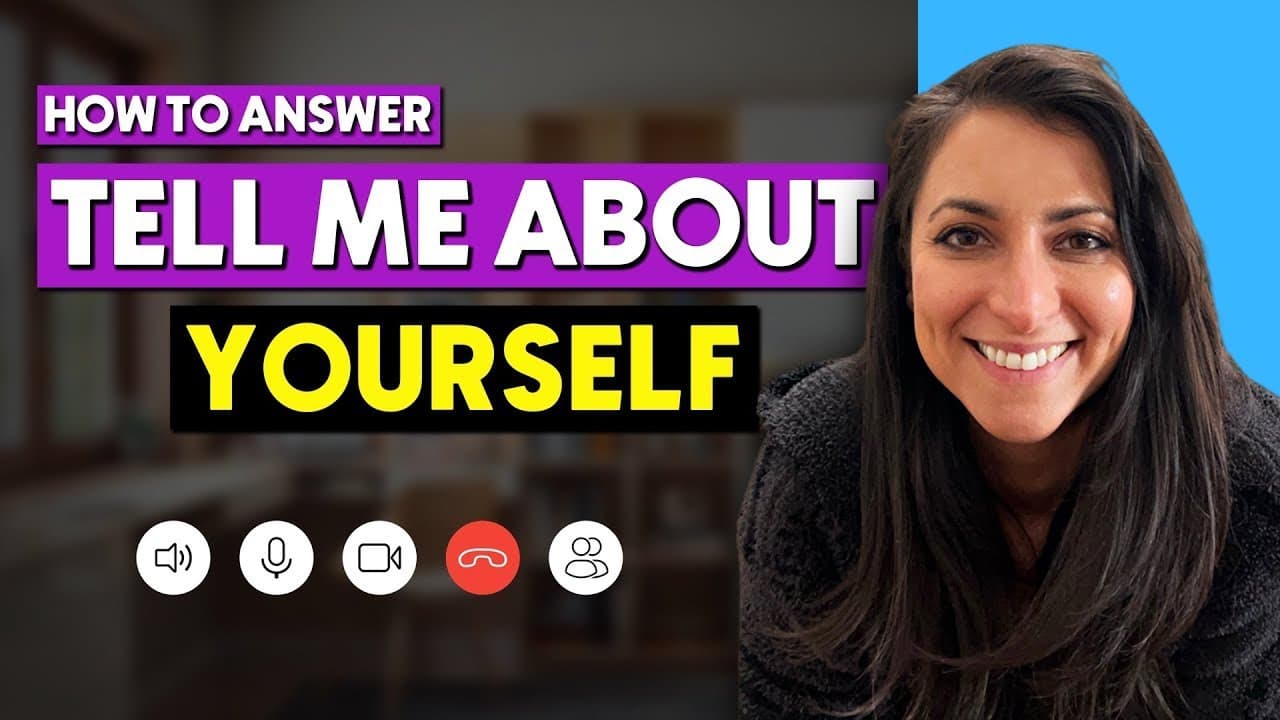
How to Answer Tell Me About Yourself in Interviews
TL;DR
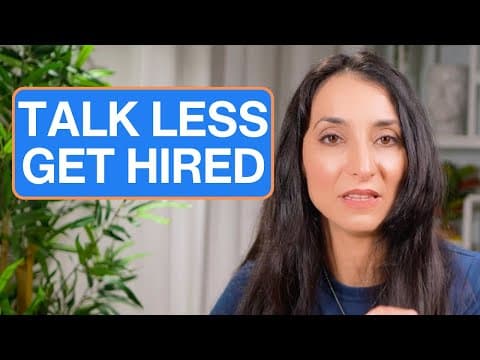
Build your answer around the employer’s needs, using a concise professional introduction, relevant past accomplishments, and one sentence about why the role fits your future. Then ask what the interviewer most wants to learn about you and remain silent, giving them time to identify the information most relevant to the position.
Transcript
a Harvard Business Review study found that 72 percent of candidates who did not receive a job offer failed to make a great impression so if only 28 of people get job offers how do they do it when you go for a job interview most of the time the first question they will ask you is tell me about yourself and your answer will set the tone for how the r... Read More
Key Insights
- The purpose of the opening question is to establish why you are a good fit for the position, not to collect unrelated personal history. A useful answer therefore focuses on professional capabilities, relevant experience, and the business problems the employer needs solved.
- A job description is a list of problems the business expects its new employee to solve. Reading each responsibility from a business owner’s perspective helps reveal why the work matters, how weak performance could hurt the company, and what evidence the interviewer needs from you.
- Relevant accomplishments are more persuasive when they are explicitly connected to the position. Interviewers may not value a project simply because the candidate is proud of it, so candidates should explain how their previous work demonstrates the skills required by the prospective employer.
- Candidates without direct experience can describe how they would approach the role’s problems. A clear explanation of the methods they would use can demonstrate listening, communication, judgment, and an understanding of what the business needs from the person it hires.
- A professional log line is a one or two sentence introduction modeled on a concise movie summary. Its first sentence describes you as a professional, while its second sentence identifies the qualities or experience that make you particularly suitable for the available role.
- The past portion of the answer should contain two or three sentences connecting previous responsibilities or results to the target job. Specific outcomes, such as increased followers by 20 percent and engagement by 30 percent, can show how past performance supports present suitability.
- The future portion of the answer is one sentence explaining why the opportunity represents an appropriate next career step. It should communicate genuine interest while completing a coherent progression from professional identity, through relevant experience, to the direction the candidate wants to pursue.
- The closing question asks the interviewer what they most want to learn about the candidate during the limited interview time. After asking it, the candidate should remain silent, allowing the interviewer to process the unexpected question and identify the information most relevant to the position.
- More videos from this channel:
- More from this channel: Farah Sharghi
Install to Summarize YouTube Videos and Get Transcripts
Explore YouTube Video Summarizer or Get YouTube Transcript Extractor
Questions & Answers
Q: How should I answer Tell me about yourself in an interview?
Answer with a three-part structure: a professional log line, relevant past experience, and your desired future direction. Begin with about two sentences describing your professional identity and distinguishing value. Follow with two or three sentences connecting prior responsibilities or results to the target role. Finish with one sentence explaining why the position is the right next step in your career.
Q: What does an interviewer want to hear when asking about me?
The interviewer primarily wants to understand why you would be a good fit for the job. Focus on the experiences, abilities, and working methods that address the employer’s needs. Personal details such as where you were born, conflicts with a neighbor, or recreational preferences are not relevant unless they directly help establish your suitability for the position.
Q: How can I use a job description to prepare my answer?
Read every responsibility in the job description as a problem the company needs someone to solve. Ask what could happen to customers, revenue, or operations if that work is handled poorly. Then review your work history for evidence that you have solved comparable problems, and build statements that directly connect that evidence to the advertised responsibilities.
Q: What is a professional log line for a job interview?
A professional log line is a concise introduction based on the Hollywood idea of summarizing a story in one or two sentences. The first sentence states who you are professionally. The second identifies what makes you distinctive and suitable for the job. It should be brief, meaningful, and tailored to the qualities the employer is seeking.
Q: How should I discuss past experience in my introduction?
Choose two or three sentences about previous work that directly relates to the position you want. Describe a responsibility, action, or measurable result, then state why that experience supports your candidacy. For example, the transcript’s marketing answer cites a social media strategy that increased followers by 20 percent and engagement by 30 percent before connecting those results to the new role.
Q: How can I answer when I lack direct experience for the role?
Explain how you would approach the problems identified in the job description, using relevant methods and transferable abilities from your background. Show that you understand what the business needs and can reason through an appropriate response. Clearly describing your approach can demonstrate that you listen carefully, communicate effectively, and can work with different people in a professional setting.
Q: What should I say about my future career plans?
Use one sentence to explain why the role is a suitable next step in your career journey. Connect the opportunity to the professional direction you want to pursue without turning the response into an extended personal history. The transcript’s marketing example says the candidate wants to further a marketing career and believes that the position is the right next step.
Q: What question should I ask after introducing myself?
Say that you are excited to share more, then ask what the interviewer would most like to learn about you so you can provide information relevant to the position during the limited time available. After asking, remain silent and let the interviewer process it. They may identify a priority area, or they may decline and continue with their planned questions.
Summary & Key Takeaways
-
Treat each responsibility in the job description as a business problem that the employer needs the successful candidate to solve. Examine why that responsibility matters, identify the possible consequences of poor performance, and connect your skills or approach directly to the employer’s underlying need instead of merely listing accomplishments.
-
Structure your response in three parts: a two-sentence professional log line, a short account of relevant past experience, and a one-sentence future statement. The introduction should identify your professional value and distinguishing qualities, while the past section should provide evidence that directly supports your suitability for the advertised position.
-
After explaining why the position is a suitable next step, ask the interviewer what they would most like to learn about you during the limited time available. Stay silent while they process and answer the question. Their response can reveal which experience or capability you should emphasize throughout the remaining interview.
Read in Other Languages (beta)
Share This Summary 📚
Summarize YouTube Videos and Get Video Transcripts with 1-Click
Try YouTube Summary with ChatGPT & Claude or YouTube Transcript Generator
Explore More Summaries from Farah Sharghi 📚


Summarize YouTube Videos and Get Video Transcripts with 1-Click
Try YouTube Summary with ChatGPT & Claude or YouTube Transcript Generator