How to Get Promoted by Focusing on Visible Impact

TL;DR
Career advancement depends less on doing every task and more on delivering visible, memorable impact. Protect your time, communicate completed work, concentrate exceptional effort on one important project, build relationships across teams, and present your own results so decision-makers can connect your name with the value you created.
Transcript
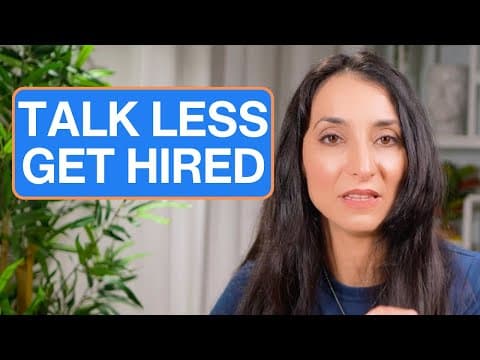
Here's why lazy people get promoted over you. Now, I've been in the rooms where these decisions get made, and these are the five things that look lazy, but are actually the reason that people get ahead. Number one, they say no. You know, the person who turns things down, they push back. They say, "That's not my priority right now." And everyone thi... Read More
Key Insights
- Strategic refusal is a career skill because accepting every request can bury an employee in work that senior decision-makers never see. The transcript recommends protecting time by asking whether a manager’s manager is likely to hear about an assignment before agreeing to it.
- Reliability is not presented as sufficient for promotion because it can identify someone as dependable without demonstrating higher-level judgment. In calibration discussions, being selective about where energy goes creates a stronger narrative of strategic thinking and makes important contributions easier for a manager to defend.
- Leaving on time can signal efficiency when an employee consistently delivers clear results. The suggested experiment is to leave on time for one week while sending a two-sentence morning update that names yesterday’s completed work and today’s priority.
- Frequent overtime can create an unintended perception that an employee needs more time to complete the same work. The transcript argues that visible delivery and concise communication contribute more to professional reputation than remaining at a desk for three additional hours.
- Focused excellence creates memorable impact because promotion committees may forget a list of eight accomplishments but remember one important project. Employees should identify a project capable of attracting attention two levels above them and give that work their strongest effort.
- Adequate execution is appropriate for lower-impact responsibilities when those tasks can bend without breaking. The transcript recommends allowing some work to be a B minus instead of an A, or to arrive Tuesday instead of Monday, so exceptional effort remains available for the most consequential project.
- Cross-team relationships strengthen promotion cases because other leaders can validate a candidate during calibration. A practical step is to invite one person at the manager’s level or above to a 15-minute coffee conversation about how that person’s team approached a project.
- Self-advocacy preserves earned credit because decision-makers evaluate who drove an impact through the story presented to them. Employees should write summaries, send leadership updates, and present their own results rather than expecting completed work to speak for itself in promotion discussions.
- More videos from this channel:
- More from this channel: Farah Sharghi
Install to Summarize YouTube Videos and Get Transcripts
Explore YouTube Video Summarizer or Get YouTube Transcript Extractor
Questions & Answers
Q: How can saying no help an employee get promoted?
Saying no can protect time for assignments that create visible, strategically important results. According to the transcript, promotion committees do not reward people simply for accepting everything. A manager needs recognizable evidence to support a candidate, so employees should ask whether the manager’s manager will hear about a task and prioritize accordingly while still handling essential responsibilities.
Q: Why does reliability alone not guarantee a promotion?
Reliability shows that an employee can consistently complete assigned work, but the transcript distinguishes dependability from strategic judgment. Someone who accepts every request may become overloaded with low-visibility tasks that provide little evidence for advancement. A stronger promotion case shows deliberate allocation of energy toward work that produces important, memorable results senior leaders can recognize and discuss.
Q: Can leaving work on time improve professional reputation?
Leaving on time can improve professional reputation when it is paired with dependable delivery and clear communication. The transcript recommends trying it for one week and sending a two-sentence update each morning that identifies completed work and the current priority. This approach makes output visible and shows that the employee can deliver results without relying on routine overtime.
Q: Why can working late hurt a promotion case?
Working late every night may be interpreted as needing extra time to produce the same work rather than as exceptional dedication. The transcript argues that staying at a desk is a performance for an audience that may not be watching. Clear accomplishments and short progress updates give a manager more useful evidence of efficiency, ownership, and readiness for greater responsibility.
Q: How should employees choose a project to prioritize?
Employees should choose a project important enough that someone two levels above them could recognize both the result and the person responsible. The transcript advises giving that project exceptional effort while completing less consequential responsibilities adequately. The goal is not to abandon necessary work, but to create one memorable contribution that clearly demonstrates impact beyond a routine checklist.
Q: Why is one exceptional project better than many good tasks?
One exceptional project can be easier for a promotion committee to remember and discuss than a long list of unrelated accomplishments. The transcript describes a calibration meeting where eight achievements failed to stick, while one clearly named project did. Concentrated effort creates a simple impact story that a manager can communicate and other leaders can associate with the candidate.
Q: How does networking across teams support promotion?
Cross-team relationships give other leaders enough direct experience to endorse an employee during promotion discussions. The transcript describes a strong candidate whose case stalled because nobody else had worked with that person, while another candidate received immediate support from colleagues. A suggested first step is requesting a 15-minute coffee with someone at the manager’s level or above.
Q: How can employees claim credit without stealing it?
Employees can preserve appropriate credit by writing their own summaries, sending their own updates, and presenting their own results. The transcript emphasizes that this is not permission to take another person’s work. It is a way to ensure the employee’s name remains attached to genuine contributions when leaders discuss who drove the impact and deserves advancement.
Summary & Key Takeaways
-
Promotion decisions favor strategic, visible contributions over indiscriminate effort. Saying no to low-priority assignments protects time for work that senior leaders will notice. Employees should consider whether an assignment supports a compelling promotion case, then direct their strongest effort toward projects that create recognizable impact rather than merely demonstrating reliability.
-
Long hours and constant multitasking do not automatically strengthen a promotion case. Leaving on time can signal efficiency when paired with clear delivery and concise progress updates. Similarly, one exceptional project may be more memorable in a calibration meeting than numerous solid accomplishments, so less consequential tasks can sometimes receive adequate rather than perfect execution.
-
Cross-team relationships and ownership of communication make accomplishments easier for decision-makers to recognize. Colleagues who can personally endorse a candidate strengthen that person’s case, while employees who summarize, update, and present their own results retain appropriate credit. Hard work cannot support advancement effectively if its story never reaches the promotion room.
Read in Other Languages (beta)
Share This Summary 📚
Summarize YouTube Videos and Get Video Transcripts with 1-Click
Try YouTube Summary with ChatGPT & Claude or YouTube Transcript Generator
Explore More Summaries from Farah Sharghi 📚





Summarize YouTube Videos and Get Video Transcripts with 1-Click
Try YouTube Summary with ChatGPT & Claude or YouTube Transcript Generator