How to Write a Résumé That Gets More Interviews
TL;DR
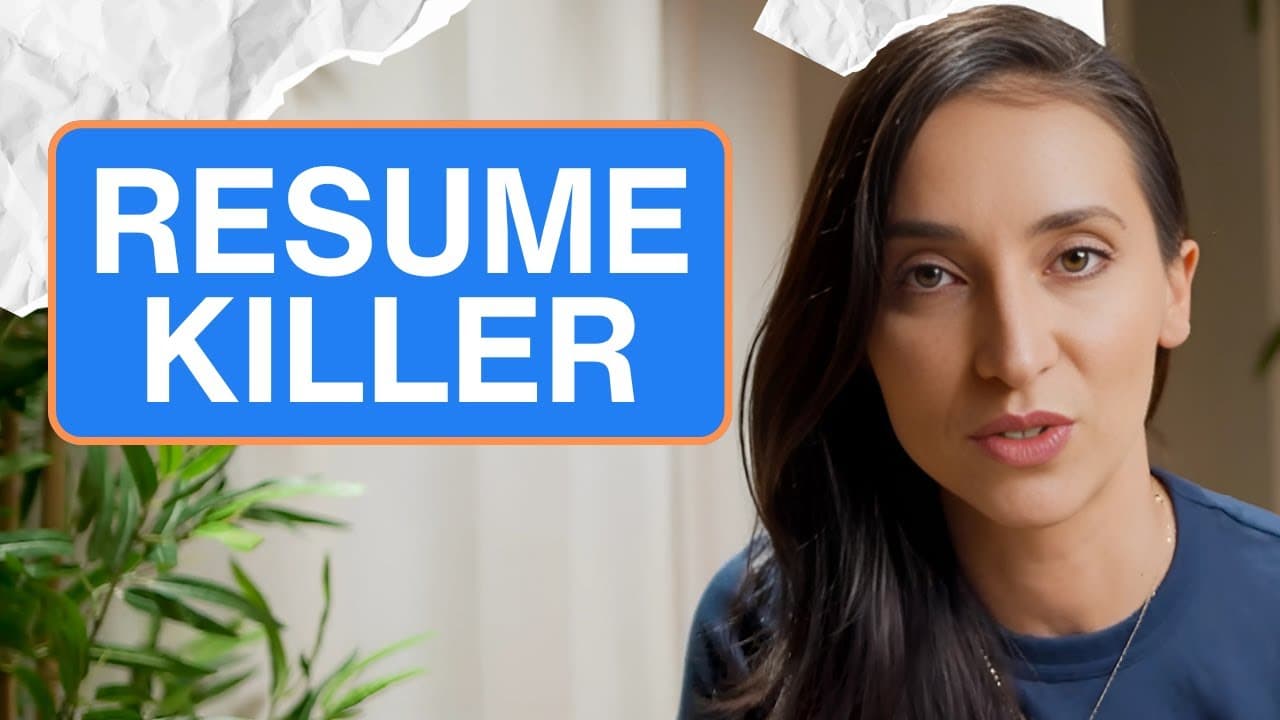
A strong résumé makes you look like a safe, proven hire by presenting recent, relevant results in language the employer recognizes. Explain potential concerns briefly, begin bullets with ownership verbs, prioritize the last 5 to 7 years, and balance technical credibility, business impact, and leadership so recruiters can quickly understand the value you offer.
Transcript
You've applied to hundreds of jobs. You tweak your resume, rewrite the bullet points, fix the format, but still nothing. And at some point, you stop thinking about the resume, and you start wondering if you're the problem. The real reason you're getting ghosted is because of mistakes almost everybody makes. And no one tells you about it. So, in thi... Read More
Key Insights
- Hiring managers want a safe pair of hands who can solve problems without adding work or risk. Résumé bullets should demonstrate that the applicant has performed similar work before by presenting recent, relevant actions and clear outcomes rather than vague responsibilities, buzzwords, or disconnected tasks.
- Unexplained résumé concerns create risk because recruiters do not have time to investigate ambiguity. A career gap, short position, pivot, or unusual transition should receive brief, factual context that makes the situation understandable without oversharing personal details or turning the résumé into a lengthy explanation.
- Transferable skills require translation into the target employer's language and business priorities. Applicants moving between roles or industries should scan the job description, mirror its recognizable terminology, and rewrite internal jargon as clear outcomes so recruiters can connect previous experience with the position being filled.
- The opening verb of each bullet influences how senior an applicant appears. Words such as led, spearheaded, drove, launched, and owned communicate responsibility, while phrases such as helped, supported, or worked on can make someone appear to have participated without directing the work.
- A résumé is a signal of present relevance, not a complete life story. Giving equal space to recent work and positions from many years earlier can bury the evidence recruiters need, so the strongest detail should focus on accomplishments from the last 5 to 7 years.
- Older experience should be condensed to two or three relevant bullets when it reinforces the applicant's current direction or fits the target job. Removing unrelated detail reduces noise and makes the evidence most useful to the hiring manager easier to find during a quick résumé scan.
- Strong résumés balance technical credibility, business impact, and leadership. Technical detail alone can suggest execution without direction, while strategy without evidence of hands-on delivery can sound insubstantial. Showing all three dimensions presents a more complete picture of how the applicant creates value.
- Specific results make résumé claims clearer and safer for recruiters to evaluate. Examples in the transcript include cutting operating costs by 15%, reducing delay time by 30%, improving delivery scores by 12%, and cutting infrastructure costs by 25%, each tied to a concrete action.
Install to Summarize YouTube Videos and Get Transcripts
Explore YouTube Video Summarizer or Get YouTube Transcript Extractor
Questions & Answers
Q: How can I make my résumé look safer to hiring managers?
Make every bullet show that you have already solved a problem similar to the one the employer faces. Use recent and relevant examples, explain the action you personally took, and state the result clearly. A line such as cutting operating costs by 15% through streamlined vendor contracts is more reassuring than saying you handled various operational duties because it demonstrates specific, repeatable value.
Q: How should I explain a short job or career gap on my résumé?
Add a brief, factual explanation directly where recruiters will see the concern. A short position can note that it was affected by departmental reorganization, while a career break can identify family caregiving responsibilities and confirm current full-time availability. The goal is not to disclose every personal detail. It is to remove ambiguity before a recruiter creates an inaccurate explanation.
Q: How do I show transferable skills when changing industries?
Translate previous experience into the terminology and business priorities used in the target job description. Recruiters look for signals they recognize and generally do not spend time decoding a candidate's potential. Replace internal jargon and meeting-focused descriptions with the problem addressed, the scope of responsibility, and the measurable outcome, such as reduced delays or improved team delivery scores.
Q: Which action verbs make a résumé sound more senior?
Verbs such as led, spearheaded, drove, launched, and owned signal responsibility and make the applicant appear to have directed the work. By contrast, helped, supported, and worked on can suggest a secondary role. The verb should still accurately describe the applicant's contribution, then be followed by context and an outcome that proves what the ownership produced.
Q: How many years of experience should a résumé emphasize?
The résumé should place its sharpest and most detailed evidence within the most recent 5 to 7 years because that period serves as the main proving ground for current relevance. Older positions do not need equal space. Condense them to two or three relevant bullets only when they reinforce the work you do now or directly support the requirements of the target role.
Q: Why do vague résumé bullets lead to rejection?
Vague bullets force recruiters to determine what the applicant actually did, why the work mattered, and whether it produced a useful result. Recruiters screening large numbers of résumés do not have time to investigate that uncertainty. Clear bullets lower perceived risk by identifying the action, providing relevant context, and showing a concrete outcome that could potentially be repeated for the new employer.
Q: What three strengths should a strong résumé demonstrate?
A strong résumé should demonstrate technical credibility, business impact, and leadership. Technical credibility shows that the applicant can perform the work, business impact connects that work to meaningful results, and leadership shows direction or ownership. Presenting only technical detail can make someone look like a builder without direction, while presenting strategy without execution can make the claims seem insubstantial.
Q: How can I add measurable impact to résumé bullets?
Connect a specific action to a concrete result found in your own work history. The transcript's examples include reducing operating costs by 15%, cutting delay time by 30%, improving delivery scores by 12%, lowering infrastructure costs by 25%, and developing a Python tool used by more than 900 engineers that saved $2 million annually. The number should clarify the value of the action.
Summary & Key Takeaways
-
Hiring managers favor candidates who appear able to solve existing problems without creating additional work. Each résumé bullet should therefore demonstrate recent, relevant, and clearly measured results. Replacing vague responsibilities with specific actions and outcomes helps recruiters see that the applicant has already performed comparable work and can likely repeat that success.
-
Recruiters have limited time and will not investigate unexplained gaps, short positions, career pivots, or unusual transitions. Brief context can prevent them from assuming the worst. Applicants changing industries should also translate their experience into the language and priorities of the target job instead of expecting recruiters to decode transferable skills.
-
A résumé should emphasize relevance rather than document an entire career equally. The last 5 to 7 years deserve the greatest detail, while older roles should receive only two or three relevant bullets when useful. Strong applications also balance technical credibility, business impact, and leadership to demonstrate both execution and direction.
Read in Other Languages (beta)
Share This Summary 📚
Summarize YouTube Videos and Get Video Transcripts with 1-Click
Try YouTube Summary with ChatGPT & Claude or YouTube Transcript Generator
Explore More Summaries from Farah Sharghi 📚
Summarize YouTube Videos and Get Video Transcripts with 1-Click
Try YouTube Summary with ChatGPT & Claude or YouTube Transcript Generator