How to Get Hired When You Have Experience
TL;DR
Improve your hiring chances by presenting yourself as dependable, targeting roles that match your qualifications, tailoring your resume, and supporting interview answers with specific examples. Build professional rapport, ask relevant questions, avoid criticizing former employers, and follow the recruiter’s guidance on timing, follow-ups, and thank-you notes while recognizing that some hiring decisions remain outside your control.
Transcript
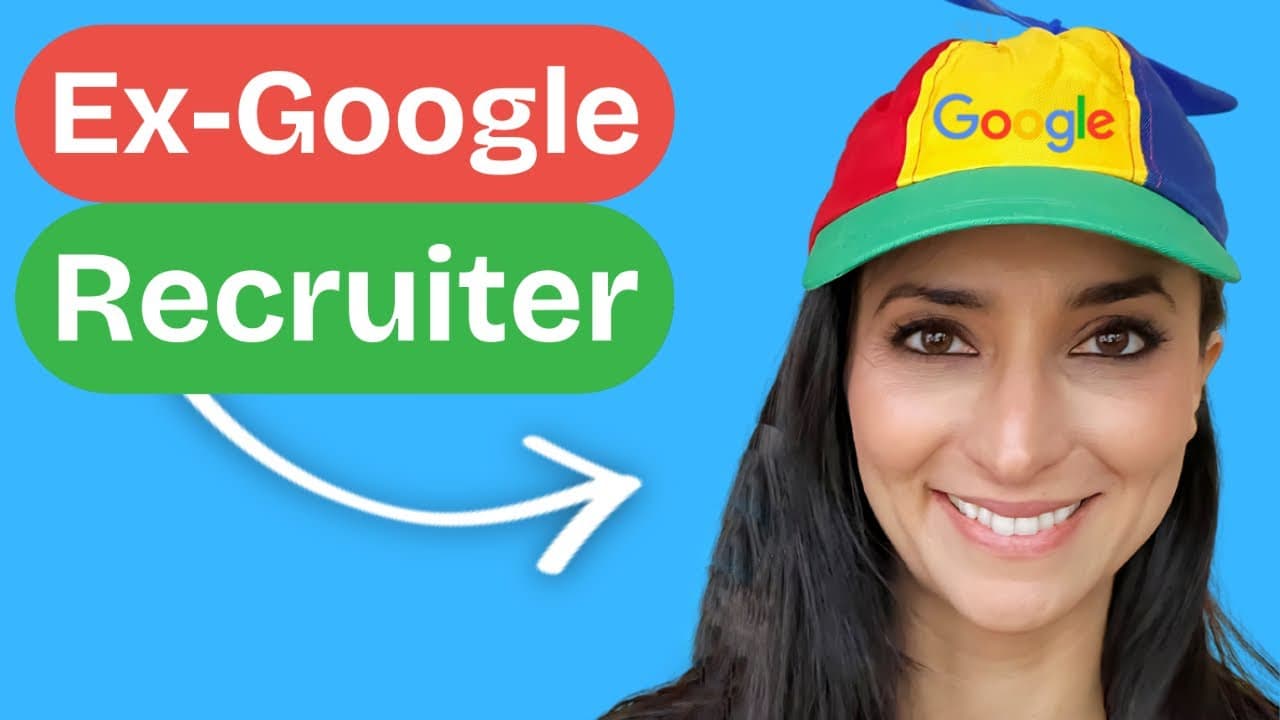
have you ever wondered why you're not getting a job even though you're qualified to do the job sometimes it just takes a shift in perspective over the past decade I've worked as a professional recruiter and career coach for companies like Google Lyft Uber and Tik Tok and I've seen firsthand a lot of the mistakes that job Seekers make so today I'm g... Read More
Key Insights
- Hiring decisions are partly assessments of risk, because employers want candidates who can work well with existing teams, remain dependable, and avoid creating unnecessary problems. Presenting evidence of stability, reliability, commitment, and professional judgment can therefore improve a qualified candidate’s chances of receiving an offer.
- A clear job search strategy is necessary because applying without defined goals resembles traveling without a destination. Candidates should decide which industries and roles they are targeting, define their career goals, tailor their resumes accordingly, and follow a deliberate route toward those specific opportunities.
- Qualification alignment increases the likelihood of progress in a hiring process. Applying broadly to positions that do not match a candidate’s skills and background can consume time without producing results, while focusing on suitable roles gives employers a clearer reason to consider the application.
- A resume should connect prior experience directly to the position being pursued. If repeated applications generate no employer interest, the document may need updating so that it highlights relevant accomplishments, responsibilities, and qualifications in terms that clearly support the targeted role.
- Interview rapport matters alongside technical or professional qualifications. Employers value candidates who appear easy to work with and compatible with the team, so applicants should be personable while maintaining a professional demeanor, including avoiding profanity even when an interviewer behaves casually or seems friendly.
- Authentic interview answers stand out more effectively than memorized generic responses. A candidate discussing a genuine weakness, such as time management, should also explain the actions taken to improve it, demonstrating self-awareness, honesty, and an ability to address personal development needs.
- Specific examples make interview claims credible and complete. The situation, task, action, result framework gives candidates a structure for explaining the context, their responsibility, the steps they personally took, and the outcome, instead of offering unsupported or vague statements.
- Some hiring outcomes are outside the candidate’s control, even after an excellent resume and interview process. A company may lose headcount or reorganize a team, but a strong impression can still lead recruiters, hiring managers, or interviewers to contact the candidate about later opportunities.
- More videos from this channel:
- More from this channel: Farah Sharghi
Install to Summarize YouTube Videos and Get Transcripts
Explore YouTube Video Summarizer or Get YouTube Transcript Extractor
Questions & Answers
Q: Why am I not getting hired even though I have experience?
Experience alone does not eliminate an employer’s concerns about fit, reliability, commitment, or professional behavior. A candidate may also be targeting unsuitable roles, using a resume that does not connect prior experience to the position, or giving vague interview answers without examples. Improving strategy, qualification alignment, resume relevance, rapport, and evidence-based answers can increase the chance of moving forward.
Q: How can I create a clear job search strategy?
Begin by defining the industries you want to enter, the specific jobs you are targeting, and the career goals those roles support. Then plan a route toward those goals instead of applying without direction. Focus on suitable openings, tailor your resume to each target role, and make every application part of a consistent strategy rather than an isolated attempt.
Q: How do I choose which jobs to apply for?
Prioritize jobs that match your existing skill set, professional background, and qualifications. Applying to positions that do not fit is compared to trying several keys that cannot unlock a door, which creates frustration and consumes time. Better alignment helps employers understand why you belong in the role and improves your chances of advancing through the hiring process.
Q: How should I tailor my resume for a job application?
Your resume should highlight prior experience and explain how that experience relates to the job you are pursuing. Adjust its emphasis to match your defined career goals and the requirements of the targeted role. If you have sent many applications without receiving interest, treat that pattern as a reason to update the resume and make its relevance clearer.
Q: How can I give authentic answers during an interview?
Use common interview guidance only as a foundation, then build an answer around your actual experience and circumstances. For a weakness question, identify a genuine area such as time management and explain what you have done to improve it. This approach demonstrates self-awareness and sounds more distinctive than repeating a generic answer such as perfectionism.
Q: How should I use the STAR framework in an interview?
Use the STAR framework to organize a concrete example into situation, task, action, and result. Describe the circumstances, identify what you were responsible for, explain the actions you took, and state the resulting outcome. This structure helps prevent vague answers and gives the interviewer evidence supporting your claims about skills, judgment, and past performance.
Q: What questions should I ask at the end of an interview?
Choose questions that fit the person interviewing you. A hiring manager can discuss challenges facing the team and projects the team has worked on. A recruiter can appropriately answer questions about the benefits package. Asking relevant questions demonstrates engagement while also helping you gather information from the person best positioned to provide an accurate answer.
Q: What should I do after a job interview?
Ask the recruiter when you should expect an answer, then follow up after that stated time has passed. Because thank-you notes are expected in some industries but not others, ask the recruiter whether you should send a thank-you email. Following their guidance keeps your communication appropriate while allowing you to remain professionally engaged with the hiring process.
Summary & Key Takeaways
-
Employers evaluate risk as well as qualifications, so candidates should demonstrate stability, reliability, professionalism, and an ability to work well with the existing team. Outside ambitions, frequent interview rescheduling, unprofessional language, or signs that someone may leave quickly can create concerns about commitment and make an otherwise qualified applicant less attractive.
-
A focused job search begins with defined career goals, selected industries, and clearly targeted roles. Candidates should apply where their skills and background fit the requirements, then tailor their resumes to show how previous experience relates to each position. Repeated silence from employers can indicate that the resume needs substantial updating.
-
Strong interviews combine rapport, authentic answers, and evidence. Candidates should expand beyond generic responses, discuss genuine weaknesses alongside steps taken to improve, and use the situation, task, action, result framework when providing examples. They should also ask role-appropriate questions, remain positive about former employers, and clarify follow-up expectations with the recruiter.
Read in Other Languages (beta)
Share This Summary 📚
Summarize YouTube Videos and Get Video Transcripts with 1-Click
Try YouTube Summary with ChatGPT & Claude or YouTube Transcript Generator
Explore More Summaries from Farah Sharghi 📚


Summarize YouTube Videos and Get Video Transcripts with 1-Click
Try YouTube Summary with ChatGPT & Claude or YouTube Transcript Generator