Why Do We Get Offended by Small Comments?
TL;DR
Offense often arises when a comment threatens a valued part of your identity, causing your self-concept to narrow around the perceived criticism. Reactions become stronger when your identity rests on one pillar, the criticism echoes an existing fear, or an ambiguous remark is interpreted as deliberate disrespect. Building a broader sense of self can reduce the power any single judgment holds.
Transcript
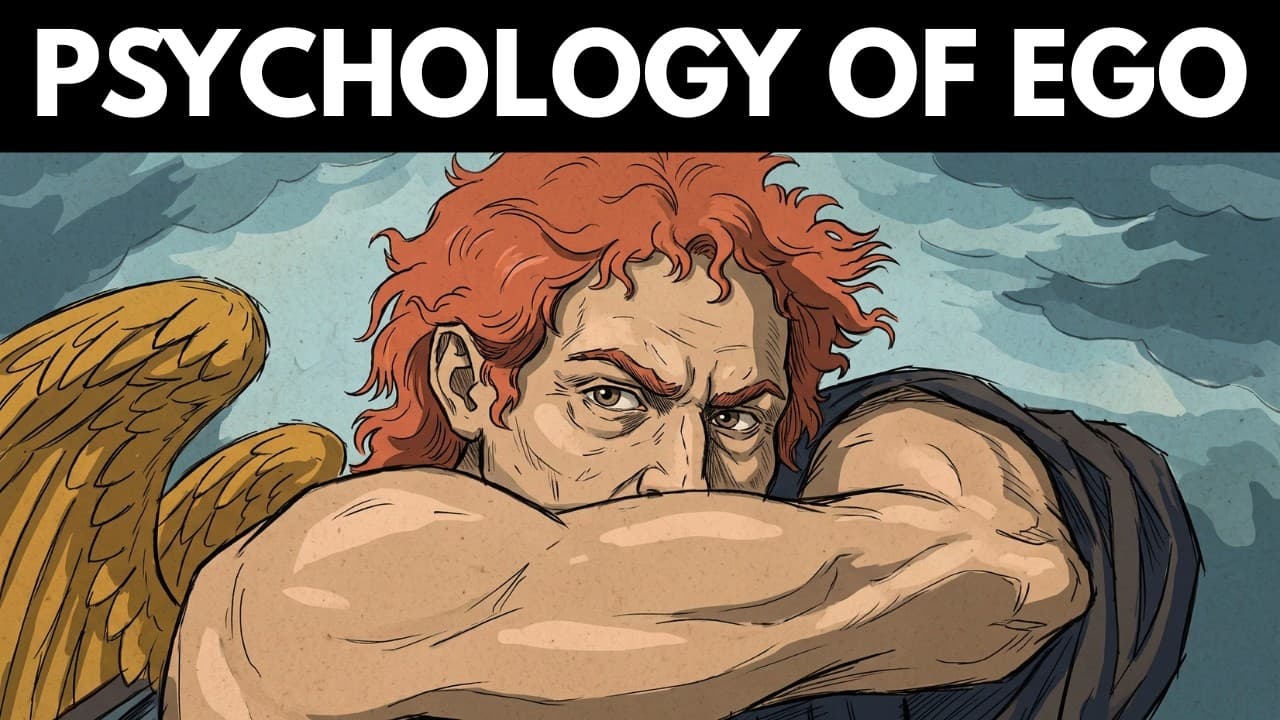
There is a 2-second delay hidden inside the psychology of ego, and once you notice it, you finally understand why we get offended so easily. Someone says one sentence to you. It isn't even an insult. It's just a comment. "Oh, you're still at that job?" or "Huh, I figured you'd finished by now." And for about 2 seconds, nothing happens on the outsid... Read More
Key Insights
- Threatened egotism is the defensive reaction that occurs when a favorable opinion of oneself is challenged. The research described in the video found that self-esteem alone did not predict retaliation, while a positive self-view combined with an ego threat did.
- Self-esteem is described by sociometer theory as a gauge of perceived social value rather than a personal trophy. A critical remark can therefore trigger an older concern about whether one's standing within a group has fallen, even before its accuracy is evaluated.
- The working self-concept can constrict when identity feels threatened. Other accomplishments, relationships, abilities, and qualities become temporarily less accessible, while the criticized feature dominates attention and makes accepting even a small part of the feedback feel like total surrender.
- A stranger's judgment can affect mood because the social gauge does not first verify the speaker's credibility. A brief signal of devaluation may register emotionally even when it comes from someone whose advice, knowledge, or character would never otherwise be taken seriously.
- An insult hurts most where it connects with an existing private suspicion. Criticism about an irrelevant ability may be harmless, while a familiar accusation can linger because it appears to confirm a fear that the recipient has not resolved internally.
- Hostile attribution bias is the tendency to interpret ambiguous behavior as intentional hostility. When hurt is reframed as disrespect, attack, or a violated principle, retaliation can feel like justice, making it harder to distinguish between genuinely being wronged and merely feeling wounded.
- A narrow identity makes each criticism proportionally more damaging. When being intelligent, reliable, calm, or self-sufficient becomes the only protected pillar, situations that challenge that identity can feel dangerous and encourage bluffing, avoidance, or concealment.
- Offense functions like an alarm mounted on the boundaries of identity. The intensity of the reaction reveals what the person has placed inside those boundaries and how closely their sense of worth is tied to the particular quality or role being touched.
Install to Summarize YouTube Videos and Get Transcripts
Explore YouTube Video Summarizer or Get YouTube Transcript Extractor
Questions & Answers
Q: Why do small comments offend people so easily?
Small comments can feel large when they touch a quality that a person treats as central to identity. In the moment of threat, the working self-concept may constrict, pushing other strengths, roles, relationships, and achievements out of attention. The criticized feature then appears to represent the whole person, so a limited remark feels like a judgment of total worth.
Q: What is threatened egotism in psychology?
Threatened egotism is the defensive response produced when a favorable self-view is challenged. The research discussed in the video measured self-esteem, exposed people to criticism of their writing, and allowed retaliation. Self-esteem itself did not predict the response. Retaliation was instead associated with holding a positive view of oneself and then experiencing a blow to that view.
Q: How does sociometer theory explain feeling offended?
Sociometer theory describes self-esteem as a real-time gauge of how much a person appears to be valued by others. A dismissive remark can move that gauge because it signals possible rejection or reduced social standing. The system responds before asking whether the speaker is correct or credible, which helps explain why even a stranger's opinion can disrupt someone's mood.
Q: Why does criticism make one mistake feel overwhelming?
Criticism can cause the working self-concept to narrow around the threatened area. A person receiving one correction on a large project may temporarily forget years of experience, supportive relationships, and unrelated abilities. Because only the criticized part feels mentally available, agreeing with a small portion of the feedback can feel equivalent to accepting a complete negative judgment of the self.
Q: Why do some insults hurt while others do not?
An insult tends to hurt when it matches an unresolved suspicion already held by the recipient. A criticism involving something irrelevant, such as an ability the person does not value, may produce no reaction. A familiar accusation can linger because it seems to provide outside confirmation of an internal fear. Strong reactions can therefore identify areas of unfinished personal uncertainty.
Q: How does hostile attribution bias intensify offense?
Hostile attribution bias turns an ambiguous or careless remark into evidence of deliberate harmful intent. Once a person concludes that the speaker meant to disrespect or attack them, retaliation can feel morally justified rather than defensive. Reframing personal hurt as the defense of a principle also makes vulnerability less visible, but it can prevent honest evaluation of what actually happened.
Q: Why is building an identity around one trait risky?
A one-pillar identity gives every challenge to that trait disproportionate power. Someone defined mainly by intelligence may avoid admitting ignorance, while someone defined by reliability may conceal exhaustion or need. Protecting the pillar can gradually narrow life because learning, experimentation, openness, and imperfection become threatening. A broader identity reduces the percentage of the self affected by any single criticism.
Q: What can reactions to offense reveal about identity?
Reactions to offense can reveal which roles, traits, reputations, or relationships a person has placed inside the boundaries of the self. The strongest flare-ups often occur where identity feels narrow or uncertain. Instead of treating every reaction only as proof of another person's cruelty, examining what felt threatened can expose private doubts, inherited standards, and areas that remain unsettled.
Summary & Key Takeaways
-
Offense is presented as an alarm protecting the qualities, roles, relationships, and reputations a person considers part of the self. Threatened egotism suggests retaliation is associated not simply with low self-esteem, but with a favorable self-image being challenged by criticism, rejection, or an apparent loss of social standing.
-
Sociometer theory describes self-esteem as a gauge of perceived social value. Because rejection can move this gauge more sharply than acceptance, even an unqualified stranger's comment may feel consequential. The reaction evaluates possible devaluation before considering whether the speaker is credible, correct, informed, or personally important.
-
Under threat, the working self-concept can constrict until the criticized trait temporarily feels like the whole identity. Offense becomes especially intense when it confirms a private doubt, is reframed as principled outrage, or threatens a single identity pillar. A broader identity makes individual criticisms proportionally less damaging.
Read in Other Languages (beta)
Share This Summary 📚
Summarize YouTube Videos and Get Video Transcripts with 1-Click
Try YouTube Summary with ChatGPT & Claude or YouTube Transcript Generator
Explore More Summaries from PsychToons 📚


Summarize YouTube Videos and Get Video Transcripts with 1-Click
Try YouTube Summary with ChatGPT & Claude or YouTube Transcript Generator