How to Rest Properly and Recover From Work
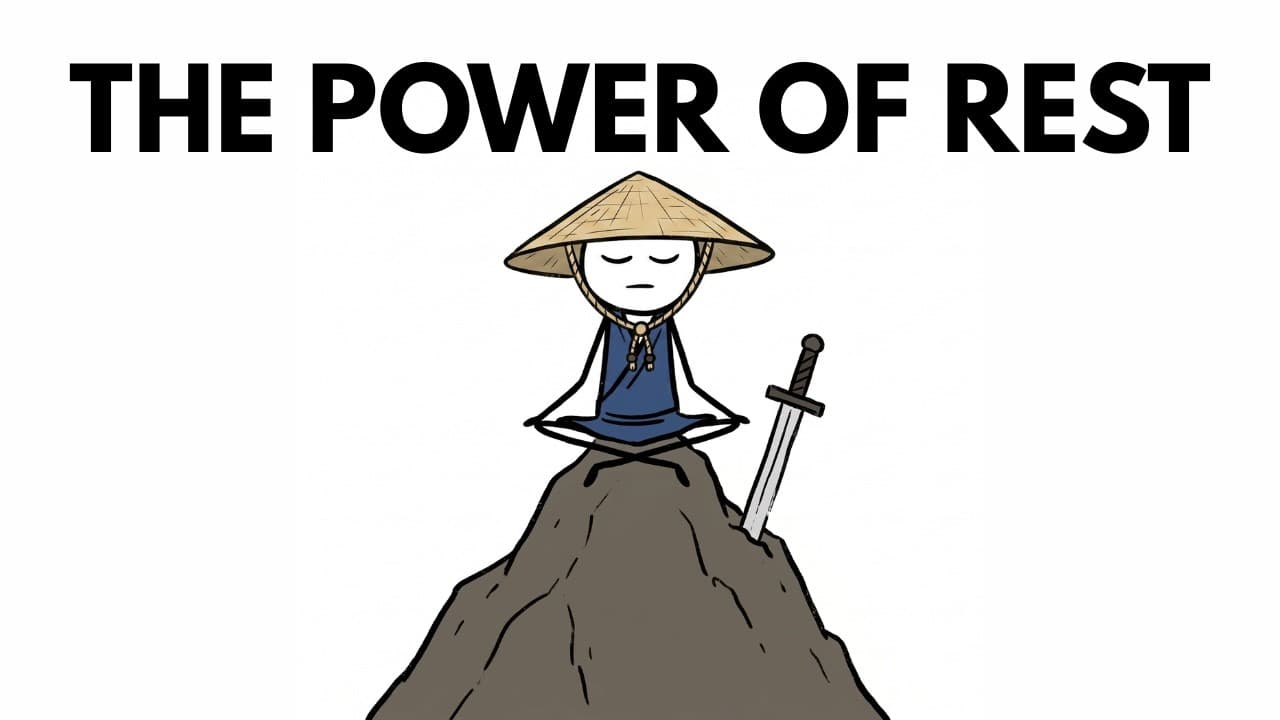
TL;DR
Effective recovery requires psychological detachment, relaxation, mastery, and control, not merely time away from work. Rest works when your mind disengages, activation falls, you pursue an unmeasured challenge, and you choose how to spend your time. Frequent deliberate recovery is more dependable than relying on one annual vacation whose benefits may fade within weeks.
Transcript
You have stopped hundreds of times this year, but you have almost never recovered. Those are two completely different events, and your body has been keeping score even if you haven't. Here is what stopping looks like. You close the laptop at 7:00, you eat something, you put on a show, you scroll for a while, you go to bed late because the day never... Read More
Key Insights
- Stopping work is not the same as recovering because recovery occurs only when the mind and body return to baseline. A person can close a laptop in the evening while remaining mentally activated by unfinished tasks, imagined meetings, or messages until bedtime.
- Time away from work is a weak predictor of restoration because identical periods off can produce different outcomes. The decisive factor is the experience inside those hours, particularly whether the time provides psychological detachment, relaxation, mastery, and control.
- Psychological detachment is genuine mental disengagement from work rather than physical absence alone. Continuing to draft replies, replay the day, or anticipate future meetings keeps the work psychologically open and prevents off-hours from fully repaying the load created by effort.
- Relaxation is a state of low activation combined with low mental and physical effort. Stressful shows, news, and stimulating games may demand little effort while maintaining high activation, while involuntary collapse after prolonged overwork represents system failure rather than chosen, restorative relaxation.
- Mastery experiences are freely chosen activities that provide manageable challenge and a sense of improvement. Learning an instrument, cooking something unfamiliar, lifting, climbing, drawing, or practicing a language can restore what passive consumption does not, provided the activity is unmeasured and unrelated to work.
- Control is authorship over how, when, and where off-hours are spent. An evening, weekend, or holiday directed by messages, old obligations, group chats, or fixed itineraries may provide free time without the personal choice required for strong recovery.
- Allostatic load is the accumulated wear and tear created by repeatedly adapting to demands. The especially damaging pattern is failing to shut off the stress response after the stressor ends, leaving the system activated long after the actual work has stopped.
- Vacation benefits are real but modest and often fade within the first weeks after returning to work, with some measures reaching baseline during the first week. Banking most recovery into one annual break therefore leaves the rest of the year dependent on an effect that leaks away quickly.
Install to Summarize YouTube Videos and Get Transcripts
Explore YouTube Video Summarizer or Get YouTube Transcript Extractor
Questions & Answers
Q: How can I rest properly after work?
Proper rest after work should include psychological detachment, relaxation, mastery, and control. Mentally close work instead of continuing conversations or tasks in your head, choose something that lowers activation, spend some time on a freely chosen challenge unrelated to your job, and protect enough authorship over the evening to decide what happens and when.
Q: What are the four recovery experiences?
The four recovery experiences are psychological detachment, relaxation, mastery, and control. Detachment means mentally disengaging from work. Relaxation means allowing mental and physical activation to fall. Mastery comes from a modest, freely chosen challenge that creates improvement. Control means having meaningful choice over the schedule, timing, and activities within personal time.
Q: Why does time off sometimes fail to restore energy?
Time off can fail because stopping an activity does not guarantee that the mind and body return to baseline. Work may remain mentally open through unfinished replies, rehearsed meetings, or persistent worry. Free hours may also contain stimulating media, unwanted obligations, or little personal choice, preventing detachment, relaxation, mastery, and control from occurring.
Q: Why is scrolling not considered effective rest?
Scrolling fails as effective rest because it can interfere with both psychological detachment and relaxation. A continuous stream of other people's output, ambition, and timelines keeps the mind engaged in comparison and activity. Although scrolling requires little physical effort, it can maintain high activation and leave the mind busier than it was before the break began.
Q: How do mastery activities improve recovery?
Mastery activities provide a manageable challenge and a genuine sense of becoming better at something. Examples include learning an instrument, trying an unfamiliar recipe, lifting, climbing, drawing, or practicing a language. These activities can support recovery when they are freely chosen, unrelated to work, and performed without an audience, grading, or performance metrics.
Q: What does psychological detachment from work mean?
Psychological detachment means disengaging from work mentally as well as physically. Leaving the workplace or closing a laptop is insufficient if the mind continues drafting messages, replaying problems, or preparing for future meetings. Detachment occurs when the mental file is allowed to close, giving the system an opportunity to reduce activation and return toward baseline.
Q: Why do vacation benefits fade after returning to work?
Vacations genuinely improve health and well-being while a person is away, but the described meta-analysis found that the effects were modest and faded quickly. Benefits generally declined within the first weeks after returning, and some measures returned to baseline within the first week. This makes one annual holiday an unreliable substitute for regular recovery throughout the year.
Q: How does poor recovery contribute to burnout?
Poor recovery keeps the stress response active after the original demand has ended, so the system does not consistently return to baseline. Repeating this pattern across many evenings creates accumulated wear and tear described as allostatic load. Burnout is presented not as one catastrophic week, but as repeated failures to release tension until the capacity to spring back degrades.
Summary & Key Takeaways
-
Rest and recovery are different events because stopping work does not automatically return the body and mind to baseline. Time away is a weak predictor of restoration. The quality of an evening, weekend, or holiday depends on the psychological experiences it contains, making effective recovery a skill that can be practiced deliberately.
-
The Recovery Experience Questionnaire identifies four mechanics of restorative time: psychological detachment, relaxation, mastery, and control. Detachment closes work mentally, relaxation lowers activation, mastery builds capability through freely chosen challenges, and control provides authorship over personal time. Counterfeit versions of these experiences can consume free hours without producing meaningful restoration.
-
Stress becomes especially costly when the response continues after the demand has ended, contributing to accumulated allostatic load. Vacations can improve health and well-being, but their modest benefits fade quickly after work resumes. Sustainable performance therefore depends on repeated recovery and deliberate limits, not saving an entire year of restoration for one holiday.
Read in Other Languages (beta)
Share This Summary 📚
Summarize YouTube Videos and Get Video Transcripts with 1-Click
Try YouTube Summary with ChatGPT & Claude or YouTube Transcript Generator
Explore More Summaries from PsychToons 📚



Summarize YouTube Videos and Get Video Transcripts with 1-Click
Try YouTube Summary with ChatGPT & Claude or YouTube Transcript Generator