How to Outsmart Power in Conversations Without Words
TL;DR
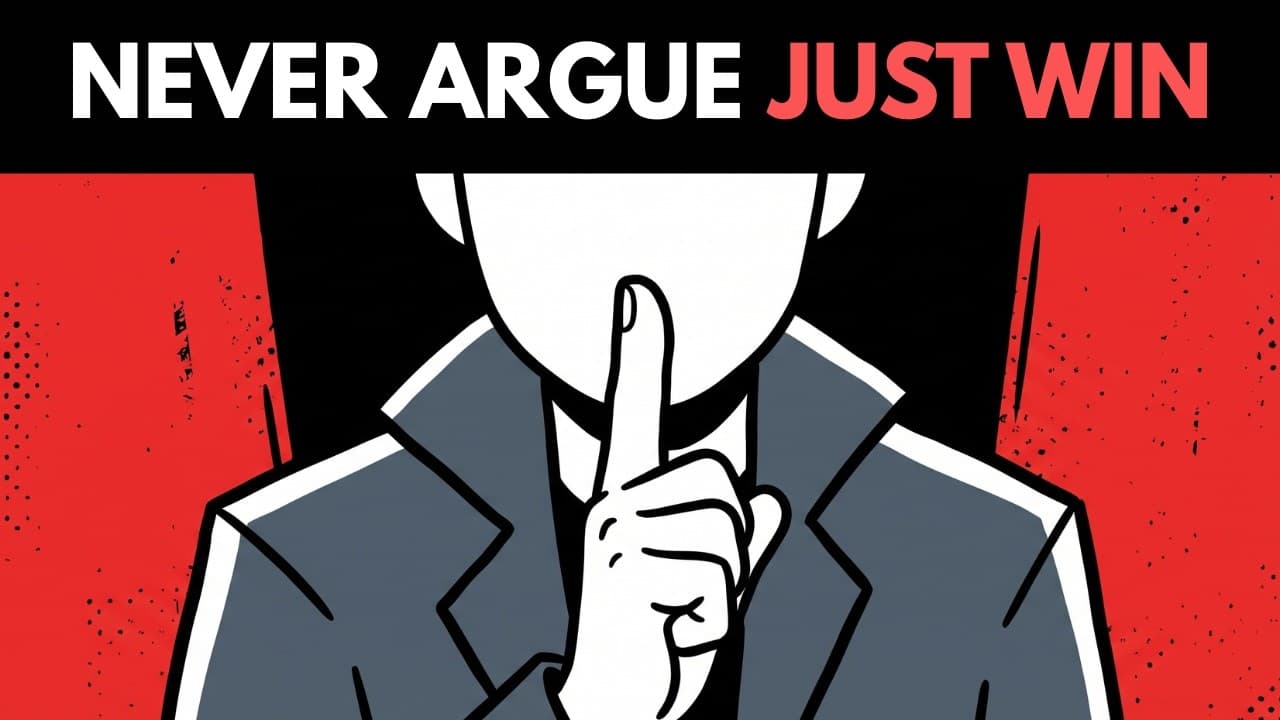
Power isn’t owned, it rests in dependence and silent negotiation. The video outlines four subtle concessions that reveal control dynamics and explains how to counter them by building alternatives before a discussion. It also shows how to align your speech and behavior with true agency rather than visible signals.
Transcript
Every conversation you have runs two negotiations at the same time. One happens out loud, things like the offer, the plan, the favor, the deadline. The other happens in silence, and that's the one that decides the power dynamics in the room. It gets settled by who breaks the silence first, whose face gets watched, who smiles on cue, and whose voice... Read More
Key Insights
- Power rests in dependence, not possession. The more you want something and the fewer alternatives you have, the more power others hold over you.
- Silence in a negotiation can shape outcomes; a brief pause often increases anxiety and can shift opinions to end the silence.
- The visual dominance ratio shows how eye contact changes with power dynamics, signaling whose approval is being sought during talking and listening.
- Smiling is a license for the powerful but an obligation for those with less power, making authentic signals harder to read for others.
- Voice matching reveals power, as people with lower status shift toward the higher status voice while higher status speakers stay more stable.
- Power is a ratio that can change; you can increase your leverage by reducing your need for the other party and increasing your alternatives.
- BATNA, or best alternative to a negotiated agreement, strengthens your position by providing options beyond the current negotiation.
- Do not force stillness or aggression; genuine power comes from changing underlying dependence rather than surface behaviors.
Install to Summarize YouTube Videos and Get Transcripts
Explore YouTube Video Summarizer or Get YouTube Transcript Extractor
Questions & Answers
Q: What is the core idea behind power in conversations?
Power in conversations is not a fixed attribute but a relationship based on dependence. The more you want something the other person controls and the fewer alternatives you have, the more power they hold over you. This relationship-centric view explains why signals like pauses, gaze, smiling, and voice flow reveal true power dynamics even when you think you are just being polite.
Q: What are the four silent concessions that reveal power dynamics?
The four silent concessions are: rushing to fill the pause, which betrays a need for reassurance and control; eyes that keep checking, which signal dependence and seeking approval; the smile you owe, which can mask true feelings and indicate power imbalance; and the voice that follows, where the language and intonation align with those who hold more power, signaling lowered status.
Q: How does the visual dominance ratio relate to power?
The visual dominance ratio compares how much you look at someone while speaking versus listening. Those with less power tend to look more while listening, while those with more power distribute gaze more evenly. Observers use this pattern to judge who holds power in a conversation, linking gaze behavior to perceived control.
Q: Why is smiling perceived differently depending on power?
Smiling tracks how you feel for people with higher or equal power, but for those with lower power smiling often does not reflect true emotion. This creates a license for those with power to smile honestly while others may smile out of obligation, diluting the signal and reducing trust in verbal and nonverbal communication.
Q: What does voice alignment tell us about power?
Voice alignment shows power through language adaptation. People with lower status adjust their voice toward higher-status speakers, while those with higher status do not mirror as much. This directional mirroring indicates who holds influence, and when the flow is one-way, the higher-status person’s dominance becomes audible.
Q: What is BATNA and why is it important?
BATNA stands for best alternative to a negotiated agreement. Building a strong BATNA before entering a negotiation increases your leverage because you possess credible alternatives. This reduces your dependence on the other party and shifts the balance of power in your favor.
Q: How should you respond to power without becoming less likable?
Instead of forcing stillness or mirroring with aggression, focus on changing the underlying dependence. Build alternatives, avoid overreacting to pauses, and maintain authentic engagement. The goal is to reduce the other party’s perceived control over you by expanding your options and stabilizing your own level of involvement.
Q: What happens when you reduce need and increase alternatives in a meeting?
Reducing need and increasing alternatives shifts the power balance by making you less predictable and more self-sufficient. This change alters how others allocate attention and who they defer to, enabling you to steer conversations more effectively without resorting to forceful tactics or artificial signaling.
Summary & Key Takeaways
-
Power in conversations comes from dependence, not body language, and is decided by who has alternatives and who needs what is being asked for. The video traces how silent negotiation shapes outcomes and why you should cultivate options before you speak.
-
The four concessions are: rushing to fill pauses, eyes that seek approval, smiling when not feeling it, and voice alignment. Each concession signals dependence and can erode influence if left unchecked.
-
Three principles to counter power are: build alternatives before you enter, avoid being the one who needs less only temporarily, and maintain a balanced presence that prevents others from predicting your reactions.
Read in Other Languages (beta)
Share This Summary 📚
Summarize YouTube Videos and Get Video Transcripts with 1-Click
Try YouTube Summary with ChatGPT & Claude or YouTube Transcript Generator
Explore More Summaries from PsychToons 📚
Summarize YouTube Videos and Get Video Transcripts with 1-Click
Try YouTube Summary with ChatGPT & Claude or YouTube Transcript Generator