How to Learn Faster with Cognitive Psychology
TL;DR
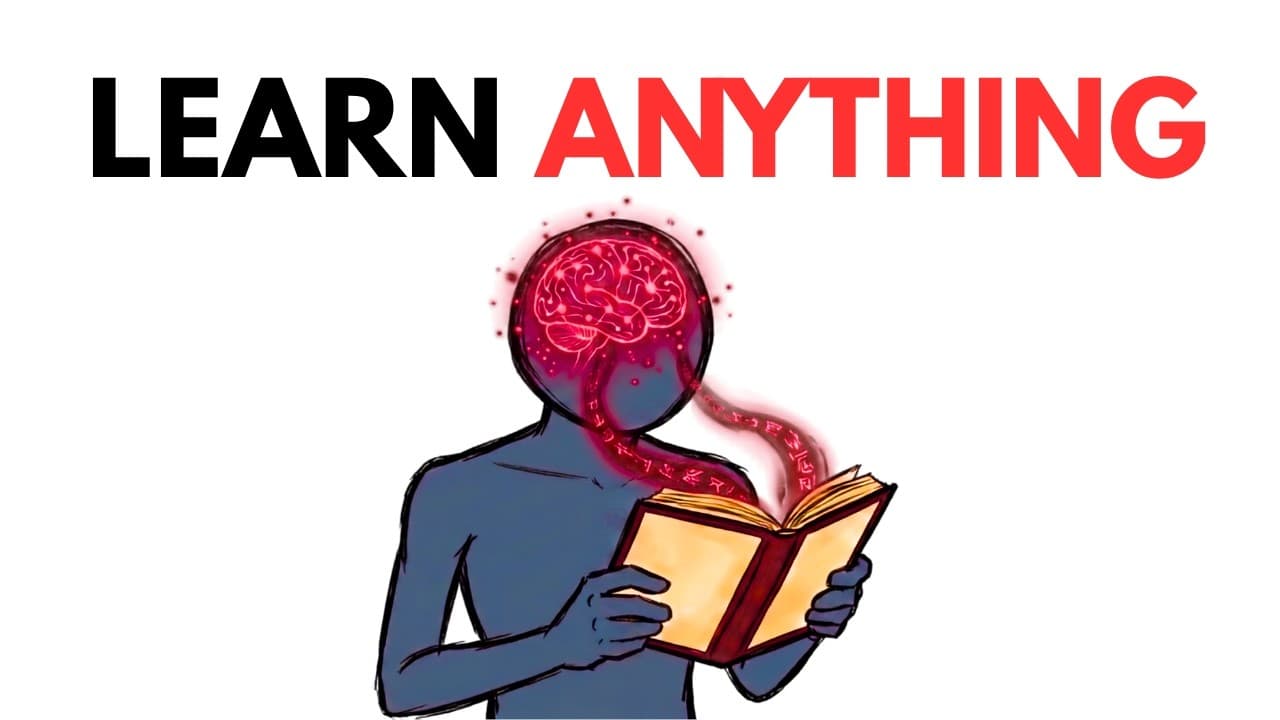
Learning faster relies on using techniques that feel counterintuitive, such as embracing difficulty during study sessions. Techniques like retrieval practice, spacing, and interleaving can significantly enhance long-term retention. The key is focusing on storage strength rather than retrieval strength, which often misleads students into believing they've mastered material when they haven't.
Transcript
You can learn almost anything at twice the speed you're learning it right now, and the reason you're not has very little to do with your intelligence. That's not a motivational line. It's one of the most repeated findings in cognitive psychology, and it's been sitting in the research for 50 years while almost nobody outside of university lab has he... Read More
Key Insights
- Desirable difficulties enhance learning. Conditions that slow you down during study often lead to better long-term retention.
- Storage strength and retrieval strength are distinct. Storage strength is true learning, while retrieval strength is the ease of recall.
- Retrieval practice is crucial. Repeatedly recalling information strengthens long-term memory more than restudying.
- Spacing out study sessions improves retention. Allowing time to forget slightly before revisiting material enhances memory.
- Interleaving practice boosts performance. Mixing different types of problems helps in applying the right solution in varied contexts.
- Fluency illusion misleads learners. The ease of reading or following instructions doesn't equate to actual understanding or retention.
- Learning styles lack scientific basis. Research shows no evidence supporting the effectiveness of tailoring study methods to learning styles.
- Chunking information aids memory. Experts remember better by connecting new information to existing knowledge, forming larger, meaningful chunks.
Install to Summarize YouTube Videos and Get Transcripts
Explore YouTube Video Summarizer or Get YouTube Transcript Extractor
Questions & Answers
Q: How can retrieval practice improve learning?
Retrieval practice enhances learning by focusing on recalling information from memory rather than simply reviewing it. This process strengthens storage strength, which is the true measure of learning. Studies show that repeated retrieval leads to better long-term retention and understanding of material, as it requires active engagement with the content.
Q: Why is spacing important in study sessions?
Spacing study sessions allows time for forgetting to occur, which paradoxically enhances memory retention. By revisiting material after a delay, learners strengthen their storage strength, making the information more durable. This method takes advantage of the spacing effect, where learning is more effective when spread over time rather than crammed into a single session.
Q: What is the fluency illusion in learning?
The fluency illusion occurs when learners mistake the ease of processing information for actual understanding and retention. This illusion can lead to overconfidence, as students believe they know the material well when, in fact, their knowledge is superficial. True learning requires active engagement and retrieval practice, not just passive review.
Q: How does interleaving practice benefit learners?
Interleaving practice involves mixing different types of problems or subjects during study sessions, which helps learners develop the ability to choose and apply the correct method in varied contexts. This approach contrasts with blocked practice, where similar problems are grouped together, often leading to a false sense of mastery and less effective learning.
Q: Are learning styles supported by scientific evidence?
Learning styles, the idea that individuals learn best through specific modalities, lack robust scientific evidence. Research has not found significant support for tailoring education based on learning styles. Instead, universally effective strategies like retrieval practice and spacing are recommended for enhancing learning across diverse learners.
Q: What role does chunking play in memory retention?
Chunking involves organizing information into larger, meaningful units, which aids memory retention by reducing cognitive load. Experts often use chunking to connect new information with existing knowledge, making it easier to remember and understand. This strategy allows learners to process and recall more information efficiently.
Q: What is the difference between storage strength and retrieval strength?
Storage strength refers to how deeply information is embedded in memory, representing true learning. Retrieval strength, on the other hand, is the ease with which information can be recalled at a given moment. While retrieval strength can fluctuate, storage strength determines the durability and transferability of knowledge to new contexts.
Q: How does desirable difficulty enhance learning?
Desirable difficulty refers to conditions that make learning more challenging but ultimately lead to better retention and understanding. These difficulties encourage deeper cognitive processing, strengthening storage strength. Techniques like retrieval practice and spacing, which introduce desirable difficulties, are effective in promoting long-term learning.
Summary & Key Takeaways
-
Learning effectively involves embracing difficulties during study, as these conditions often lead to better retention. Key techniques include retrieval practice, which focuses on recalling information, and spacing, which involves revisiting material after some forgetting has occurred. These methods enhance storage strength, true learning, rather than just retrieval strength, which can be misleading.
-
Interleaving different types of problems during practice sessions helps learners apply knowledge in varied contexts, improving performance. The fluency illusion, where ease of understanding is mistaken for true comprehension, often deceives learners. Furthermore, the concept of learning styles lacks empirical support, suggesting that focusing on universally effective methods is more beneficial.
-
Chunking information into larger, meaningful units aids memory retention, as seen in experts who connect new facts to existing knowledge. This approach allows for rapid learning, as each new piece of information integrates into a pre-existing framework, reducing cognitive load and enhancing recall.
Read in Other Languages (beta)
Share This Summary 📚
Summarize YouTube Videos and Get Video Transcripts with 1-Click
Try YouTube Summary with ChatGPT & Claude or YouTube Transcript Generator
Explore More Summaries from PsychToons 📚





Summarize YouTube Videos and Get Video Transcripts with 1-Click
Try YouTube Summary with ChatGPT & Claude or YouTube Transcript Generator