How to read people without overreading their cues
TL;DR
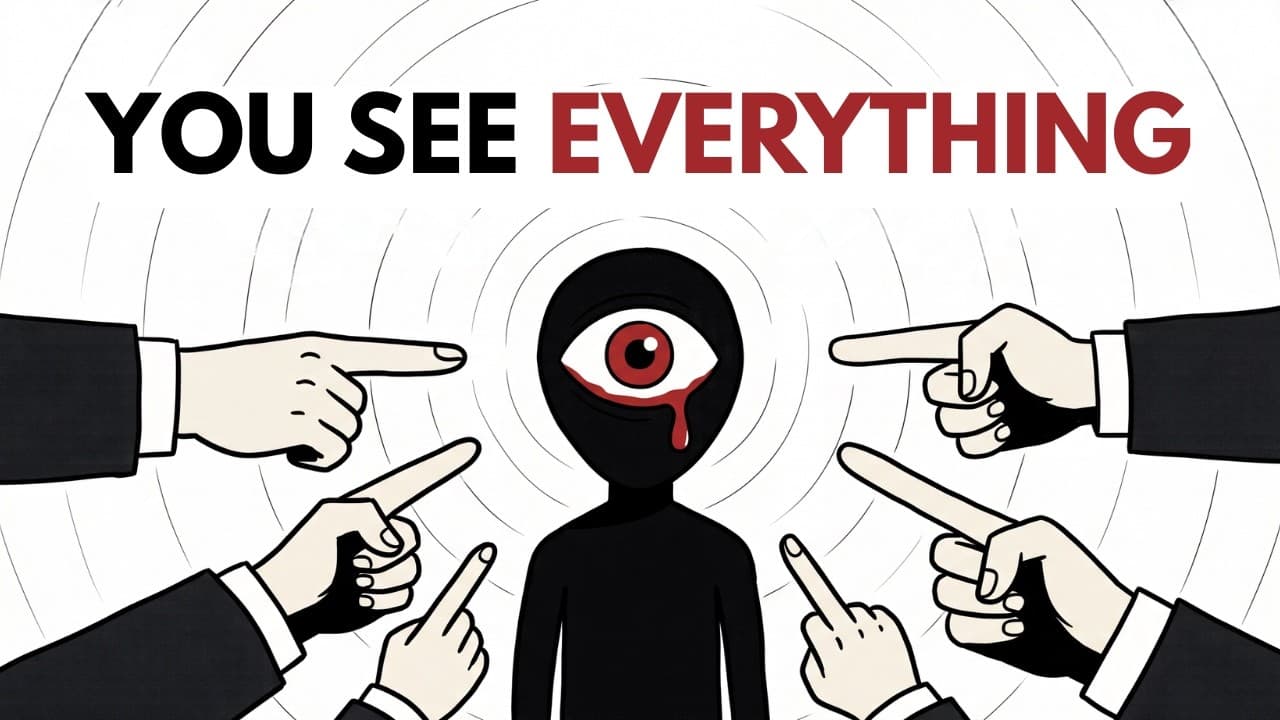
Reading people often feels precise, but accuracy is limited and confidence is misleading. The video explains that lie detection accuracy averages about 54 percent, and even experts show little improvement beyond chance unless feedback is fast and clear. It then outlines four dangers of high sensitivity and offers three guidelines to improve validation and reduce misreads.
Transcript
Somewhere in the last month, you made a decision about a person and never said it out loud. Maybe you decided a friend has cooled on you. Nothing was said. Nothing really happened. You just felt the temperature drop. Maybe you sat across from someone in an interview and knew somewhere around minute 4 that they had already picked another candidate. ... Read More
Key Insights
- Reading people is not always accurate and is highly influenced by the believability of the person being read.
- Confidence in a read is not a reliable indicator of correctness, leading to a disconnect between feeling and fact.
- Intuition requires a stable environment and fast feedback to be trustworthy, otherwise it degrades with experience.
- The brain treats a signal as meaningful while failing to report what the signal actually confirms.
- There is a predictable danger when signaling leads to self-fulfilling interpretations in interactions.
- Hostile attribution bias shows how ambiguous behavior can be interpreted as hostility, shaping subsequent responses.
- A common danger is creating invented reasons for observed signals, which damages relationships.
- Without feedback, a read becomes a habit that drifts from accuracy over time.
Install to Summarize YouTube Videos and Get Transcripts
Explore YouTube Video Summarizer or Get YouTube Transcript Extractor
Questions & Answers
Q: What does the video say about average lie detection accuracy and why is it important?
The video cites a meta analysis of 206 documents and more than 24,000 judgments showing an average accuracy of 54 percent, only slightly better than a coin flip. This is important because it demonstrates that humans are not reliably accurate at detecting deception, which casts doubt on the reliability of our everyday reads and highlights the need for feedback and caution when interpreting others’ behavior.
Q: How does the video describe the relation between confidence and accuracy in reads?
The video explains that confidence is not a good measure of accuracy. Across multiple studies, the correlation between how confident someone feels and how accurate their read is approaches zero. This means people can feel certain about a read that is actually wrong, and vice versa, creating a dangerous mismatch between belief and reality.
Q: What are the four dangers of a highly perceptive mind outlined in the video?
Danger one is the read you never graded, where a quiet withdrawal during a relationship goes unexamined. Danger two is the wall of survivors, where remembered correct reads accumulate while misses fade from memory, skewing confidence. Danger three is the read that causes what it predicted, where a misread prompts behaviors that confirm the original interpretation. Danger four is the right signal with the invented reason, where a true signal is followed by a fabricated explanation that harms the relationship.
Q: Explain the concept of a misread becoming a self reinforcing pattern as discussed in the video.
The video explains that when a perception is ungraded, it creates a self reinforcing loop. You act on a belief and the other person responds, seemingly confirming the read. Because there is no external scoreboard or feedback, the initial interpretation is reinforced, and confidence grows even if accuracy does not, leading to repeated misreads.
Q: What is hostile attribution bias and how does it relate to reading people?
Hostile attribution bias is the tendency to interpret ambiguous behavior as hostile. The video links this bias to the danger of misreads, showing how initial interpretations influence subsequent behavior. Over time, this can escalate, as the interpreted hostility justifies more guarded or aggressive responses, creating a self fulfilling cycle.
Q: What does the video say about the usefulness of intuition in reading people?
Intuition can be trustworthy only under two conditions: the environment is regular enough to reveal real patterns, and the person has long practice with fast, unmistakable feedback. When these conditions are not met, intuition tends to be unreliable, and people should seek external feedback and validation to correct misreads.
Q: How can one reduce the risks of misreading others according to the video?
To reduce risk, the video suggests seeking feedback that clarifies whether a read is accurate, treating confidence as separate from truth, and avoiding acting on invented explanations. Building checks into perception involves acknowledging when a signal is heard but not knowing what it means, and consciously seeking data that can confirm or disconfirm the read.
Q: What final principle does the video offer for improving perceptual accuracy?
The final principle emphasizes building the part of perception that checks, rather than the part that guesses. This means creating feedback loops, encouraging verification of reads, and using objective data to confirm or adjust beliefs about others, thereby reducing the risk of misreads and misinterpretations.
Summary & Key Takeaways
-
A misread on a person can seem right in the moment but is rarely corrected, leading to gradual drift in interpretation and repeated certainty.
-
Confidence in reads does not reliably track accuracy, so remembered successes do not prove skill.
-
The brain creates reasons to match signals, risking relationship harm when invented explanations replace data.
-
Four dangers of sensitive perception include ungraded reads, survivor bias, self-fulfilling predictions, and invented explanations.
-
Intuition is trustworthy only when the environment is regular and feedback is fast and unmistakable, otherwise it can mislead.
-
Hostile attribution bias can turn ambiguous behavior into perceived hostility, creating a self-reinforcing cycle.
-
Reading people well requires feedback loops and checks to avoid turning signals into unjustified conclusions.
Read in Other Languages (beta)
Share This Summary 📚
Summarize YouTube Videos and Get Video Transcripts with 1-Click
Try YouTube Summary with ChatGPT & Claude or YouTube Transcript Generator
Explore More Summaries from PsychToons 📚






Summarize YouTube Videos and Get Video Transcripts with 1-Click
Try YouTube Summary with ChatGPT & Claude or YouTube Transcript Generator