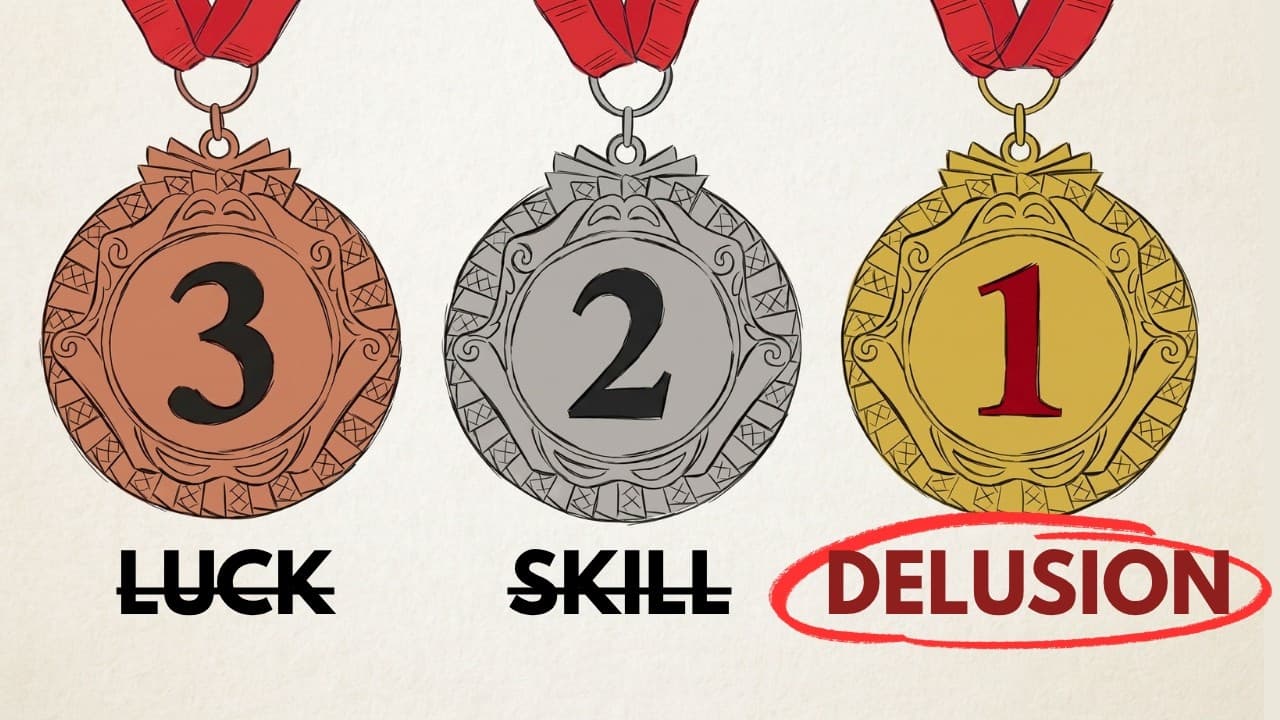
How to use delusion to reach your goals effectively
TL;DR
A small overestimate helps you get through doors, but fantasies drain energy and unspent belief stalls progress. The key is applying the right margin of illusion while converting belief into real attempts. Belief can propel action, yet imagination that stays in the head wastes potential and keeps you from testing yourself in the real world.
Transcript
Every person who has built something you admire was at some point factually wrong about themselves. Not slightly wrong, but wrong in a way that would have failed any honest assessment. They believed they could do a thing before there was a single convincing piece of evidence that they could do it. If you had audited their skills, their track record... Read More
Key Insights
- Delusion can be beneficial when its margin is small to moderate, enabling action without full evidence of capability.
- Belief does not improve skill directly; it changes your entry criteria and the opportunities you consider.
- A finished picture fantasy, if imagined in detail, drains energy and reduces actual effort toward real outcomes.
- An unspent belief feels valuable but never tested, which harms long term growth by preventing corrective feedback.
- Comparative delusion raises confidence about ranking rather than capability, potentially hindering real progress.
- The cost of a delusion lies in its tendency to blind you to disconfirming information and risk assessment.
- The same margin that helps you start can also blind you to walls, creating a fundamental trade off.
- Real progress comes from turning belief into repeated attempts that generate feedback and skill.
Install to Summarize YouTube Videos and Get Transcripts
Explore YouTube Video Summarizer or Get YouTube Transcript Extractor
Questions & Answers
Q: What is the optimal margin of illusion and why does it matter?
The optimal margin of illusion is a small to moderate distortion in how you see yourself and the world. It matters because a little overestimate helps you enter opportunities you would otherwise skip, while too much overconfidence can lead you to reckless action. This balance determines whether belief translates into real progress or stagnation.
Q: How does belief influence entry criteria or opportunities you pursue?
Belief does not upgrade your actual ability; it changes what you think you are capable of and thus what opportunities you allow yourself to attempt. By altering your self estimate, belief filters in or out chances, shaping the doorway you walk through and the experiences you gather on the way to building skill.
Q: Why can vivid fantasies about a future hinder progress?
Vivid fantasies can drain energy because the mind may treat imagined rewards as earned, reducing motivation to take real steps. When people rehearse a finished version in detail, they may feel they already achieved it, which lowers the drive to acquire the actual skills and complete the necessary work.
Q: What is unspent belief and why is it harmful?
Unspent belief is the feeling of being capable without ever fully committing or testing that capability. It can persist for years, offering emotional payoff without real-world evidence. This prevents urgent action and timely feedback, which are essential for correcting course and building genuine skill.
Q: What is comparative delusion and what risk does it carry?
Comparative delusion is the belief one will rank highly relative to others, not a belief about personal capability. It can help start a venture but often leads to poor strategic decisions, slower adaptation, and worse growth because the focus shifts from actual skills to perceptions about standing.
Q: What is the paradox at the center of positive delusion?
The paradox is that the same margin that helps you start and push through doors also blinds you to walls and disconfirming information. This means progress comes with a higher likelihood of errors, and prudence requires accepting some risk while maintaining awareness of limits.
Q: How can you run delusion in a way that works without losing honesty?
To run delusion effectively, convert belief into concrete attempts, seek feedback, and test assumptions in real situations. Keep the margin small enough to avoid reckless decisions, but large enough to generate opportunities. Regularly check progress against evidence and be prepared to adjust beliefs when data contradicts them.
Q: What role do established research findings play in applying positive delusion?
Research shows that belief in one own capability predicts performance, yet certain forms of delusion can hinder energy and outcomes. Apply a measured version of belief that fuels action and subsequent learning, while avoiding fantasies that drain effort or encourage passive expectation. This aligns practice with outcomes.
Summary & Key Takeaways
-
A concise overview of how optimal illusion works, including the balance between helpful overestimation and risky delusion, and how entry criteria gate what opportunities you pursue in life.
-
An explanation of why fantasies undermine energy and how unspent belief can drift for years without producing skill or evidence.
-
A practical guide to four rules for using delusion effectively while avoiding common counterfeit versions and their costs.
Read in Other Languages (beta)
Share This Summary 📚
Summarize YouTube Videos and Get Video Transcripts with 1-Click
Try YouTube Summary with ChatGPT & Claude or YouTube Transcript Generator
Explore More Summaries from PsychToons 📚



Summarize YouTube Videos and Get Video Transcripts with 1-Click
Try YouTube Summary with ChatGPT & Claude or YouTube Transcript Generator