How to Stop Self Sabotage and Protect Progress
TL;DR
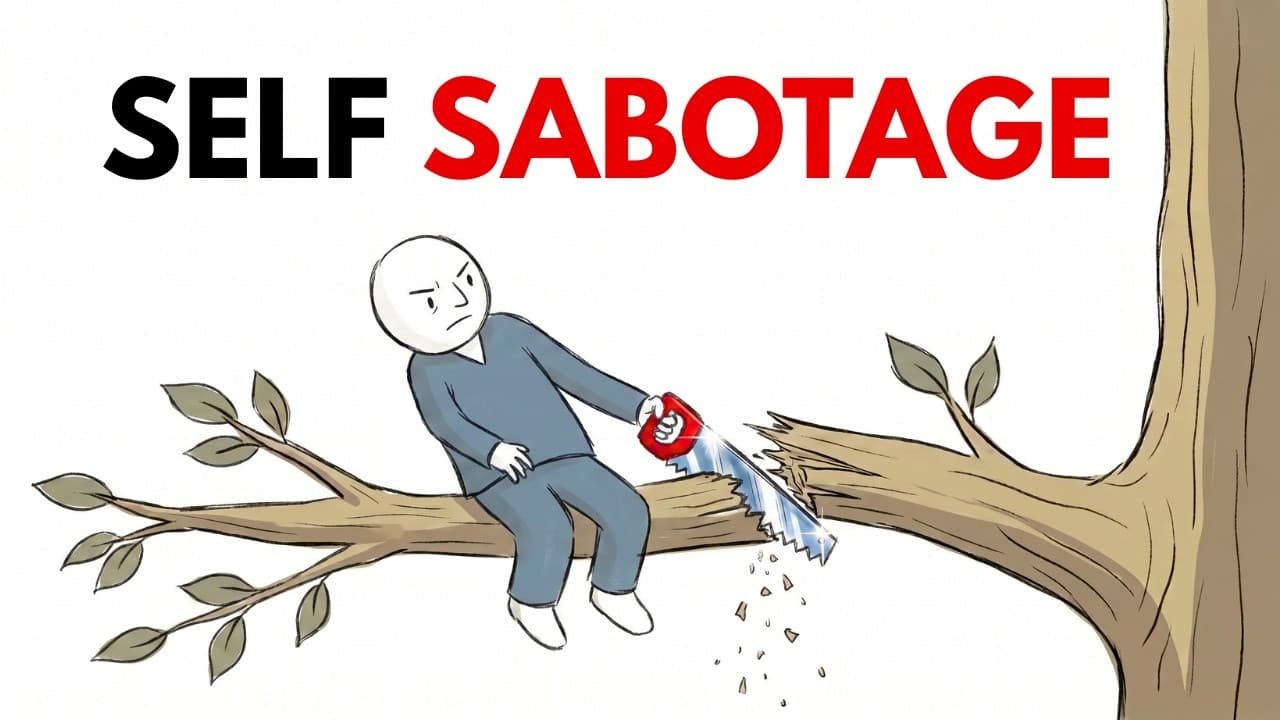
Self sabotage often shows up when things are going well because the brain protects a fixed self image. Four common patterns explain it: preemptive excuses, pulling away when things get close, quitting near the finish, and vague goals that can never be scored. You can hack this by challenging the underlying self verification and choosing concrete actions over comforting excuses.
Transcript
Everyone assumes self-sabotage shows up when life is falling apart. That's the picture we have in our heads. Someone is losing, someone is drowning, and they make it worse. But that isn't when it happens most. Look closely at your own history, and you'll notice something strange. The moment you started sabotaging yourself was usually the moment thi... Read More
Key Insights
- Self handicapping is when people build an obstacle in advance so a future failure cannot disprove their ability.
- Self verification explains that people defend a ready-made self image by seeking confirmation of it from others, even if negative.
- Success can feel like an anomaly if it contradicts a long held self verdict, triggering protective mechanisms.
- The first pattern is building an excuse before you begin, guaranteeing safe outcomes regardless of result.
- The second pattern is pulling away when things get close, testing to see if a partner or situation will chase you.
- The third pattern is quitting in the last 10 percent, where finish line pressure causes withdrawal rather than completion.
- The fourth pattern is keeping goals vague to avoid measurable outcomes and avoid accountability.
- Willpower alone is insufficient because the issue is a conflict between desired outcomes and protective self beliefs.
Install to Summarize YouTube Videos and Get Transcripts
Explore YouTube Video Summarizer or Get YouTube Transcript Extractor
Questions & Answers
Q: How can I identify if I am self sabotaging at work before a big presentation?
Self sabotage at work often shows up as preemptive excuses, poor preparation or rushing at the last minute, and a pattern of avoiding the final push. Start by tracking the night before and the morning of the presentation to see if you consistently choose sleep, distraction, or insufficient rehearsal over thorough practice. Note whether the outcome always feels like you expected to fail or if you fear proving you are capable. Once you recognize the pattern, you can switch to concrete steps such as a structured rehearsal plan, a fixed pre-presentation routine, and a commitment to submit or present regardless of perfection. This reframing helps you test your self image against real world results and reduces the power of the protective mechanism.
Q: What is self verification and how does it relate to self sabotage in relationships?
Self verification is the drive to have others confirm your established self view, even if negative. In relationships, this means you may unconsciously choose partners who reflect your belief that you are unworthy or difficult to love, or you test a partner to trigger proof of that belief. This keeps you in a familiar emotional loop and prevents growth. Understanding this can help you break the pattern by seeking relationships that challenge the negative view and by actively testing your beliefs with evidence from healthy interactions. Changing the internal verdict reduces the pull of sabotage in close connections.
Q: Why does finishing a project feel risky and trigger self-sabotage near the end?
Finish line avoidance is driven by a motivation pattern where proximity to outcome intensifies conflicting forces of approach and avoidance. As you get closer, the fear of judgment increases, and finishing would reveal your current level of capability. The remedy is to set clear, objective finish criteria and schedule immediate next steps after completion. By redefining the end as a transition rather than a verdict, you reduce the emotional weight of finalizing and increase the chances of shipping the work.
Q: How can vague goals contribute to ongoing self sabotage and what should replace them?
Vague goals stay in motion because they lack measurable endpoints, so they never fail. That protects the self image by keeping you in the identity of someone who is working on themselves. Replace vague aims with specific, time bound targets, numbers, and deadlines. For example, replace 'grow the channel' with 'publish one high quality video per week for the next eight weeks and reach X subscribers' to create a measurable path and a verifiable outcome.
Q: What role does perceived failure play in self handicapping and how can you counter it?
Perceived failure activates a defensive response where future performance is protected by self endorsed excuses or alternative explanations. Counter this by reframing the outcome as information about the process rather than a verdict on worth. Practice documenting what was learned, what could be improved, and what new steps will be taken next time. This shifts the focus from defending identity to improving capability, reducing the need for self handicapping.
Q: Can you explain the four patterns of self sabotage and give a practical antidote to each?
The four patterns are 1) preemptive excuses, 2) pulling away when things go well, 3) quitting near the finish, and 4) vague goals. Antidotes: 1) precommit to a fixed preparation plan and a strict bedtime; 2) test support by inviting consistent, non reactive feedback rather than seeking reassurance; 3) set a finish line with a mandatory submission or launch date and celebrate completion; 4) define specific metrics, dates, and a deliverable to eliminate vagueness.
Q: What research findings explain how self sabotage can predict long term outcomes?
Research shows that strategies protecting the self image while delaying action predict worse long term achievement. In particular, self handicapping correlates with poorer performance over time and self verification explains why negative self views persist through select social interactions. Understanding these findings helps you replace protective tactics with concrete behaviors that produce verifiable progress and better outcomes.
Q: How can one practically begin hacking the self sabotage mechanism today?
Begin by identifying which of the four patterns you most commonly exhibit, then adopt concrete replacements. Design a clear, measurable plan with deadlines, seek feedback from trusted peers, and commit to submit or start regardless of perceived perfection. Schedule regular reviews of progress and adjust goals only when needed. This practical approach disrupts the automatic protection and invites real growth.
Summary & Key Takeaways
-
Self sabotage is a protective mechanism for a fixed self image, not a failure of effort, and it operates most strongly when progress is visible rather than when life is in crisis.
-
The video links self handicapping and self verification to show how people create obstacles or pull away at critical moments to maintain a familiar, valued sense of self.
-
Concrete steps and a shift in mindset are proposed to interrupt the four patterns, replacing excuses with measurable actions and a clearer sense of identity aligned with real progress.
Read in Other Languages (beta)
Share This Summary 📚
Summarize YouTube Videos and Get Video Transcripts with 1-Click
Try YouTube Summary with ChatGPT & Claude or YouTube Transcript Generator
Explore More Summaries from PsychToons 📚




Summarize YouTube Videos and Get Video Transcripts with 1-Click
Try YouTube Summary with ChatGPT & Claude or YouTube Transcript Generator