How to lead effectively by avoiding the emergence gap
TL;DR
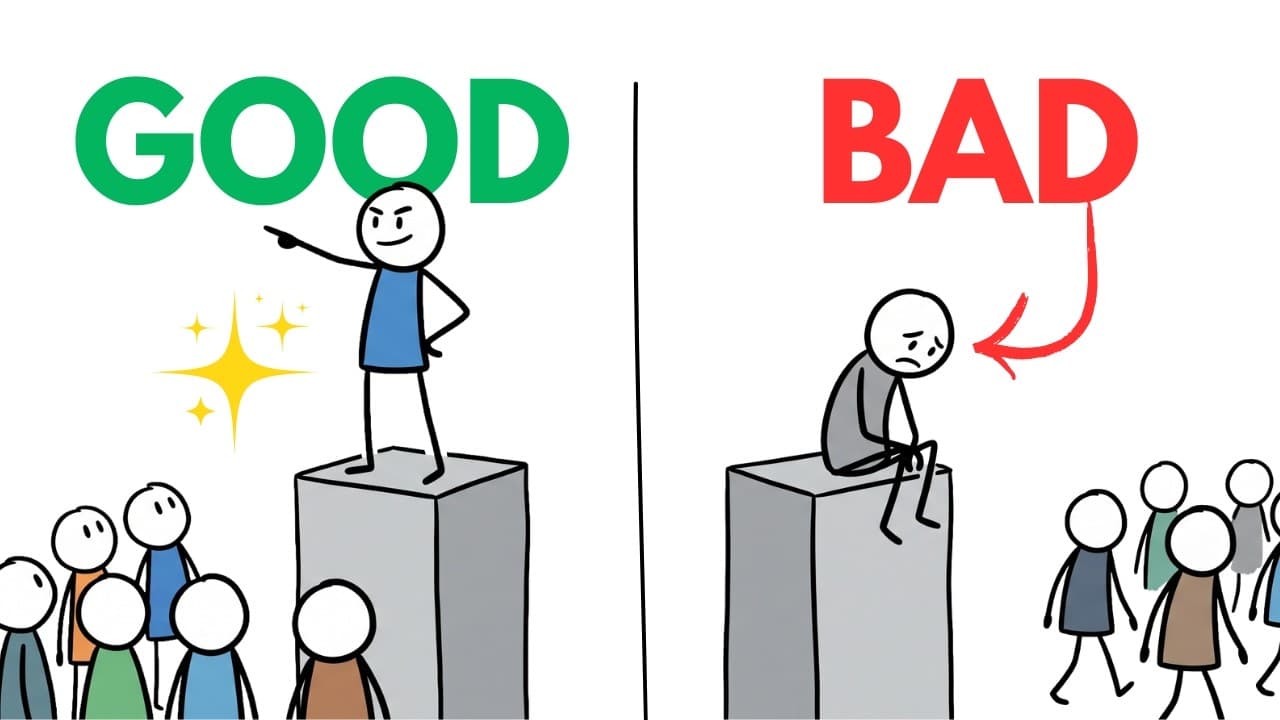
The key idea is that being chosen to lead does not predict being good at leading. Leadership emerges from traits that predict selection, not competence. To improve, focus on learning practices that enhance actual effectiveness, such as promoting psychological safety, listening, and expressing humility rather than chasing charisma or overconfidence.
Transcript
There is a finding buried in the psychology of leadership that almost nobody outside of research has heard. When scientists study leadership, they do not measure one thing. They measure two separate things, and they keep them apart on purpose. The first is called leader emergence. That is the question of who gets picked, who ends up running the mee... Read More
Key Insights
- X is that leader emergence and leader effectiveness are poorly correlated, meaning the traits that help you get picked do not reliably predict real performance.
- The key to leadership lies in recognizing that a leader shapes the environment so that others are willing to contribute, rather than merely commanding attention or issuing directives.
- The Babel hypothesis shows speaking time predicts leadership emergence, not the quality of ideas, indicating that communication patterns can mislead assessments of ability.
- Promotion often rewards the wrong skill set, moving high performers into management where they may struggle; this is the Peter Principle in action.
- Narcissism correlates with self rated effectiveness but not with actual effectiveness as rated by others, underscoring the gap between perception and reality.
- Psychological safety is essential for teams to surface errors and learn, contrasting with the idea that quiet leadership equates to quality or safety.
- Expressed humility, as a set of behaviors rather than a fixed trait, can be practiced to improve leadership outcomes and team trust.
- To counter the Illusions, leaders should cultivate environments where feedback is valued, mistakes are discussed openly, and diverse contributions are encouraged.
Install to Summarize YouTube Videos and Get Transcripts
Explore YouTube Video Summarizer or Get YouTube Transcript Extractor
Questions & Answers
Q: How to identify leadership that actually improves team performance?
Identifying leadership that improves performance requires looking beyond who is chosen to lead. Assess how teams perform over time, the level of psychological safety, and whether feedback is actively sought and used. External evaluations by peers and direct reports provide essential data, revealing whether decisions benefit the group, not only the leader’s presence or confidence.
Q: What is the emergence gap in leadership science?
The emergence gap refers to the mismatch between traits that help someone get selected as a leader and traits that actually make them effective. Narcissism may boost emergence, making a person appear charismatic or decisive, but it does not reliably translate into greater team performance or better outcomes. The gap highlights the difference between selection and competence.
Q: Why does speaking more predict leadership emergence according to the Babel hypothesis?
The Babel hypothesis suggests that the person who talks most in group settings is perceived as the leader regardless of the quality of their input. This makes speaking time a shortcut for perceived authority, shaping social dynamics and decisions more than the substantive merit of ideas. It emphasizes how communication patterns influence leadership perception.
Q: How should organizations address the promotion illusion in leadership pipelines?
Organizations should separate the skills of doing a job from the skills of leading people. This means evaluating potential managers with criteria beyond sales or technical success, such as people management, scheduling, decision making under uncertainty, and delivering team development, to avoid promoting high performers who may struggle as effective leaders.
Q: What does psychological safety contribute to leadership effectiveness?
Psychological safety allows team members to speak up about errors and concerns without fear of punishment. Higher performing teams report more errors because they feel safe to disclose them, which in turn supports learning and improvement. Leaders should foster this environment by inviting input, listening without immediate judgment, and acting on feedback.
Q: How can leaders practice expressed humility to improve outcomes?
Expressed humility involves observable behaviors such as acknowledging limits, inviting input, crediting others for ideas, and showing openness to feedback. These behaviors help build trust, encourage collaboration, and improve decision quality by integrating diverse perspectives. Unlike fixed traits, expressed humility can be learned and reinforced through deliberate practice.
Q: What is the role of feedback in reversing the control illusion?
Feedback is essential because it provides information about what is really happening rather than what leaders assume. When teams report issues and leaders respond with constructive changes, problems are addressed rather than hidden. This practice reduces the illusion that quiet equals effective leadership and supports a culture of continuous improvement.
Q: What practical steps can a new leader take to avoid the four illusions?
New leaders should promote psychological safety from day one, seek diverse input, delegate to empower others, and solicit honest feedback. They should also align promotion criteria with leadership-specific skills, monitor communication patterns to avoid overreliance on volume, and cultivate a learning mindset that values growth over personal validation.
Summary & Key Takeaways
-
A leader is better defined by the room’s acoustics than by being the loudest instrument, influencing what can be heard and how far it carries.
-
The emergence gap explains why narcissists can appear effective to themselves, while others see no real competence, highlighting the need for external feedback.
-
Four Illusions drive bad leadership: volume, promotion, confidence, and control, and recognizing them is the first step to reversing them in teams.
Read in Other Languages (beta)
Share This Summary 📚
Summarize YouTube Videos and Get Video Transcripts with 1-Click
Try YouTube Summary with ChatGPT & Claude or YouTube Transcript Generator
Explore More Summaries from PsychToons 📚



Summarize YouTube Videos and Get Video Transcripts with 1-Click
Try YouTube Summary with ChatGPT & Claude or YouTube Transcript Generator