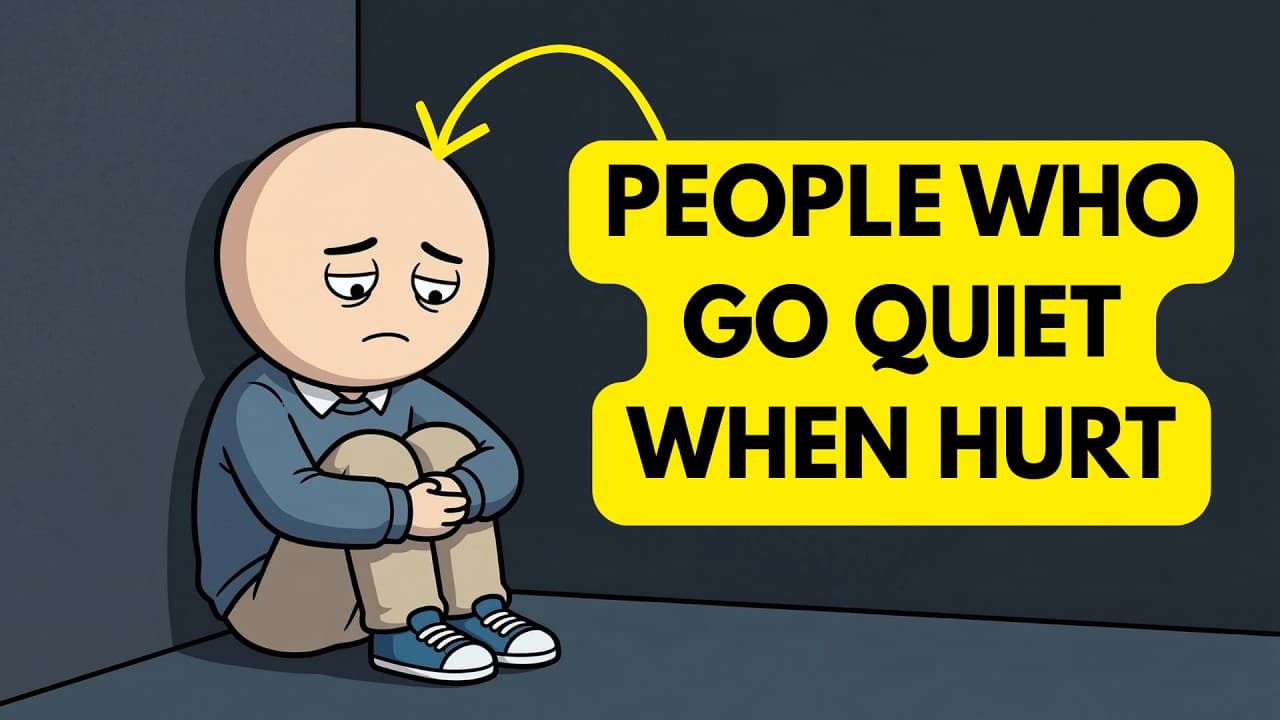
How to understand someone who goes quiet when hurt
TL;DR
When people go quiet after being hurt it is not coldness or avoidance but a protective nervous system response. The freeze reaction slows language and processing, while early experiences teach that vulnerability costs something. With patience and safe space, they open up when they feel able, making silence a protective strategy rather than a flaw.
Transcript
You know that person who goes completely quiet when something hurts them? The one who says, "I'm fine." and actually means, "Leave me alone." Yeah, that person isn't being cold and they're not broken either. In fact, there's a lot more going on beneath that silence than most people realize. If you're someone who shuts down instead of speaking up, w... Read More
Key Insights
- Silence when hurt is a survival skill, not a flaw.
- The freeze response is as hardwired as fight or flight and helps protect you.
- Early relationships teach the cost of vulnerability and shape later behavior.
- The brain remains highly active in self reference and future planning while quiet.
- Language centers can quiet during emotional flooding, hindering speech.
- Waiting with patience without pressure increases openness and communication.
- Window of tolerance defines when real dialogue is possible.
- Non judgmental presence from others helps silence become a pathway to connection.
Install to Summarize YouTube Videos and Get Transcripts
Explore YouTube Video Summarizer or Get YouTube Transcript Extractor
Questions & Answers
Q: What is the freeze response and how does it relate to silent hurt
The freeze response is a hardwired reaction to emotional pain that slows everything down to protect you. It is not weakness or avoidance, but a protective mechanism that makes speaking up feel risky when the pain is too big to process in real time.
Q: Why do some people go quiet instead of expressing pain
People go quiet because their nervous system prioritizes processing and safeguarding themselves over immediate expression. This quieting allows them to assess thoughts and feelings before they speak, reducing the chance that what they say in the moment could be said hurtfully or not true to their experience.
Q: How do early life experiences influence quietness when hurt
Early relationships teach that vulnerability leads to more pain. If crying or expressing hurt was punished or minimized, the nervous system learns to protect itself by becoming quiet, a behavior carried into adulthood as a coping strategy rather than a character flaw.
Q: What happens in the brain when someone goes quiet under stress
Researchers show that regions tied to self reflection, memory, and future planning become more active during silence. This means the person is deeply processing what happened and considering possible outcomes before saying anything.
Q: What is the window of tolerance and its relevance here
The window of tolerance is the emotional space where real communication is possible. When someone is outside this window, overwhelmed by emotion, productive dialogue is unlikely, so silence may function as a bridge to safety until they feel capable of speaking.
Q: What do people often misinterpret about silent individuals
Others may assume silence means lack of care or a deliberate decision to shut others out. In reality, the person is holding themselves in to avoid saying something they might later regret and to protect relationships from unfiltered pain.
Q: What kind of support helps someone who goes quiet to open up
What helps is patience without pressure from trusted people who sit with the discomfort of silence. When there is no expectation to perform feelings, the person can process internally and eventually find a meaningful, accurate way to express what they feel.
Q: What does it mean when the person finally speaks after silence
When words finally come, they carry deliberate care and accuracy and are not used as weapons. The speaker intends to convey truth, not to dominate an argument, and the moment marks a completed internal process rather than a reactive outburst.
Summary & Key Takeaways
-
The video explains that silence in the face of hurt is a protective survival skill built early in life, not emotional unavailability. It introduces the idea that the nervous system slows down and language areas quiet during emotional flooding, making talking feel risky.
-
It traces how early relationships shape our tolerance for vulnerability, showing that silence may be learned to protect oneself and others, and that steady, non pressuring support helps people move past it.
-
It concludes with a call for patience from others, highlighting that when the right people sit with the silence without pressuring, meaningful conversations can happen and healing can begin.
Read in Other Languages (beta)
Share This Summary 📚
Summarize YouTube Videos and Get Video Transcripts with 1-Click
Try YouTube Summary with ChatGPT & Claude or YouTube Transcript Generator
Explore More Summaries from PsychToons 📚



Summarize YouTube Videos and Get Video Transcripts with 1-Click
Try YouTube Summary with ChatGPT & Claude or YouTube Transcript Generator