How to Keep AI Projects from Failing and Deliver ROI
TL;DR
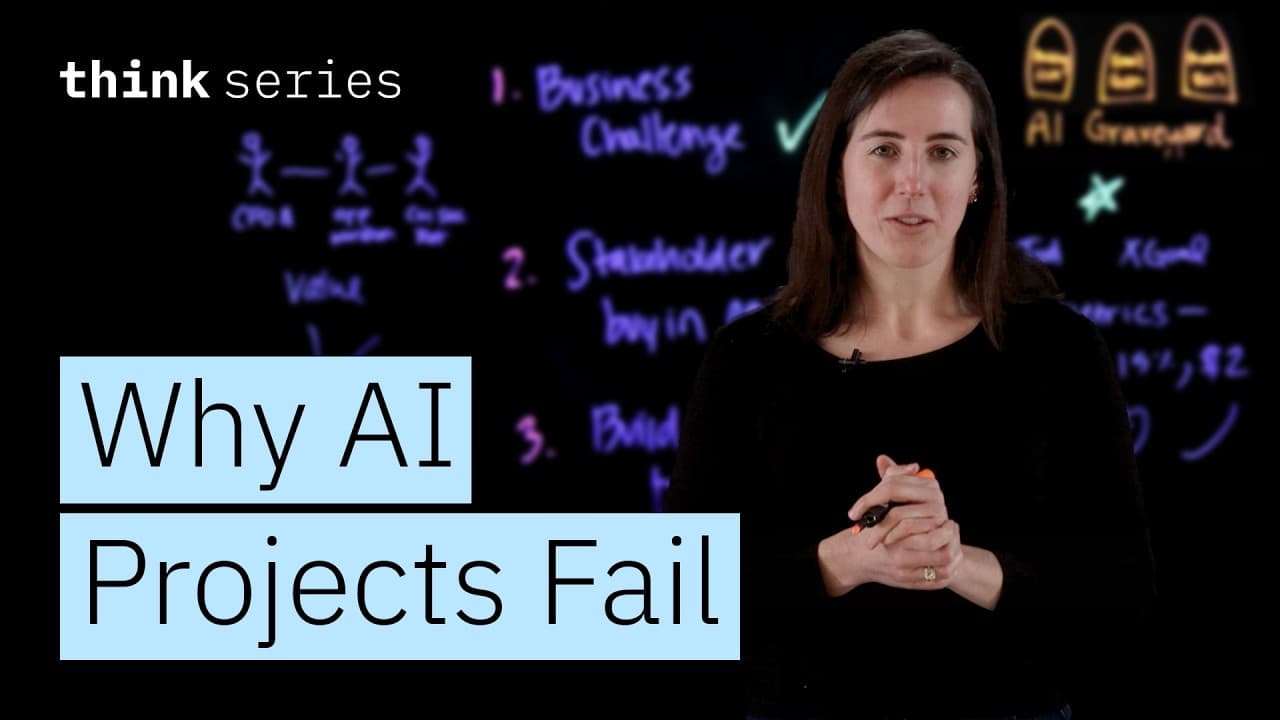
Start with a clear business problem, secure early stakeholder buy-in, and plan for deployment from day one. These steps prevent AI initiatives from becoming shiny demos or shelfware and help deliver measurable value over time. Define success metrics up front and monitor progress to show real ROI.
Transcript
AI projects are a lot like New Year's resolutions. On January 1st, the gym is packed. Meal plans are ready, and everybody's motivated. But fast forward to February and most resolutions, they're abandoned. Starting is easy, but sustaining is hard. AI projects follow the same pattern. They begin with excitement and bold promises, but most, they don't... Read More
Key Insights
- AI projects fail when teams start with technology instead of a business problem, which leads to misaligned goals and unclear success metrics.
- Defining measurable success upfront creates a true north for the project and enables ongoing progress tracking and ROI calculation.
- Early stakeholder alignment across CFO, operations, and customer success drives champions rather than blockers, accelerating adoption and impact.
- Projects often stall because deployment and monitoring are treated as afterthoughts, not essential long term requirements for production readiness.
- A model that works in a notebook but not in production is shelfware; production readiness is a core deliverable.
- Business outcomes should guide AI initiatives, with AI viewed as a tool rather than the primary objective.
- Regularly updating and communicating benefits helps sustain executive sponsorship and cross functional support.
- ROI emerges when deployment is integrated with existing systems and data pipelines, not isolated as a standalone experiment.
- More videos from this channel:
- More from this channel: IBM Technology
Install to Summarize YouTube Videos and Get Transcripts
Explore YouTube Video Summarizer or Get YouTube Transcript Extractor
Questions & Answers
Q: How to start an AI project by defining the business problem rather than the technology?
Begin by identifying the real business challenge your organization faces and specify the outcome you want to achieve, such as reducing churn or cutting costs. Translate that outcome into concrete metrics and targets, like a percentage reduction or a dollar amount saved. This approach aligns the team around a shared objective, guides data needs, and sets a clear success path that is independent of any single algorithm or tool.
Q: What questions should I ask stakeholders to secure early buy-in for an AI project?
Ask stakeholders how the project will affect their daily workflows, what success looks like in their terms, and what risks or concerns they have. Speak in business language, not technical jargon, and demonstrate the tangible value for each role, such as cost savings for the CFO, efficiency gains for operations, and improved retention for customer success. Build a consensus on priorities and milestones.
Q: Why is deployment planning essential from day one in AI projects?
Deployment planning ensures the model will integrate with existing systems, data flows, and monitoring processes rather than remaining a standalone demo. It reduces the risk of performance drift, enables ongoing maintenance, and keeps the project aligned with real world use cases. This proactive approach increases the likelihood of sustained value and avoids shelfware.
Q: How should success metrics be defined and tracked for AI initiatives?
Define metrics that reflect business impact, such as churn reduction, efficiency improvements, or cost savings. Set targets upfront and track them throughout rollout with regular reviews. Use dashboards that show progress against these metrics over time, and adjust the model or processes as data evolves to maintain relevance and value.
Q: What are common pitfalls after a successful pilot that hinder production adoption?
Common pitfalls include failing to scale beyond the pilot, weak data governance, insufficient monitoring for drift, lack of integration with existing systems, and unclear ownership for ongoing maintenance. Addressing these early through deployment-ready design, governance, and cross functional collaboration helps prevent regression and ensures long term impact.
Q: How can you illustrate ROI to executives in an AI project?
Translate technical outcomes into business value by showing quantified benefits like reduced costs, faster decision making, or higher retention. Use concrete examples from pilots, project milestones, and projected annualized savings. Provide a clear path from pilot to enterprise scale and demonstrate how metrics improve as deployment expands across teams.
Q: What role does data quality play in successful AI deployment?
High quality data is essential for accurate models and reliable outcomes. Establish data cleanliness, lineage, and governance early, and ensure access controls and privacy considerations are addressed. Poor data quality will degrade model performance, undermine trust, and erode the potential ROI of the initiative.
Q: How can organizations maintain momentum after initial results begin to plateau?
Continue to align with evolving business needs by revisiting objectives, expanding the use cases, and iterating the model with fresh data. Maintain stakeholder engagement by highlighting incremental wins, adjust deployment plans as needed, and invest in monitoring and governance to sustain performance and drive ongoing value.
Summary & Key Takeaways
-
A clear business problem anchors an AI initiative, preventing scope creep and misaligned expectations across teams and stakeholders.
-
Stakeholder buy-in is essential early on, requiring language that resonates with each role and illustrates concrete value in their workflow and outcomes.
-
Deployment planning from day one ensures integration, monitoring, and adaptability, reducing the risk of projects failing after a successful pilot and delivering sustained value across the enterprise.
Read in Other Languages (beta)
Share This Summary 📚
Summarize YouTube Videos and Get Video Transcripts with 1-Click
Try YouTube Summary with ChatGPT & Claude or YouTube Transcript Generator
Explore More Summaries from IBM Technology 📚





Summarize YouTube Videos and Get Video Transcripts with 1-Click
Try YouTube Summary with ChatGPT & Claude or YouTube Transcript Generator