What Is Software as a Service (SaaS) and How Does It Work?
TL;DR
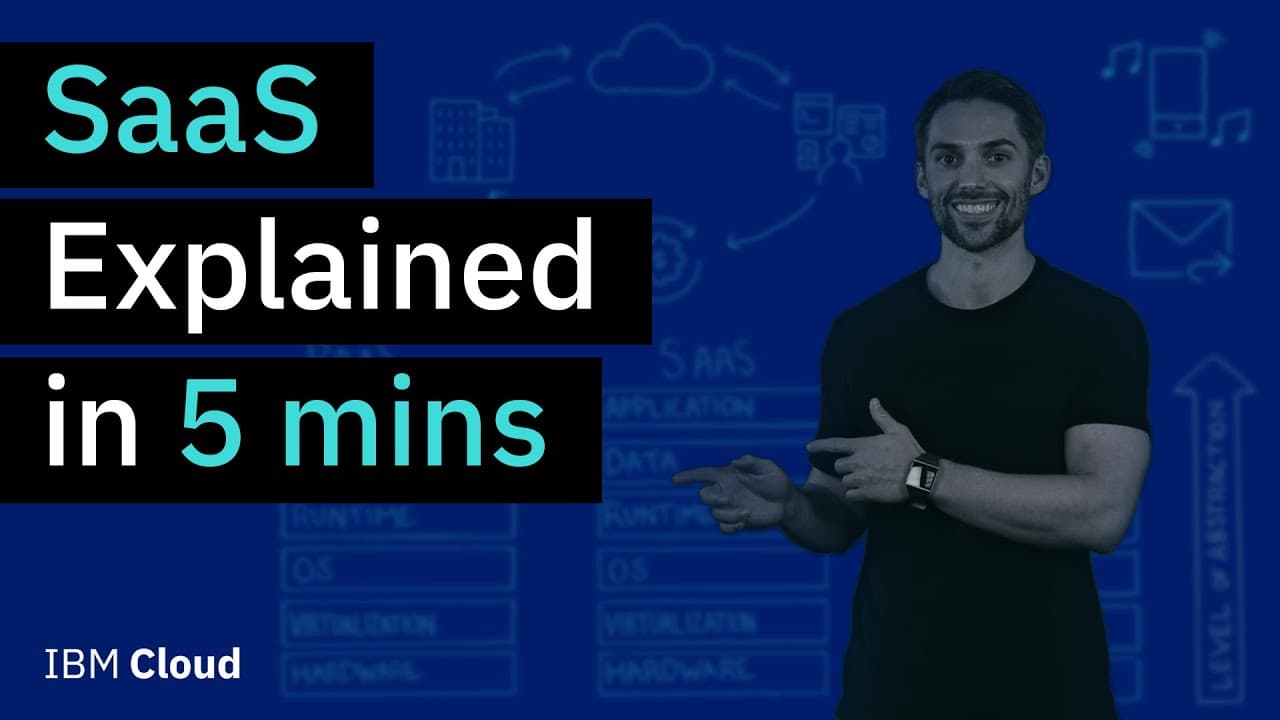
Software as a Service (SaaS) delivers applications via the internet on a subscription basis, allowing users to access software without managing installations or upgrades. It’s the most popular cloud computing model, providing benefits like cost efficiency, scalability, and access from anywhere, making it ideal for various business operations.
Transcript
Unless you’ve been living under the rock the past few years it is very likely you use Software as a Service, or SaaS, on a daily basis for business and as a consumer. SaaS is one of the three main categories of cloud computing, Infrastructure as a Service, or IaaS, and Platform as a Service, or PaaS. Out of the big 3 cloud computing models... Read More
Key Insights
- 😶🌫️ SaaS is the most popular cloud computing model and does not require users to possess technical expertise.
- 👤 By subscribing to SaaS, users can save costs, easily scale their resources, access applications from anywhere, and benefit from automatic upgrades.
- 😒 SaaS finds extensive use in various business operations, offering productivity tools and solutions for communication, customer relationship management, sales, and more.
- 👻 Multi-tenant architecture in SaaS allows multiple users to securely store their data in a shared hosting environment.
- 👤 SaaS offers convenience, security, and compatibility by ensuring all users are on the same version of the software and handling updates and patches automatically.
- 🏪 Some instances may require data to be stored in specific locations due to legal requirements.
- 🕸️ SaaS is accessible through web browsers and does not require installations or plugins.
Install to Summarize YouTube Videos and Get Transcripts
Explore YouTube Video Summarizer or Get YouTube Transcript Extractor
Questions & Answers
Q: What is SaaS and how does it differ from other cloud computing models?
SaaS stands for Software as a Service and is a cloud computing model where software and applications are delivered over the internet via a subscription model. Unlike Infrastructure as a Service (IaaS) and Platform as a Service (PaaS), SaaS does not require users to be developers or IT experts.
Q: What are some benefits of using SaaS?
Some benefits of using SaaS include cost efficiency as the cloud service provider manages and maintains the application, scalability allowing for easy addition of resources on-demand, accessibility from anywhere with an internet connection, high security, and automatic upgrades to the latest version of the software.
Q: How does a user typically consume a SaaS application?
A user accesses a SaaS application within a multi-tenant architecture, where multiple users access the same pool of resources. Each user has their own dedicated space to securely store their data. This setup offers cost efficiency and streamlined management by the cloud service provider.
Q: Are there any restrictions on data location in SaaS?
In some instances, data must be kept in the same location as the user's residence due to legal requirements, such as GDPR in Europe. However, for the most part, SaaS is highly secure and allows users to access their applications regardless of their geographical location.
Summary & Key Takeaways
-
SaaS is a method of delivering software and applications over the internet through a subscription model, eliminating the need for users to manage, install, and upgrade software on local servers or computers.
-
Examples of SaaS include Gmail, Microsoft Office 365, Adobe Creative Cloud, and music streaming services.
-
SaaS is widely used in various business operations such as communication, customer relationship management, billing, sales management, and more.
Read in Other Languages (beta)
Share This Summary 📚
Summarize YouTube Videos and Get Video Transcripts with 1-Click
Try YouTube Summary with ChatGPT & Claude or YouTube Transcript Generator
Explore More Summaries from IBM Technology 📚




Summarize YouTube Videos and Get Video Transcripts with 1-Click
Try YouTube Summary with ChatGPT & Claude or YouTube Transcript Generator