How to Train Like the Experts: Evidence-Based Guide
TL;DR
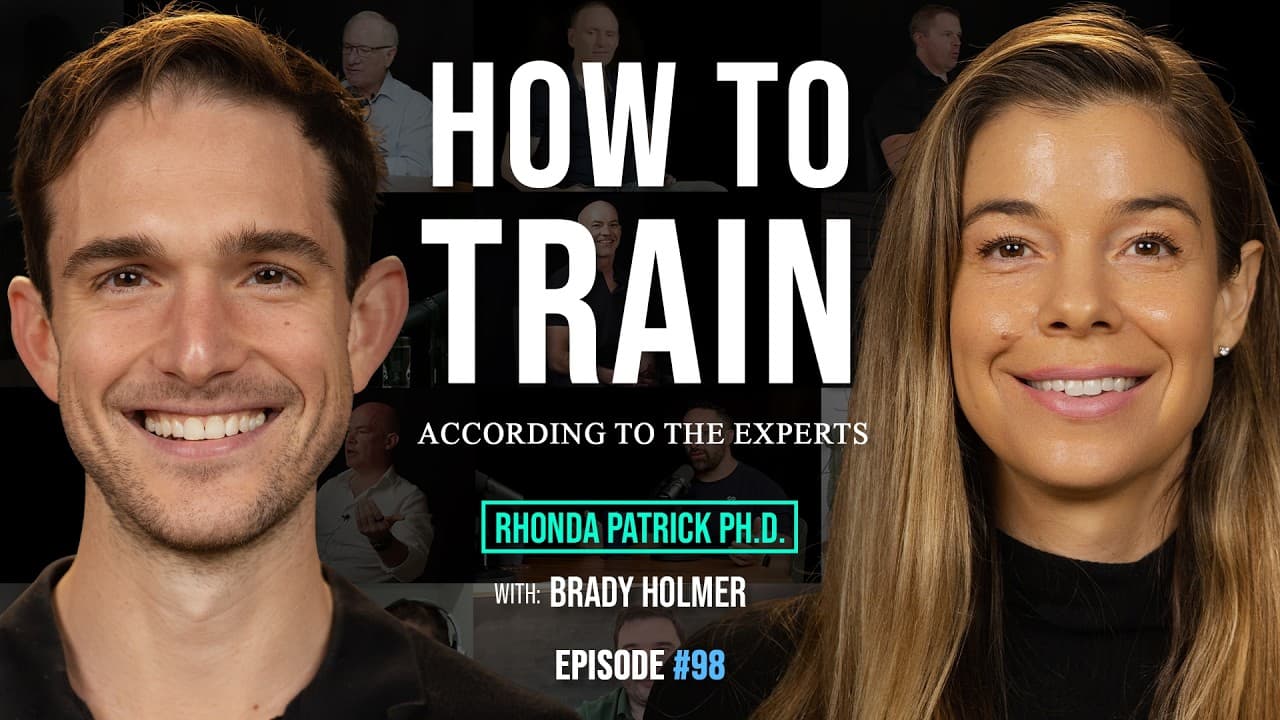
The best way to train, based on expert evidence, is to tailor goals and use proven protocols that blend endurance and strength work. VO2 max is a key marker linked to longevity, and the guide covers aerobic training, lactate clearance, zone training, and HIIT approaches while emphasizing safety and practical implementation. It also discusses heart aging and how to apply science to everyday training for health and performance.
Transcript
over the course of nearly a hundred episodes of the F my fitness podcast I've had the privilege of interviewing some of the most prestigious researchers in the fields of exercise physiology nutrition Human Performance and these conversations have really brought together some of the greatest minds and knowledge in the field of exercise physiology I'... Read More
Key Insights
- VO2 max is a marker of aerobic fitness and longevity, reflecting the body’s capacity to take in and use oxygen.
- Sedentary behavior has a pronounced negative effect on cardiovascular health, with long-term consequences comparable to extended aging.
- Zone 2 training offers benefits for endurance and heart health, but its impact on VO2 max depends on the overall training plan.
- HIIT protocols, when applied correctly, can drive meaningful fitness gains and support heart health without excessive time commitment.
- Balancing effort and recovery through the 80/20 principle can optimize training efficiency and adaptations.
- Measuring training zones and using appropriate devices improves the accuracy of aerobic programming, especially when comparing watches to chest straps.
- Variation in interval training enhances fitness adaptations by challenging the body in multiple ways across workouts.
- Age-related cardiac stiffness can be mitigated by targeted exercise, supporting healthier aging of the heart.
Install to Summarize YouTube Videos and Get Transcripts
Explore YouTube Video Summarizer or Get YouTube Transcript Extractor
Questions & Answers
Q: A real search query question about the video (e.g. 'How to...', 'What is...', 'Why does...'). Question 1
How can I train to improve cardiorespiratory fitness and potentially extend healthspan according to expert guidance. The answer combines aerobic training with strategies to improve VO2 max, lactate clearance, and metabolic health, while emphasizing goal setting that aligns with personal priorities such as endurance, health, or body recomposition. Training should mix zone specific work with strategic recovery to maximize adaptations over time.
Q: Question 2
What is VO2 max and why is it considered a predictor of longevity. VO2 max measures how well the body can take in and utilize oxygen during maximal effort and serves as a marker of overall aerobic capacity. Higher VO2 max values generally reflect better cardiovascular health, greater metabolic efficiency, and a reduced risk of age-related diseases, making it a central target in evidence-based training plans.
Q: Question 3
Why is the comparison between bed rest and aging important for understanding training needs. The discussion highlights that three weeks of complete bed rest severely reduces fitness, and after 30 years of aging the resulting fitness level can resemble those three weeks of bed rest, underscoring how inactivity over time can be more detrimental than aging alone and stressing the value of regular movement.
Q: Question 4
How should I measure training zones and monitor progress. The guidance covers establishing zones 1 through 5 and using heart rate or other metrics to guide workouts, ensuring that effort aligns with goals such as endurance or strength. Regular testing and consistent monitoring help tailor training to responses and improve outcomes over time.
Q: Question 5
What are practical benefits and limits of zone 2 training. Zone 2 training supports aerobic health and mitochondrial function, with specific benefits for endurance and recovery, though its impact on VO2 max depends on the broader program and variation. It remains a sustainable, time-efficient approach for many athletes seeking health and longevity benefits.
Q: Question 6
Can you combine HIIT and zone 2 in one workout. Yes, integrated approaches can be used to exploit the strengths of both methods, providing cardiovascular stimulus and efficient time use. The key is careful planning, ensuring proper recovery, and balancing intensity with volume to prevent overtraining while maximizing adaptations.
Q: Question 7
What does the 80/20 rule mean for training time. The rule emphasizes that the majority of training time should be spent at lower intensities (zone 2) while a smaller portion is allocated to higher intensity work, optimizing adaptations and reducing injury risk while still delivering performance gains.
Q: Question 8
What is the role of endurance training in heart health and aging. Endurance training supports cardiovascular structure and function, improves metabolic health, and can contribute to delaying heart aging by promoting healthier cardiac adaptation, with practical implications for longevity and quality of life when integrated into a balanced training plan.
Summary & Key Takeaways
-
The guide distills expert findings into actionable training and supplementation advice, focusing on cardiovascular health, metabolism, and body recomposition.
-
It emphasizes measurable outcomes like VO2 max and lactate clearance, and explains how to structure workouts using zone concepts and HIIT protocols.
-
It also highlights practical considerations such as goal setting, time efficiency, and safety when applying evidence-based strategies to real life training.
Read in Other Languages (beta)
Share This Summary 📚
Summarize YouTube Videos and Get Video Transcripts with 1-Click
Try YouTube Summary with ChatGPT & Claude or YouTube Transcript Generator
Explore More Summaries from FoundMyFitness 📚

Summarize YouTube Videos and Get Video Transcripts with 1-Click
Try YouTube Summary with ChatGPT & Claude or YouTube Transcript Generator