Who Was Sun Tzu and What Is The Art of War?
TL;DR
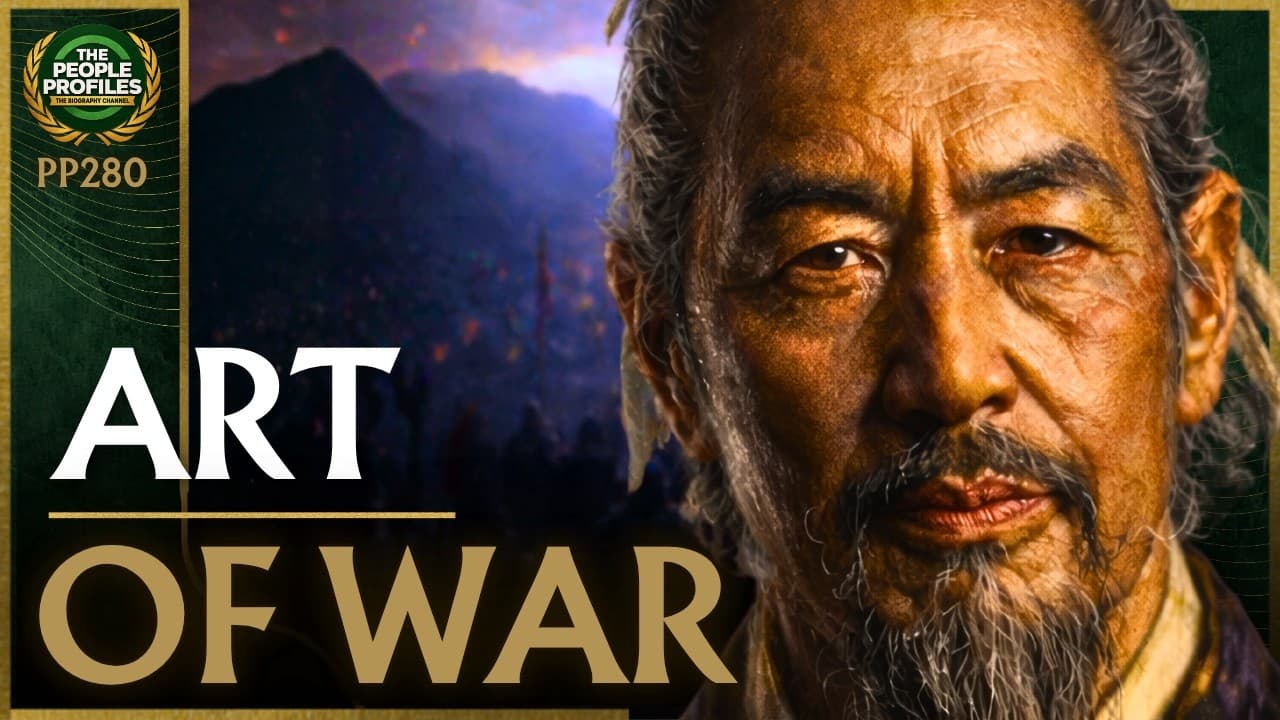
Sun Tzu was the traditionally credited author of The Art of War, but his identity, lifetime, and military career remain disputed because surviving accounts were written centuries later. The treatise emerged from an age of fragmented authority and persistent warfare, offering thirteen chapters on military affairs while reflecting the political instability of ancient China.
Transcript
The man known to history as Sun Tzu is traditionally believed to have been born in the State of Qi in eastern China in the late sixth century BC. Sun Tzu is an honorific name meaning ‘Master Sun’, and his original name was Sun Wu. Although he is known as the author of the Sun Zi Bing Fa or Master Sun’s Art of War, one of the most influent... Read More
Key Insights
- Sun Tzu is an honorific meaning “Master Sun,” while the traditional author’s given name was Sun Wu. His personal history remains elusive because the available ancient biographies contain few details and were composed centuries after the period in which he supposedly lived.
- The historical existence of Sun Tzu is disputed among scholars. Theories place him in either the late sixth century BC or no earlier than the fourth century BC, while another interpretation treats him as a literary figure invented to give The Art of War an accomplished military author.
- The Shiji contains the earliest known mention of Sun Tzu. Written by Sima Qian in the late second and early first centuries BC, it gives Sun Tzu only a short biographical paragraph before devoting most of the associated section to his descendant Sun Bin.
- Sun Tzu and Sun Bin were probably different military writers. Although both were called “Master Sun,” fragments of Sun Bin’s separate treatise discovered in the Yinqueshan tombs in Shandong province in 1972 indicate that two distinct works and authors existed.
- The surviving sources disagree about Sun Tzu’s birthplace. The Shiji identifies the State of Qi in modern-day Shandong province, while the Wuyue Chunqiu identifies the State of Wu around the Yangtze River delta, near modern-day Shanghai.
- The Eastern Zhou period was marked by weakened central authority and increasingly independent feudal states. The Zhou king retained nominal sovereignty and moral importance, but hundreds of vassals fought to expand their territories, creating the environment of recurring conflict associated with Sun Tzu’s ideas.
- King Helü reportedly brought Sun Tzu into Wu’s service around 512 BC. The Shiji says the king had read The Art of War and requested a practical demonstration, while the Wuyue Chunqiu instead describes Sun Tzu as an unrecognized expert recruited from seclusion.
- The standard version of The Art of War contains thirteen chapters, each introduced by the formula “Master Sun says.” The transcript describes it as the most influential military treatise from ancient China, although many thinkers from different philosophical traditions also wrote about warfare during the same broad era.
- More videos from this channel:
- More from this channel: The People Profiles
Install to Summarize YouTube Videos and Get Transcripts
Explore YouTube Video Summarizer or Get YouTube Transcript Extractor
Questions & Answers
Q: Who was Sun Tzu according to ancient Chinese sources?
Sun Tzu was traditionally identified as Sun Wu, a military thinker whose honorific name means “Master Sun.” The Shiji says he came from Qi and entered the service of King Helü of Wu around 512 BC. The Wuyue Chunqiu instead calls him a native of Wu who lived in seclusion until emissaries persuaded him to command Wu’s forces. Neither account provides his birth year or parentage.
Q: Did Sun Tzu really exist as a historical person?
Sun Tzu’s historical existence remains uncertain because the surviving biographical evidence is sparse, inconsistent, and considerably later than his alleged lifetime. Some historians accept a late sixth-century BC setting, others believe the treatise indicates a date no earlier than the fourth century BC, and still others propose that later writers invented Sun Tzu as a successful commander who embodied the text’s teachings.
Q: What are the main historical sources about Sun Tzu?
The principal sources are the Shiji, or Records of the Grand Historian, and the Wuyue Chunqiu, or Spring and Autumn Annals of Wu and Yue. Sima Qian wrote the Shiji in the late second and early first centuries BC. The Wuyue Chunqiu is a first-century AD chronicle attributed to Zhao Ye, but its reliability is considered questionable. Both appeared centuries after Sun Tzu’s supposed lifetime.
Q: Were Sun Tzu and Sun Bin the same person?
Some scholars proposed that Sun Tzu and Sun Bin were the same person because both carried the title “Master Sun,” and the Shiji pairs material about them within one biographical treatment. However, fragments of Sun Bin’s long-lost military work were uncovered in the Yinqueshan tombs in Shandong province in 1972. That discovery suggests they were different people who produced separate texts on warfare.
Q: What was China like during Sun Tzu’s alleged lifetime?
China was divided among feudal states that nominally recognized the Zhou king in Luoyang but increasingly operated as independent powers. After the Zhou court relocated eastward in 770 BC, royal authority weakened severely. States and rulers competed through warfare, diplomacy, alliances, and political intrigue. This sustained instability formed the historical setting in which thinkers considered how conflicts could be won or lost.
Q: How did Sun Tzu reportedly enter King Helü’s service?
The Shiji says King Helü had read The Art of War and invited its author to court to demonstrate his methods in practice. The Wuyue Chunqiu gives another account, describing Sun Tzu as a military expert living in seclusion because others failed to appreciate his abilities. Emissaries brought him to Wu, where his perceptive answers to the king’s strategic questions reportedly secured recognition.
Q: Why is King Helü important to Sun Tzu’s biography?
King Helü is the ruler whom ancient accounts connect most directly with Sun Tzu’s military career. He seized Wu’s throne in 514 BC after arranging King Liao’s assassination during a dinner. According to the Shiji, Sun Tzu entered his service around 512 BC, as Helü prepared for conflict involving two Wu princes who had defected to Chu after the usurpation.
Q: What is known about the structure of The Art of War?
The standard text of The Art of War is divided into thirteen chapters, each opening with the formula “Master Sun says.” The transcript identifies it as the most influential military treatise from ancient China while noting that many scholars from different philosophical traditions also addressed military affairs during the Spring and Autumn and Warring States periods. The modern text rests on a compilation dating to the eleventh century.
Summary & Key Takeaways
-
Sun Tzu, an honorific meaning “Master Sun,” was traditionally identified as Sun Wu, a military thinker born during the late sixth century BC. However, his biography is uncertain. Some historians place him no earlier than the fourth century BC, while others question whether he existed as a historical individual at all.
-
The principal accounts of Sun Tzu appear in Sima Qian’s Shiji and the later Wuyue Chunqiu. Both were composed centuries after his alleged lifetime, disagree about his birthplace, and provide limited or questionable evidence. The discovery of fragments attributed to Sun Bin nevertheless supports treating Sun Tzu and Sun Bin as different writers.
-
Sun Tzu was associated with the State of Wu and King Helü, who allegedly recruited him around 512 BC after examining his strategic knowledge. His famous treatise contains thirteen chapters beginning with “Master Sun says.” Its intellectual setting was the Eastern Zhou, when weakened royal authority encouraged prolonged rivalry among increasingly independent states.
Read in Other Languages (beta)
Share This Summary 📚
Summarize YouTube Videos and Get Video Transcripts with 1-Click
Try YouTube Summary with ChatGPT & Claude or YouTube Transcript Generator
Explore More Summaries from The People Profiles 📚
Summarize YouTube Videos and Get Video Transcripts with 1-Click
Try YouTube Summary with ChatGPT & Claude or YouTube Transcript Generator