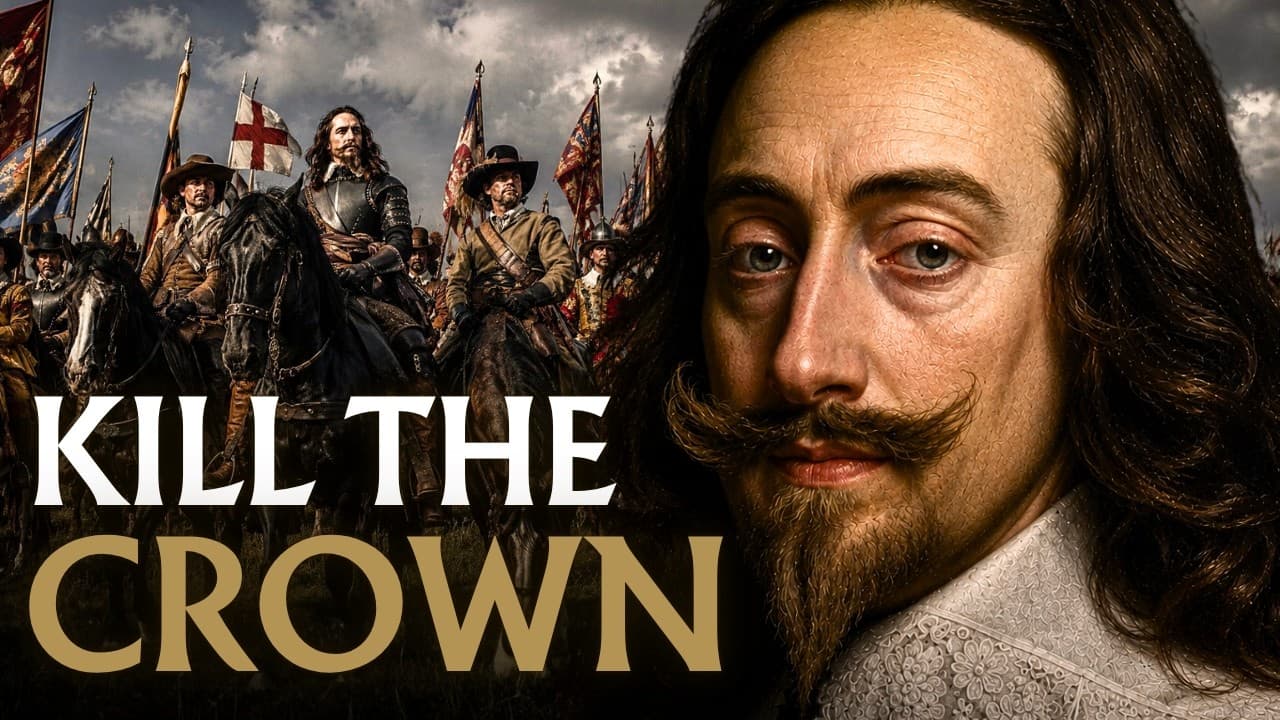
How Charles I became king and shaped his era
TL;DR
Charles I rose to the throne after his brother Henry Frederick died, leaving him heir to three thrones. He grew up in a Scottish English court under James I, developed his education and stutter, and was influenced by Buckingham. His 1623 Madrid visit inspired an autocratic sensibility and a shift toward royal prerogative that shaped his later reign.
Transcript
The man known to history as King Charles I was born on the 19th of November 1600 at Dunfermline Palace in Scotland. His father was King James VI of Scotland, who had ruled that kingdom since he was an infant in the mid-1560s. Charles’ mother was Queen Anne, a princess of the Danish royal family who had married James in 1589. Charles was the fourth ... Read More
Key Insights
- Charles I is introduced as the heir to three thrones after a family tragedy, setting a lifelong burden of succession.
- The young prince receives a rigorous humanist education, excelling in rhetoric and divinity while overcoming personal health challenges.
- Buckingham’s rise to power creates a triadic rule with the king, heir, and Buckingham shaping policy and patronage across England and Ireland.
- Charles I is drawn to the Spanish Match for dynastic and financial reasons, reflecting broader European political maneuvering of the era.
- The 1623 Madrid visit exposes Charles to a court steeped in absolutist governance and vast artistic patronage, influencing his later preferences for centralized authority.
- The king’s early health and personal challenges influence his public speaking and leadership style, including his stuttering, which he overcomes in part through effective expression.
- Parliamentary consent and funding become crucial for war decisions, highlighting tensions between royal prerogative and representative governance.
- The experience of failed diplomacy with Spain and the shift toward war after the Madrid visit foreshadowed later conflicts between Charles I and Parliament.
- More videos from this channel:
- More from this channel: The People Profiles
Install to Summarize YouTube Videos and Get Transcripts
Explore YouTube Video Summarizer or Get YouTube Transcript Extractor
Questions & Answers
Q: A real search query question about the video (e.g. 'How to...', 'What is...', 'Why does...', 'When should...'). Question 1
Charles I was born in 1600 to James VI, who had become James I of England, Scotland, and Ireland, and Anne of Denmark. As the heir after his brother Henry Frederick’s death, he grew up under a split court that would later influence his approach to succession, politics, and the patronage system that defined early Stuart governance. This background explains his later emphasis on royal prerogative and dynastic strategy.
Q: Question 2
The early education of Charles I played a crucial role in shaping his leadership. He was educated by Thomas Murray and excelled in humanist subjects such as rhetoric, Latin, philosophy, and divinity. This educational foundation helped him articulate royal ideology and manage court disputes, raising his capacity to negotiate with parliaments and nobles later in life.
Q: Question 3
Buckingham’s influence created a powerful dynamic at court where the king, the heir, and Buckingham shaped policy and patronage. This triage of power helped Charles I navigate early governance but also sowed dependencies that affected how authority was exercised, particularly in foreign policy, marriage diplomacy, and finance.
Q: Question 4
The Spanish Match represented a major diplomatic gamble driven by dynastic and financial incentives. It highlighted how marriage alliances could alter the balance of power in Europe and influenced Charles I to weigh alliances against domestic political stability, foreshadowing broader tensions between foreign policy and parliamentary consent.
Q: Question 5
Charles I’s 1623 Madrid mission exposed him to an absolutist court where the monarchy exercised strong centralized control. The experience contributed to his later preference for a more autocratic style of governance in England, aligning his artistic and cultural ambitions with a centralized political authority.
Q: Question 6
The Madrid visit also revealed to Charles the scale and prestige of royal patronage and the arts, inspiring him to become a major art patron in England during the 1630s. This cultural influence reinforced his desire for a sovereign image that could command resources and legitimacy across his realms.
Q: Question 7
Parliamentary involvement in funding and approving wars became a persistent constraint on Charles I. The need for consent demonstrated the friction between royal prerogative and representative government, a tension that would escalate in the years of his reign and contribute to later constitutional conflicts.
Q: Question 8
Overall, Charles I’s early life shows a prince shaped by a blending of Scottish and English court cultures, heightened by the influence of Buckingham and the experience of Spain. These elements contributed to a governance style that balanced personal authority with dynastic aims, foreshadowing both his ambitions and the political challenges he would later face.
Summary & Key Takeaways
-
Charles I was born in 1600 in Scotland to James VI of Scotland and Anne of Denmark, becoming heir after his brother’s death. He received a humanist education and developed skills in rhetoric and governance despite early health challenges.
-
The influence of court favourites like Buckingham and the failed Spanish Match shaped his approach to politics and marriage diplomacy, paving the way for a more centralized rule.
-
A formative Madrid trip in 1623 exposed him to autocratic displays of power and artistic patronage, influencing his future style of monarchy and his dependence on royal prerogative rather than parliamentary consensus.
Read in Other Languages (beta)
Share This Summary 📚
Summarize YouTube Videos and Get Video Transcripts with 1-Click
Try YouTube Summary with ChatGPT & Claude or YouTube Transcript Generator
Explore More Summaries from The People Profiles 📚
Summarize YouTube Videos and Get Video Transcripts with 1-Click
Try YouTube Summary with ChatGPT & Claude or YouTube Transcript Generator