How Did William Wilberforce Challenge Slavery?
TL;DR
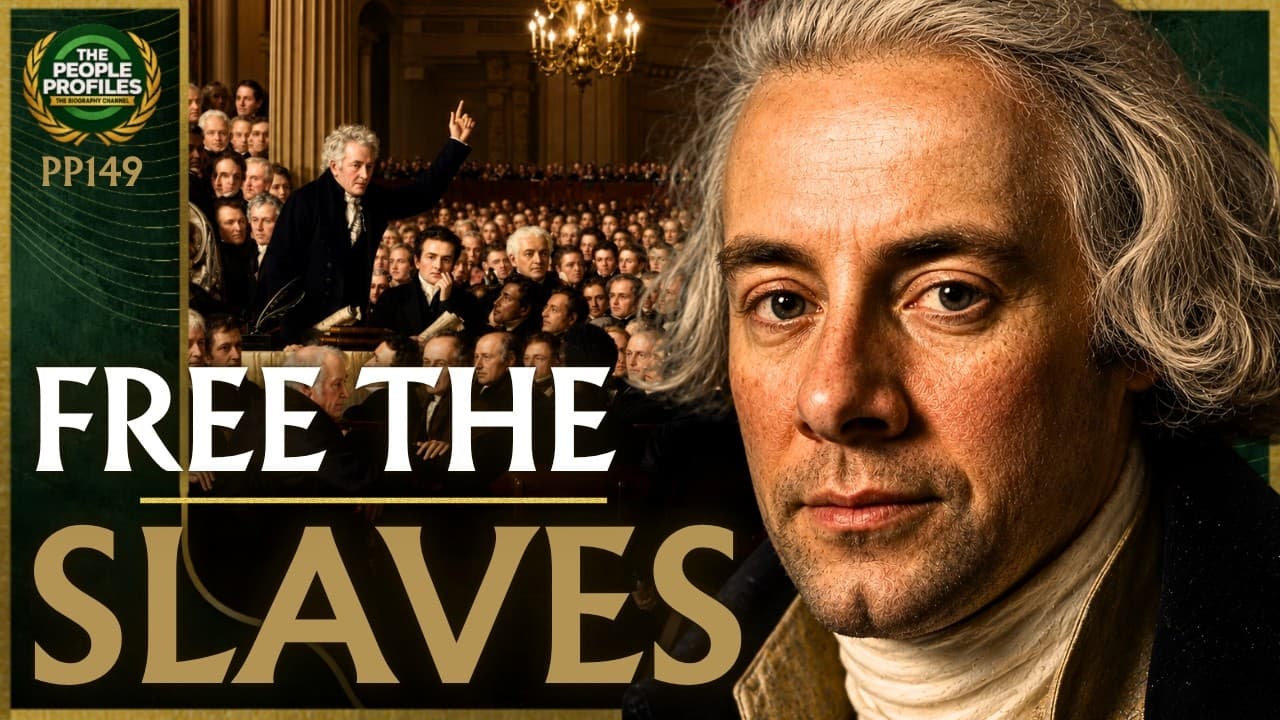
William Wilberforce’s path toward antislavery action grew from privilege, political ambition, evangelical influence, and a close friendship with William Pitt the Younger. Born into a wealthy Hull merchant family, he entered Parliament at twenty-one as an independent, initially pursuing status and pleasure rather than reform, before beginning the antislavery efforts that became his defining public cause.
Transcript
The man known to history as William Wilberforce was born in the English town of Hull, located in the East Riding of Yorkshire, on the 24th of August, 1759. Wilberforce’s father Robert was a merchant, and a successful one at that, having built up the family fortune that had been first developed by his own father, William. Young William Wilberforce k... Read More
Key Insights
- William Wilberforce was born into a wealthy Hull merchant family whose prosperity reflected Britain’s expanding commerce and empire. His privileged upbringing gave him education, social access, and political opportunities unavailable to children who had to work to support their families.
- Wilberforce’s childhood was marked by frequent illness, small stature, and poor eyesight. Family wealth protected him from the physically demanding existence endured by Britain’s lower classes, while formal schooling allowed his quick intellect and energetic personality to develop.
- Evangelical Christianity first influenced Wilberforce while he lived with his aunt and uncle near London. He listened eagerly to John Newton, a minister and former sea captain and slave trader, whose preaching and stories about Africa made a strong impression on him.
- Wilberforce’s early religious commitment weakened after his mother returned him to Hull. Sustained family criticism of Methodism, a classical education at Pocklington, and participation in theater and elite social activities moved him closer to conventional Anglican views during adolescence.
- Cambridge life encouraged Wilberforce’s idleness as well as his social gifts. Although gambling and entertainment displaced serious study, his memory and intelligence enabled him to pass examinations and gain recognition as one of the college’s brightest and most popular students.
- William Pitt the Younger became Wilberforce’s close and enduring friend after they met at Cambridge. Despite their different temperaments, they attended parliamentary debates together, and their relationship became an important part of Wilberforce’s political development and public life.
- Wilberforce entered the House of Commons at twenty-one after winning the Hull election of 1780. His charm and campaign spending, described as the modern equivalent of almost two million pounds, helped him secure a landslide victory over two competing candidates.
- Wilberforce began his parliamentary career as an independent who aligned with neither Tories nor Whigs. He initially concentrated on learning House procedures, building relationships, gambling in elite clubs, and enjoying London society rather than addressing the African slave trade.
- More videos from this channel:
- More from this channel: The People Profiles
Install to Summarize YouTube Videos and Get Transcripts
Explore YouTube Video Summarizer or Get YouTube Transcript Extractor
Questions & Answers
Q: How did William Wilberforce’s upbringing shape his career?
William Wilberforce grew up as the son of a prosperous Hull merchant in a family whose shipping business traded British products for lumber, mineral ores, and hemp from Baltic nations. That wealth gave him schooling, social connections, inherited financial independence, and access to elite circles. These advantages protected his sickly body from hard labor and later supported an expensive, successful campaign for Parliament.
Q: What religious influences affected William Wilberforce as a child?
Wilberforce encountered evangelical teaching while living with his aunt and uncle at Wimbledon Villa and spending time in London. He especially admired John Newton, a minister, former sea captain, and former slave trader whose sermons and stories captivated him. His mother became alarmed when he sounded increasingly Methodist, returned him to Hull, and separated him from those formative religious surroundings.
Q: Why did William Wilberforce move away from Methodism in his youth?
Wilberforce initially retained Methodist principles after returning to Hull, but his family repeatedly criticized those beliefs and encouraged his participation in respectable local society. At Pocklington he received a classical education, while in Hull he attended theater and joined social activities among aristocrats and elites. These pressures and attractions gradually shifted his outlook toward more conventional Anglican views.
Q: What was William Wilberforce like as a Cambridge student?
Wilberforce entered St. John’s College, Cambridge, in October 1776 at seventeen. He spent more time gambling and seeking amusement than studying, although his quick memory and sharp intellect enabled him to pass examinations. He was physically small and considered unattractive, yet his wit, singing, cheerful temperament, and sociability made him exceptionally popular among his classmates.
Q: How did William Wilberforce meet William Pitt the Younger?
Wilberforce met William Pitt the Younger while studying at Cambridge. Pitt was more serious and studious, but the two developed a close friendship despite their contrasting habits. During the winter of 1779 and 1780, they attended parliamentary debates together. Their relationship remained important after both entered the House of Commons and began participating in the government of the British Empire.
Q: How did William Wilberforce become a member of Parliament?
Wilberforce began planning a political career while still associated with Cambridge and started canvassing Hull electors in 1780. His personal charm attracted local freemen, while his campaign spending was described as the modern equivalent of almost two million pounds. He defeated two other candidates in a landslide and entered the House of Commons on October 31, 1780, aged twenty-one.
Q: What were William Wilberforce’s early priorities in Parliament?
Wilberforce entered Parliament as an independent and refused to align firmly with either the Tories or the Whigs. During his first year he spoke rarely, attended consistently, and studied parliamentary procedures. He also cultivated elite acceptance through clubs, gambling, operas, plays, and friendships with young bachelors. At this stage, the African slave trade was not one of his priorities.
Q: Why was William Wilberforce not initially given a cabinet position?
After the American Revolution ended and Lord North’s administration fell, Wilberforce hoped to join the new government’s inner circle. Despite his patriotism, political connections, and friendship with William Pitt the Younger, he was considered unsuitable for a cabinet role because of his organizational inefficiency. Pitt advanced into government and continued consulting Wilberforce about challenges facing the administration.
Summary & Key Takeaways
-
William Wilberforce was born in Hull on August 24, 1759, into a prosperous merchant family enriched by international trade during Britain’s imperial expansion. Frequently ill, physically small, and affected by poor eyesight, he nevertheless benefited from wealth, schooling, and freedom from the harsh labor experienced by many lower-class British children.
-
After his father died in 1768, Wilberforce lived with relatives near London and encountered evangelical teaching, particularly the preaching of John Newton, a former sea captain and slave trader. His mother later returned him to Hull, where family criticism, classical schooling, theater, elite social life, and inherited wealth gradually weakened his youthful Methodist commitment.
-
Wilberforce entered St. John’s College, Cambridge, in 1776, where his intelligence compensated for poor study habits and a life centered on amusement. His friendship with William Pitt the Younger encouraged his political ambitions. Backed by charm, wealth, and extensive campaign spending, he won election for Hull and entered Parliament in 1780 at twenty-one.
Read in Other Languages (beta)
Share This Summary 📚
Summarize YouTube Videos and Get Video Transcripts with 1-Click
Try YouTube Summary with ChatGPT & Claude or YouTube Transcript Generator
Explore More Summaries from The People Profiles 📚




Summarize YouTube Videos and Get Video Transcripts with 1-Click
Try YouTube Summary with ChatGPT & Claude or YouTube Transcript Generator