How Did Cleopatra Navigate Rome and Rule Egypt?
TL;DR
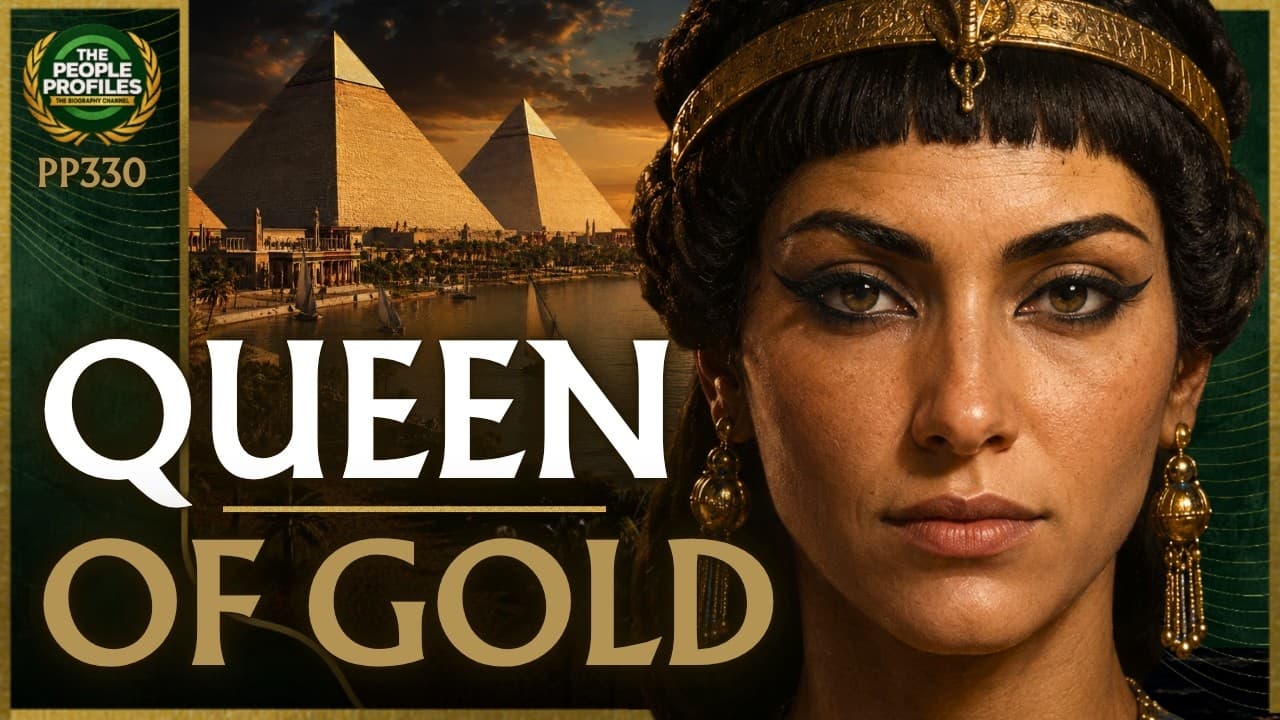
Cleopatra preserved Egypt’s independence for as long as possible through political skill, multilingual education, and strategic alliances with Julius Caesar and Mark Antony. Born into the Macedonian Ptolemaic dynasty as Rome expanded across the Eastern Mediterranean, she combined Greek learning with Egyptian religious traditions and became the dynasty’s last active pharaoh before her tragic end.
Transcript
The woman known to history as Queen Cleopatra VII of Egypt was most likely born early in 69 BC in the city of Alexandria, the capital of the Ptolemaic Kingdom of Egypt, though her date of birth is uncertain and it could have been in late 70 BC. Her name is derived from the Greek word kleos, meaning ‘glory’, and pater meaning ‘father’, so ... Read More
Key Insights
- Cleopatra VII was most likely born in Alexandria in early 69 BC, although the uncertain evidence also permits a birth in late 70 BC. Her name combined Greek words meaning “glory” and “father,” effectively giving it the meaning “glory to her father.”
- Cleopatra belonged to the Ptolemaic royal family, a Macedonian dynasty that governed Egypt through Greek cultural institutions while also observing Egyptian traditions. Her father was Ptolemy XII, but fragmentary records and royal practices involving polygamy make the identity of her mother uncertain.
- The Ptolemaic Kingdom emerged after Alexander the Great died in 323 BC without an adult legitimate heir. His general Ptolemy secured Egypt during the resulting wars, eventually becoming Ptolemy I and controlling additional territories in Libya, Cyprus, and the Levant.
- Alexandria was a major center of ancient learning under the Ptolemies. Its scholarly community, associated with the Mouseion and Great Library, supported fundamental work in mathematics, astronomy, geography, and science by figures such as Euclid and Eratosthenes.
- Cleopatra’s education reflected Alexandria’s cosmopolitan culture. She reportedly spoke Greek, Latin, Egyptian, Hebrew, and perhaps Syriac and Ethiopian, while participating in rituals honoring Egyptian deities including Osiris, Isis, Ra, Ptah, and Amun.
- Cleopatra’s alleged authorship of Greek medical texts remains uncertain. Later Arab scholars credited her with such writing, possibly using evidence that has since disappeared, but the frequency of the name Cleopatra creates the possibility that another female scholar was responsible.
- Cleopatra’s physical appearance cannot be established confidently from surviving artifacts. Coins, sculptures, and royal images provide representations but do not reliably reveal skin color, while incomplete knowledge of her maternal ancestry further limits certainty about her appearance.
- Roman expansion defined the political environment of Cleopatra’s life. Pompey defeated Mithridates, ended the Seleucid Empire, annexed Syria in 63 BC, and reorganized neighboring territories, leaving Egypt as the last major independent power in the Eastern Mediterranean.
Install to Summarize YouTube Videos and Get Transcripts
Explore YouTube Video Summarizer or Get YouTube Transcript Extractor
Questions & Answers
Q: Who was Cleopatra VII and when was she born?
Cleopatra VII was a queen of Egypt from the Ptolemaic royal dynasty and the last active pharaoh of ancient Egypt. She was most likely born in Alexandria in early 69 BC, although the surviving evidence is uncertain and allows for late 70 BC. Her father was Ptolemy XII, while her mother may have been Cleopatra V, whose identity and life are poorly documented.
Q: What was the origin of Cleopatra’s Ptolemaic dynasty?
The Ptolemaic dynasty originated with Ptolemy, a Macedonian general who served under Alexander the Great. After Alexander died in 323 BC, his generals fought for control of his empire. Ptolemy established himself in Egypt and later became King Ptolemy I. His kingdom also controlled parts of Libya, Cyprus, and the Levant and competed repeatedly with the Seleucid Empire.
Q: Why was Alexandria important to Cleopatra’s education?
Alexandria was the Ptolemaic capital and one of the ancient world’s foremost centers of culture and scholarship. Cleopatra probably studied under leading scholars associated with the Mouseion, the complex containing the Great Library. The city’s intellectual tradition included major advances in mathematics, astronomy, geography, and science, while its cosmopolitan population exposed her to multiple languages, cultures, and religious traditions.
Q: What languages could Cleopatra speak?
Cleopatra learned several languages because she grew up in cosmopolitan Alexandria and ruled a culturally diverse kingdom. The transcript identifies Greek, Latin, Egyptian, and Hebrew among the languages she spoke, while Syriac and Ethiopian are presented as additional possibilities. This multilingual education reflected both her Greek royal heritage and her need to engage with Egyptian traditions and neighboring peoples.
Q: Was Cleopatra Greek, Macedonian, or Egyptian?
Cleopatra belonged genetically to a Macedonian royal dynasty and culturally to a Greek ruling family, but she governed Egypt and participated in its ancient religious traditions. The Ptolemies ruled from the Greek city of Alexandria while honoring Egyptian gods and presenting themselves through Egyptian royal customs. Her maternal ancestry is not completely clear, so the surviving evidence does not resolve every question about her background.
Q: What evidence describes Cleopatra’s physical appearance?
Surviving evidence includes profile portraits on coins, several sculptures believed to represent her, and smaller royal images found around Egypt. These sources cannot establish her skin color because coins do not convey color and ancient sculptures have lost their original paint. The transcript argues that the artifacts show Hellenistic features, but it also acknowledges uncertainty concerning Cleopatra’s maternal descent.
Q: How did Rome threaten Egypt during Cleopatra’s youth?
Rome had interfered in Ptolemaic affairs for nearly a century before Cleopatra’s birth. During her childhood, Pompey defeated Mithridates, destroyed the remaining Seleucid power, annexed Syria in 63 BC, and reorganized neighboring states. Rome also separated Cyprus from Ptolemaic control and annexed it in 58 BC, leaving Egypt increasingly isolated as the Eastern Mediterranean’s last major independent power.
Q: How did Cleopatra try to preserve Egypt’s independence?
Cleopatra used political intelligence, personal influence, and strategic alliances with the Roman leaders Julius Caesar and Mark Antony. These relationships helped her navigate the dangers created by Rome’s dominance of the Eastern Mediterranean and maintain Egypt’s independence for as long as possible. Her actions connected the fate of her reign and the Ptolemaic dynasty directly to struggles within Roman politics.
Summary & Key Takeaways
-
Cleopatra VII was probably born in Alexandria in early 69 BC, although late 70 BC remains possible. Her father was Ptolemy XII, while her mother’s identity is uncertain. She belonged to the Macedonian Ptolemaic dynasty, which had ruled Egypt since the wars following Alexander the Great’s death in 323 BC.
-
Alexandria gave Cleopatra access to an exceptional intellectual environment centered on the Mouseion and Great Library. She received a strong education and reportedly knew Greek, Latin, Egyptian, Hebrew, and possibly other languages. Her upbringing combined the Greek culture of her royal family with Egyptian religious rituals and traditions developed over three millennia.
-
Cleopatra inherited a kingdom threatened by Roman expansion. Pompey’s victories ended the Seleucid Empire, made Syria a Roman province, and left Egypt as the Eastern Mediterranean’s last major independent power. Cleopatra later used alliances with Julius Caesar and Mark Antony to navigate Roman politics and preserve Egyptian independence for as long as possible.
Read in Other Languages (beta)
Share This Summary 📚
Summarize YouTube Videos and Get Video Transcripts with 1-Click
Try YouTube Summary with ChatGPT & Claude or YouTube Transcript Generator
Explore More Summaries from The People Profiles 📚




Summarize YouTube Videos and Get Video Transcripts with 1-Click
Try YouTube Summary with ChatGPT & Claude or YouTube Transcript Generator