How Did Peter the Great Modernize Russia?
TL;DR
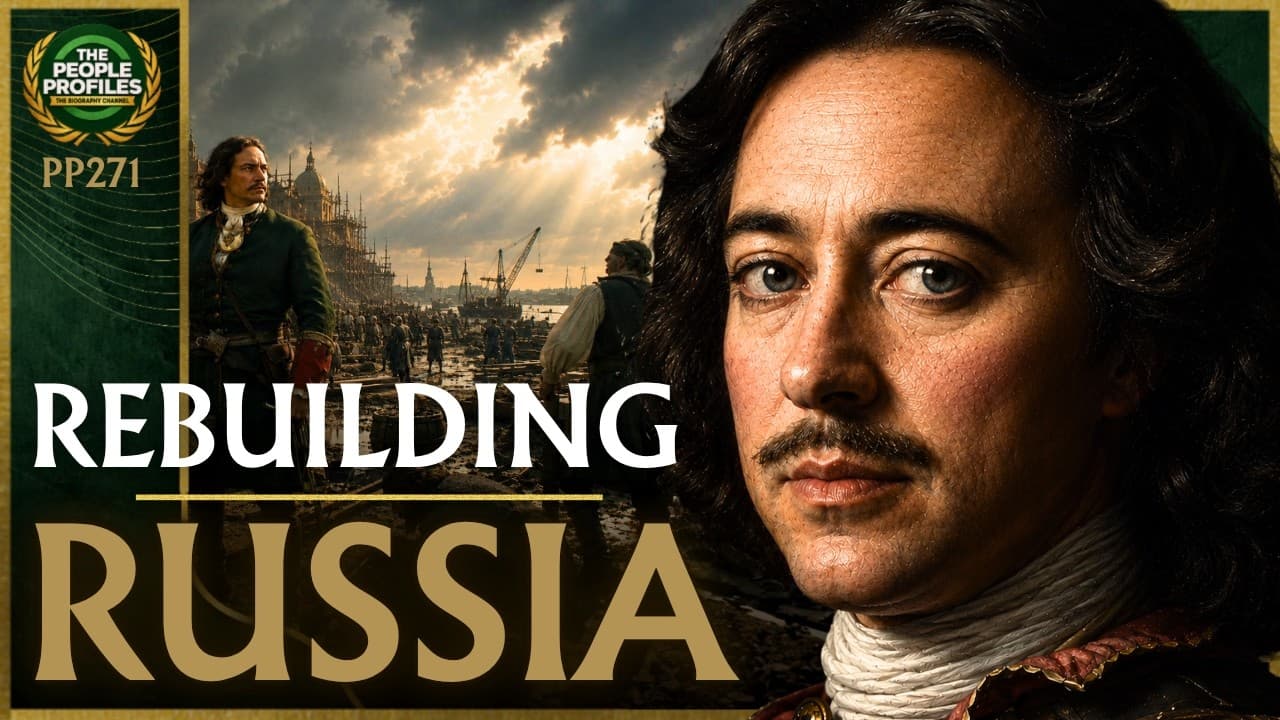
Peter the Great modernized Russia by reforming the military and adopting Western ideas, shaping it into a major European empire. He founded St. Petersburg as a gateway to the West to extend Russian influence and promote European culture and technology. His reign combined harsh autocracy with liberal, secular aims to advance the state.
Transcript
The man known to history as Peter the Great, Tsar of all Russia, was born on the 9th of June 1672 in the city of Moscow, although one will find his date of birth described as being slightly different depending on whether the Greek Orthodox, Julian or Gregorian Calendar date is being used. Peter’s father was Alexis I, Tsar of all Russia. He had ... Read More
Key Insights
- Peter is described as a reformer who fused liberal and autocratic elements to advance Russia. The key to his strategy was balancing modernization with centralized control.
- The founding of St. Petersburg served as a concrete symbol and instrument of Russia's Western orientation and expanded access to European trade and culture.
- Peter the Great identified military modernization as essential for Russia to compete with major European powers and to secure warm water ports for trade and security.
- Western ideas influenced his policy direction, aided by his exposure to European tutors and foreign ministers who supported reform and secular governance.
- The political structure of Russia under Peter evolved from a dual co ruling arrangement to a more centralized autocratic system, enabling decisive reform implementation.
- Internal societies and reforms were used to consolidate power while pushing for broader social and administrative changes across the empire.
- Economic and administrative modernization accompanied military reforms, facilitating Russia's transition toward a more capable and outward looking state.
- Peter leveraged personal leadership and public campaigns to promote reform, often living simply alongside soldiers to emphasize commitment to the national goal.
- More videos from this channel:
- More from this channel: The People Profiles
Install to Summarize YouTube Videos and Get Transcripts
Explore YouTube Video Summarizer or Get YouTube Transcript Extractor
Questions & Answers
Q: A real search query question about the video (e.g. 'How to...', 'What is...', 'Why does...', 'When should...'). Question 1
Peter the Great is described as transforming Russia from a tsardom into a major European empire during his reign. He implemented extensive reforms such as modernizing the military and founding St. Petersburg to expand Russian influence and adopt European culture and technology. These actions illustrate how centralized leadership and Western orientation reshaped Russia's strategic position and internal development.
Q: What were the core reforms Peter pursued?
The core reforms attributed to Peter include military modernization and the creation of Western oriented institutions and practices. He is noted for adopting European culture and technology and promoting secular ideas through ministers like Artamon Matveyev, as well as his own liberal but autocratic approach. These measures were aimed at strengthening the state, enhancing administration, and expanding Russia's reach to the Baltic and beyond.
Q: How did St. Petersburg factor into his goals?
St. Petersburg was founded as a window to the West, a strategic port city intended to extend Russia's influence and provide access to European trade routes and culture. Building the city symbolized a broader shift toward Westernization and helped integrate Western technology and administrative practices into Russian governance, reinforcing Russia's European orientation and military and economic development.
Q: What was Peter’s approach to governance?
Peter combined a forceful personality with a liberal streak by promoting secular and rational ideas while maintaining autocratic authority. He supported reform through trusted ministers and reform minded elites, and he was willing to live in challenging conditions with his troops to demonstrate commitment to his goals. This blend aimed at rapid modernization and state capacity building.
Q: How did Peter view Western ideas?
Peter valued Western European ideas as a source of modernization, reform, and technical knowledge. He invited influence from tutors and foreign ministers and sought to adopt European culture and science to modernize Russian state institutions, military, and society. This western orientation helped define his policy choices and state priorities.
Q: What was the historical context of Peter’s early life?
Peter inherited a Russia coming out of a period of instability and expansion that faced internal political challenges and external conflicts. The Time of Troubles and a dynamic but unstable political landscape shaped his sense of necessity for strong leadership and systemic reform to unify and empower the state for future growth.
Q: Who helped Peter in his reform agenda?
Key aides and patrons included ministers like Artamon Matveyev who supported Western oriented reforms. Natalya Naryshkina and Peter’s mother helped influence the direction of reform, and various Scottish and European figures connected through Peter's upbringing contributed to his exposure to Western ideas and administrative practices.
Q: How did Peter’s personal image influence his leadership?
Peter’s imposing physical presence and dynamic personality reinforced his ability to push through bold reforms. His willingness to endure hardship and live simply alongside soldiers demonstrated a commitment to national goals, signaling to reformers and subjects alike that modernization required dedication and sacrifice from the leadership.
Summary & Key Takeaways
-
Peter the Great propelled Russia from a tsardom toward a leading European power through selective reforms and strategic outreach.
-
He pursued Westernizing reforms while maintaining strong autocratic authority, enabling rapid state and military modernization.
-
Founding St. Petersburg and expanding European influence were central to his long term vision for Russia.
Read in Other Languages (beta)
Share This Summary 📚
Summarize YouTube Videos and Get Video Transcripts with 1-Click
Try YouTube Summary with ChatGPT & Claude or YouTube Transcript Generator
Explore More Summaries from The People Profiles 📚
Summarize YouTube Videos and Get Video Transcripts with 1-Click
Try YouTube Summary with ChatGPT & Claude or YouTube Transcript Generator