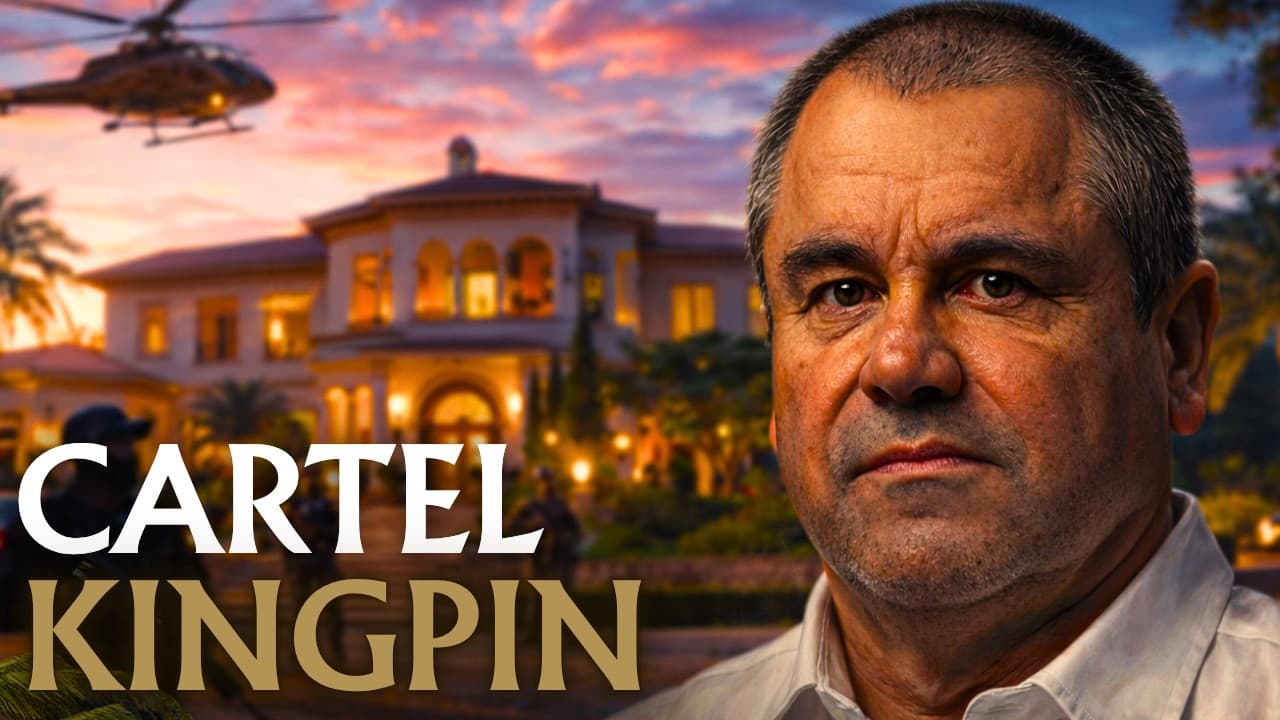
How El Chapo Built the Sinaloa Cartel Empire
TL;DR
El Chapo rose from a poor farmer’s family to lead the Sinaloa Cartel, pioneering drug smuggling techniques including underground tunnels and complex logistics. He expanded operations, faced government pressure, and was eventually extradited to the United States where he received a life sentence. His career intertwined ruthless violence with meticulous business acumen.
Transcript
It is the 11th of July 2015, a prisoner in the High Security Altiplano prison in Mexico takes a shower in his cell, going out of sight from the CCTV cameras that monitor him 24/7. Minutes pass and he doesn’t emerge. Then when prison guards inspect his cell, they find that he has vanished, through a trap door in the shower floor, along a mile lo... Read More
Key Insights
- El Chapo began as a small-scale player and rose to become the leader of the Sinaloa Cartel, shaping its long-term dominance.
- The cartel used a primary tunnel system underneath Agua Prieta for drug smuggling, enabling faster and more reliable transfers than rivals.
- El Chapo earned the nickname El Rapido due to the speed and reliability of his operation, signaling a focus on efficient distribution.
- The Golden Triangle region and the drug trade dynamics in the late 20th century set the stage for El Chapo’s rise to power.
- Relentless expansion included acquiring assets like mansions, private jets, and luxury goods to reward and motivate henchmen.
- Government actions, such as Operation Condor and enforcement by the DEA, pressured cartels and forced strategic shifts in routes.
- In the 1990s, when traditional routes were compromised, the cartel adapted by changing transportation methods and adjusting smuggling compartments.
- Despite violence, El Chapo maintained a calm, businesslike demeanor, leveraging meticulous attention to deal details to outmaneuver rivals.
- More videos from this channel:
- More from this channel: The People Profiles
Install to Summarize YouTube Videos and Get Transcripts
Explore YouTube Video Summarizer or Get YouTube Transcript Extractor
Questions & Answers
Q: How did El Chapo escape from prison and why did it change his trajectory?
El Chapo escaped from the High Security Altiplano prison through a trap door in the shower floor, emerging into a mile long tunnel equipped with air conditioning and a motorbike. This audacious escape solidified his reputation, demonstrated the cartel’s capacity for sophisticated logistics, and allowed him to reorganize leadership and expand operations while evading capture.
Q: What role did smuggling tunnels play in the Sinaloa Cartel’s operations?
Smuggling tunnels, notably the Agua Prieta tunnel, served as the primary pipeline into the United States, enabling the cartel to move several tons of product monthly with speed and reliability. These tunnels allowed coordinated hideouts, drainage systems, and concealed entrances that reduced detection risk and facilitated rapid transfers to markets in Arizona.
Q: Who were El Chapo’s early mentors and how did they influence his rise?
El Chapo moved to Guadalajara to work under mentors in the Sinaloa homeland and later for Juan José Esparragoza Moreno who took him under his wing. This mentorship provided networks, learning opportunities, and strategic guidance that helped him climb from mid-level dealer to a dominant cartel figure, aligning his operations with larger criminal networks.
Q: What events contributed to the decline of the Guadalajara Cartel and the rise of the Sinaloa Cartel?
The murder and investigation of Félix Gallardo’s network following the 1985 death of Kiki Camarena helped dismantle the Guadalajara Cartel, creating a power vacuum. This enabled El Chapo and a new generation of drug lords to seize control, establishing the Sinaloa Cartel as the dominant force in Sinaloa by the late 1980s.
Q: How did the cartel respond when primary routes were compromised in the 1990s?
When primary routes like the Agua Prieta tunnel were targeted by authorities, the cartel shifted tactics by disguising shipments in chilli cans and altering transport methods. This adaptability showed a high level of operational resilience and an emphasis on maintaining flow despite policing pressure.
Q: What kinds of assets did El Chapo acquire to consolidate power?
El Chapo acquired a 10-million-dollar mansion, a private zoo, four private jets, hundreds of luxury cars, and diamond-studded Rolex watches. These assets served to reward loyalty, project power, and enable the cartel to finance expansion, while also signaling a level of wealth and influence that deterred rivals.
Q: How did law enforcement pressure affect El Chapo’s operations in the late 20th century?
Law enforcement pressure, including DEA operations and Mexican state actions, disrupted traditional trafficking routes and catalyzed strategic shifts. The cartel had to adapt by reorganizing routes, changing smuggling methods, and maintaining supply chains through innovative tactics to stay ahead of investigators and maintain profitability.
Q: What is highlighted about El Chapo’s leadership style and personality?
El Chapo is described as ruthless and remorseless in dealing with enemies and rivals, yet calm and level-headed in business affairs. This combination of aggression and careful planning allowed him to manage complex networks, negotiate deals, and keep the cartel financially dominant while navigating constant threats from authorities and competitors.
Summary & Key Takeaways
-
El Chapo grew up in La Tuna and built a trafficking network that turned the Sinaloa Cartel into a dominant force.
-
He used innovative smuggling methods such as underground tunnels and later adapted to changing routes when routes were shut down.
-
Despite brutal methods, he was described as calm and detail oriented in business, enabling rapid expansion and large wealth.
-
The cartel relied on a tunnel network and logistical cleverness to move drugs efficiently across borders.
-
Sinaloa leadership faced government crackdowns and internal violence, including family conflicts and strategic partnerships.
-
The DEA and Mexican authorities played a key role in dismantling early routes, prompting shifts in trafficking strategies.
-
El Chapo’s extradition to the US marked the end of his prison escape era and the shift to different enforcement tactics.
-
The video emphasizes the blend of ruthlessness and business savviness that defined El Chapo’s leadership.
Read in Other Languages (beta)
Share This Summary 📚
Summarize YouTube Videos and Get Video Transcripts with 1-Click
Try YouTube Summary with ChatGPT & Claude or YouTube Transcript Generator
Explore More Summaries from The People Profiles 📚






Summarize YouTube Videos and Get Video Transcripts with 1-Click
Try YouTube Summary with ChatGPT & Claude or YouTube Transcript Generator