Why Was Charles II of Spain Called the Bewitched King?
TL;DR
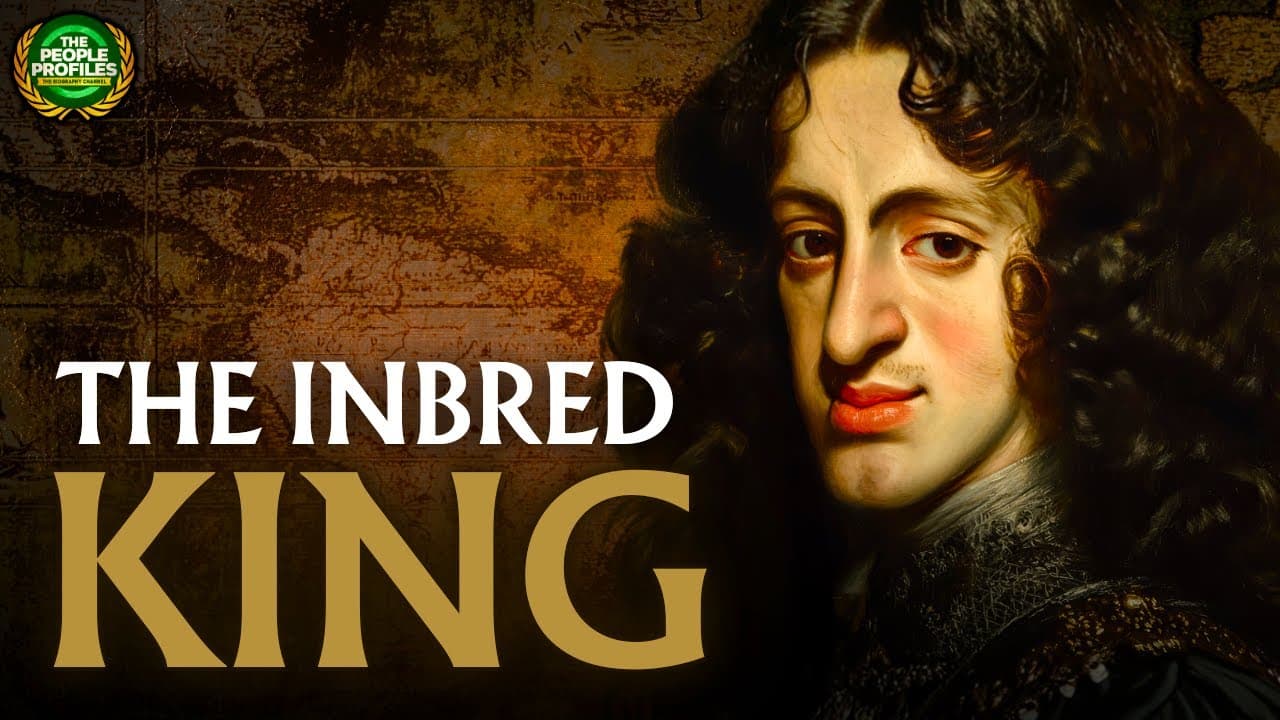
Charles II of Spain was the last Habsburg king, born in 1661 after generations of uncle-niece and cousin marriages left him severely disabled. Nicknamed the Bewitched, he could not walk until age eight, was infertile and impotent, and defied expectations by living almost 40 years. His childless death at 38 triggered the War of the Spanish Succession.
Transcript
It is the 17th of September 1665. The Spanish king Philip IV known as Elre Planeta, the planet king on account of Spain's vast global colonial empire is dead. He ascended to the throne as a 15year-old all the way back in 1621, meaning that his passing 44 years later is the end of an era. Within Spanish government circles, there is concern as Philip... Read More
Key Insights
- Charles II of Spain, born 6 November 1661 in Madrid, was the last Habsburg king of Spain, and his death would trigger a major international conflict lasting over a decade as Europe's great powers fought to succeed him.
- The 11 marriages between the Spanish and Austrian Habsburgs during the 16th and 17th centuries are commonly believed to have contributed to the health problems that plagued Charles II and led to the extinction of the Spanish Habsburg line.
- Charles II's parents were an uncle and niece: Philip IV married his 15-year-old niece Maria Anna of Austria in October 1649 when he was 44, a marriage arrangement described as strangely typical of Habsburg dynastic policy.
- The Habsburg jaw, caused by inbreeding, left successive generations with lower teeth extending beyond the upper teeth, preventing them from closing their mouths properly, alongside other genetic defects and reduced survival odds for royal children.
- Six of Queen Mariana's previous eight children before Charles were stillborn or died shortly after birth, and his older brother Filipe Prospero died a month shy of his fourth birthday on 1 November 1661, five days before Charles was born.
- Charles's birth was regarded as a miracle and a gift from God, giving the Spanish Habsburgs a final chance to continue their dynastic lineage, though witnesses may have deemed him healthy simply because he was still breathing.
- Charles II's inbreeding was so severe that, per the description, his consanguinity was higher than that of a child born of a brother-sister union, causing conditions including the Habsburg jaw, a large tongue, and an inability to walk until age eight.
- Spain was already in decline before Charles: France's victory at Rocroi in 1643 marked the end of Spanish military supremacy, and Spain recognized Dutch independence in the Peace of Münster in January 1648 after 80 years of resistance.
Install to Summarize YouTube Videos and Get Transcripts
Explore YouTube Video Summarizer or Get YouTube Transcript Extractor
Questions & Answers
Q: Why was Charles II of Spain called the Bewitched King?
Charles II was nicknamed Carlos the Bewitched by his subjects because of the serious health issues and physical deformities he suffered from birth. According to the description, his condition was so pitiable that courtiers genuinely believed he was possessed, leading to multiple failed exorcisms. In reality, his afflictions stemmed from generations of Habsburg inbreeding rather than any supernatural curse, and much of Europe spent years awaiting his imminent death.
Q: What caused Charles II of Spain's health problems?
Charles II's health problems were caused by extensive inbreeding within the Habsburg dynasty. The 11 marriages between the Spanish and Austrian branches during the 16th and 17th centuries are commonly believed to have contributed to his conditions. His own parents were uncle and niece. This concentrated genetics produced the Habsburg jaw, a large tongue, developmental delays, extreme frailty, and, per the description, a consanguinity level higher than that of a child born of a brother-sister union.
Q: Who were the parents of Charles II of Spain?
Charles II's father was King Philip IV of Spain, the fifth Habsburg king, who ruled from 1621 to 1665 and was nicknamed the planet king. His mother was Mariana of Austria, daughter of Holy Roman Emperor Frederick III and Maria Anna of Spain, who was a younger sister of Philip IV. This made his parents uncle and niece, a marriage the video calls strangely typical of Habsburg dynastic policy in that era.
Q: What is the Habsburg jaw?
The Habsburg jaw was a physical defect caused by inbreeding among the Spanish and Austrian Habsburgs. It left successive generations with prominent jaws in which the lower teeth extended beyond the upper teeth, preventing them from closing their mouths properly. According to the description, Charles II's version of the condition prevented him from chewing, and it was accompanied by a large tongue. It was one of several genetic defects produced by generations of intermarriage.
Q: How long did Charles II of Spain live despite his illnesses?
Despite the scale of his varied illnesses and the fact that the whole of Europe seemed to await his imminent death year after year, even from childhood, Charles II defied expectations and lived for almost 40 years. The description specifies that he died at age 38, childless and suffering. His prolonged survival was remarkable given that six of his mother's eight previous children were stillborn or died shortly after birth.
Q: What happened after Charles II of Spain died?
Charles II died childless, and his death triggered a major international conflict that lasted over a decade as Europe's great powers sought to decide who would succeed to his kingdom and Spain's vast colonial empire. The description names this conflict the War of the Spanish Succession, describing it as one of the worst wars in early modern European history. As the last Habsburg king of Spain, his death ended the Spanish Habsburg line.
Q: Why was Charles II of Spain's birth considered a miracle?
Charles II's birth was regarded as a miracle because the Spanish Habsburgs were desperate for an heir. Six of Queen Mariana's previous eight children were stillborn or died shortly after birth, and his older brother Filipe Prospero died just shy of his fourth birthday on 1 November 1661, only five days before Charles was born. His arrival was seen as a gift from God giving the dynasty a final chance to continue its lineage.
Q: How did Spain decline during the Habsburg era before Charles II?
Spain declined through a series of costly military and financial setbacks. King Philip's reign saw state bankruptcies from overspending to crush the Protestant Reformation. France's crushing victory at Rocroi in 1643 marked the end of Spanish military supremacy and the start of French hegemony. Spain formally recognized Dutch independence in the Peace of Münster in January 1648 after 80 years, and Portugal proclaimed independence under King John IV in December 1640.
Summary & Key Takeaways
-
Charles II, born 6 November 1661 in Madrid, was the fifth-generation product of the Spanish Habsburg dynasty. Descended from a line that repeatedly intermarried with its Austrian cousins across 11 marriages, he inherited severe genetic defects and became the last Habsburg king of Spain.
-
His father, Philip IV, the planet king, ruled a vast colonial empire from 1621 until his death on 17 September 1665, but presided over decline. Defeats to France at Rocroi in 1643, Dutch independence in 1648, and Portugal's 1640 revolt eroded Spanish supremacy.
-
Nicknamed Carlos the Bewitched, Charles suffered severe illness and deformity, yet defied constant predictions of imminent death to live almost 40 years. According to the description, he could not walk until age eight, was infertile and impotent, and his childless death at 38 sparked the War of the Spanish Succession.
Read in Other Languages (beta)
Share This Summary 📚
Summarize YouTube Videos and Get Video Transcripts with 1-Click
Try YouTube Summary with ChatGPT & Claude or YouTube Transcript Generator
Explore More Summaries from The People Profiles 📚



Summarize YouTube Videos and Get Video Transcripts with 1-Click
Try YouTube Summary with ChatGPT & Claude or YouTube Transcript Generator