How Does Face ID Work on iPhones?
TL;DR
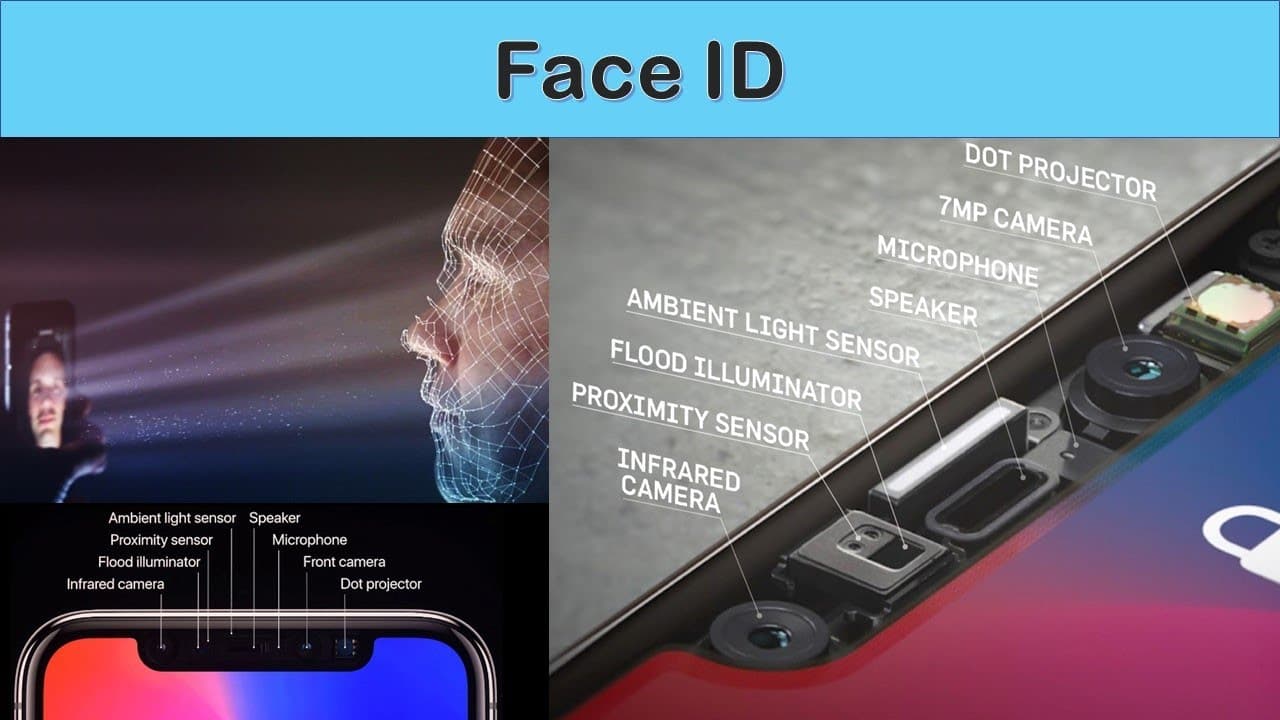
Face ID works by using three main components: a Flood illuminator, Dot projector, and Infrared camera. The Flood illuminator emits infrared light to illuminate the face, the Dot projector projects around 30,000 infrared dots to create a detailed map, and the Infrared camera captures these reflections to construct a 3D image for secure unlocking.
Transcript
Hello everyone, welcome to Semicon Talk. Today’s topic is Face ID. Face ID is used in smartphone to unlock phone just by looking it. But did you think about how it works? Let’s check it out! For Apple iPhone, there are many parts and sensors at the top side of display. From left, Infrared camera, Flood illuminator, Proximity sensor, Ambient light ... Read More
Key Insights
- Face ID technology on iPhones uses three main components: the Flood illuminator, Dot projector, and Infrared camera, each playing a crucial role in the facial recognition process.
- The Flood illuminator uses a VCSEL light source to emit infrared light, which illuminates the face for the Dot projector and Infrared camera to function effectively.
- The Dot projector emits approximately 30,000 infrared dots onto the user's face, creating a detailed map that aids in accurate facial recognition.
- The Infrared camera captures the reflected infrared dots, constructing a 3D image of the user's face to ensure secure unlocking of the device.
- VCSELs, used in both the Flood illuminator and Dot projector, are manufactured by companies such as Lumentum and II-VI, highlighting the specialized nature of these components.
- Wafer level optics, essential for directing and projecting the infrared dots, are produced by companies like ams and Himax, showcasing the collaboration between multiple manufacturers.
- The Infrared camera differs from regular cameras by using an IR image sensor and an IR pass filter, allowing it to capture only infrared light for precise facial mapping.
- Face ID not only provides a convenient method for unlocking iPhones but also serves as a robust security measure for user authentication and identity verification.
Install to Summarize YouTube Videos and Get Transcripts
Explore YouTube Video Summarizer or Get YouTube Transcript Extractor
Questions & Answers
Q: How does the Flood illuminator contribute to Face ID?
The Flood illuminator plays a vital role in Face ID by emitting infrared light to illuminate the user's face. This illumination is crucial for the Dot projector and Infrared camera to function effectively. The Flood illuminator uses a VCSEL light source, manufactured by companies like Lumentum and II-VI, to emit the necessary infrared light.
Q: What is the function of the Dot projector in Face ID?
The Dot projector is responsible for projecting approximately 30,000 infrared dots onto the user's face. These dots create a detailed map of the face, which is essential for accurate facial recognition. The Dot projector uses wafer level optics, produced by companies like ams and Himax, to direct and project the infrared dots effectively.
Q: How does the Infrared camera in Face ID differ from regular cameras?
The Infrared camera in Face ID differs from regular cameras in two significant ways. First, it uses an IR image sensor, which captures only infrared light, unlike regular cameras that capture visual light. Second, it employs an IR pass filter, allowing only infrared light to reach the sensor, ensuring precise facial mapping for secure authentication.
Q: What role do VCSELs play in Face ID technology?
VCSELs, or Vertical-Cavity Surface-Emitting Lasers, are crucial components in both the Flood illuminator and Dot projector. They serve as the light source that emits infrared light, essential for illuminating the face and projecting infrared dots. Companies like Lumentum and II-VI manufacture these specialized components, highlighting their importance in Face ID technology.
Q: Why are wafer level optics important in the Dot projector?
Wafer level optics are essential in the Dot projector because they guide and project the infrared light emitted by the VCSEL. This process creates the thousands of infrared dots required for accurate facial mapping. Companies such as ams and Himax, which acquired Heptagon, manufacture these optics, ensuring the Dot projector's precision and effectiveness.
Q: How does Face ID enhance security on iPhones?
Face ID enhances security on iPhones by using advanced infrared sensors to create a detailed 3D map of the user's face. This technology ensures that only the authorized user can unlock the device, providing a robust security measure for identity verification and preventing unauthorized access to sensitive information.
Q: What companies are involved in the manufacturing of Face ID components?
Several companies are involved in manufacturing the components for Face ID technology. Lumentum and II-VI produce the VCSELs used in the Flood illuminator and Dot projector. Ams and Himax manufacture the wafer level optics for the Dot projector, while Viavi produces the IR filter used in the Infrared camera. This collaboration ensures the system's reliability and effectiveness.
Q: In what ways is Face ID convenient for users?
Face ID provides convenience to users by allowing them to unlock their iPhones without physical interaction, simply by looking at the device. This hands-free operation is particularly useful in situations where users' hands are occupied or when wearing gloves. Additionally, Face ID streamlines authentication processes for secure apps and services, enhancing user experience.
Summary & Key Takeaways
-
Face ID technology on iPhones utilizes a combination of infrared sensors to accurately recognize and authenticate users' faces, ensuring secure access to the device. The system consists of a Flood illuminator, Dot projector, and Infrared camera, each contributing to the creation of a detailed 3D facial map.
-
The Flood illuminator emits infrared light to illuminate the user's face, while the Dot projector projects thousands of infrared dots to create a precise facial map. These components work in tandem with the Infrared camera, which captures the reflected dots to construct a 3D facial image.
-
Manufacturers such as Lumentum, II-VI, ams, and Himax play crucial roles in producing the advanced components required for Face ID technology. This collaboration ensures the system's reliability and effectiveness in providing secure and convenient user authentication.
Read in Other Languages (beta)
Share This Summary 📚
Summarize YouTube Videos and Get Video Transcripts with 1-Click
Try YouTube Summary with ChatGPT & Claude or YouTube Transcript Generator
Explore More Summaries from Semicon Talk 📚





Summarize YouTube Videos and Get Video Transcripts with 1-Click
Try YouTube Summary with ChatGPT & Claude or YouTube Transcript Generator