What Is Wafer Level Chip Scale Packaging (WLCSP)?
TL;DR
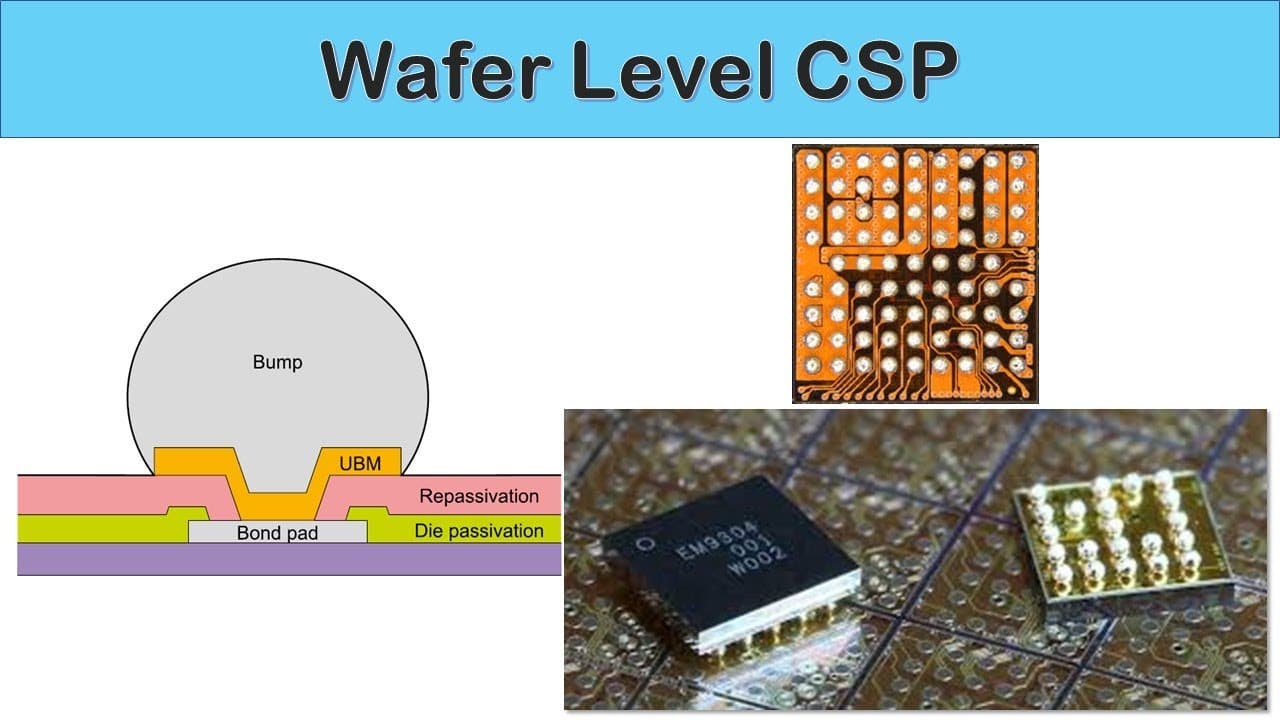
Wafer Level Chip Scale Packaging (WLCSP) is a compact packaging method where the die size equals the package size, eliminating traditional substrates. It utilizes materials like Polyimide for repassivation and is processed in batches for cost efficiency. Ideal for applications like power management ICs, WLCSP can vary in size and structure, with features for added protection against mechanical damage.
Transcript
Hello everyone, welcome to Semicon Talk! Today’s topic is Wafer Level Chip Scale Package. Let’s talk about it! Wafer Level CSP is the smallest package in the market. Its die size equals with package size Usually, packages use substrate like leadframe or laminate but WLCSP does not use package substrate. So WLCSP consists of die, repassivation and... Read More
Key Insights
- Wafer Level Chip Scale Package (WLCSP) is the smallest packaging available, with the die size equaling the package size, eliminating the need for traditional substrates like leadframes or laminates.
- Repassivation in WLCSP uses Polyimide (PI) or Polybenzoxazoles (PBO), with PI favored for its thermal stability and mechanical properties. HD MicroSystems, a joint venture between Showa Denko and DuPont, is a major supplier.
- WLCSP sizes range from less than 1x1mm to 6x6mm, with larger sizes potentially causing reliability issues. The package uses a batch process, reducing costs by processing all dies on a wafer simultaneously.
- Two popular WLCSP structures are Bump on Bond Pad and Bump on Redistribution Layer (RDL). The latter uses copper RDL to connect bumps to bond pads, allowing for different bump and pad locations.
- Bump pitches in WLCSP typically range from 0.5mm to 0.3mm, with 0.4mm being the most common. RDL thickness varies from 4um to 20um, catering to high current applications like wireless charging.
- WLCSP can include optional backside coating for die protection, using materials like Adwill LC Tape for both protection and laser marking, though it adds cost.
- Side protection in WLCSP can cover different sides of the die, offering additional mechanical protection against damage.
- WLCSP is widely used in applications such as power management ICs and audio codecs. It may require encapsulation to protect against high-energy radiation in certain devices.
Install to Summarize YouTube Videos and Get Transcripts
Explore YouTube Video Summarizer or Get YouTube Transcript Extractor
Questions & Answers
Q: What is the main advantage of Wafer Level Chip Scale Package (WLCSP)?
The main advantage of WLCSP is its compact size, which matches the die size with the package size, eliminating the need for traditional substrates like leadframes or laminates. This results in a smaller, more efficient package that is particularly useful for small-scale applications and reduces overall manufacturing costs.
Q: What materials are used for repassivation in WLCSP?
Repassivation in WLCSP primarily uses Polyimide (PI) and Polybenzoxazoles (PBO). PI is favored due to its thermal stability, chemical resistance, and mechanical properties. HD MicroSystems, a joint venture between Showa Denko and DuPont, is a major supplier of these materials, ensuring high-quality repassivation layers.
Q: What are the popular structures of WLCSP?
The popular structures of WLCSP include Bump on Bond Pad and Bump on Redistribution Layer (RDL). Bump on Bond Pad places the bump directly on the die's bond pad, while Bump on RDL uses a copper redistribution layer to connect the bump to the bond pad, allowing for varied bump and pad locations.
Q: How does WLCSP handle high current applications?
WLCSP handles high current applications by using thicker Redistribution Layers (RDL), ranging from 4um to 20um or more. These thicker RDLs are made of copper and are designed to carry higher currents, making WLCSP suitable for applications such as wireless charging and other high-power requirements.
Q: What optional features can enhance the durability of WLCSP?
Optional features that enhance WLCSP's durability include backside coating and side protection. Backside coating, using materials like Adwill LC Tape, protects the die from mechanical damage and facilitates laser marking. Side protection covers various die sides, providing additional mechanical protection against damage.
Q: In what applications is WLCSP commonly used?
WLCSP is commonly used in applications such as power management integrated circuits (ICs) and audio codecs. Its compact size and efficient packaging make it ideal for these applications, where space and performance are critical considerations. Additionally, it may require encapsulation for protection against high-energy radiation in certain devices.
Q: What is the process flow for Bump on Redistribution Layer (RDL) structure in WLCSP?
The process flow for Bump on RDL in WLCSP involves several steps: PI coating, exposure, developing, and curing; seed layer sputtering; photoresist coating, exposure, and developing; RDL plating with copper; PR strip and seed layer etching; another round of PI processing; and finally, UBM and bump plating, followed by reflow to form the final bump shape.
Q: Why might WLCSP require encapsulation when mounted on a board?
WLCSP may require encapsulation with opaque material when mounted on a board to protect it from external high-energy radiation such as UV, X-rays, and gamma rays. Some devices are sensitive to these types of radiation, and encapsulation prevents activation or damage, ensuring the device functions correctly and safely.
Summary & Key Takeaways
-
Wafer Level Chip Scale Package (WLCSP) offers a compact packaging solution without the need for traditional substrates. It utilizes materials like Polyimide for repassivation due to its excellent properties. WLCSP is processed in batches, reducing costs and making it suitable for small-scale applications.
-
WLCSP structures include Bump on Bond Pad and Bump on Redistribution Layer, with the latter allowing for varied bump and pad locations. The package's size ranges from 1x1mm to 6x6mm, with bump pitches typically between 0.5mm and 0.3mm, making it ideal for high current applications.
-
Optional features like backside coating and side protection enhance WLCSP's durability, though they increase costs. Its applications span power management ICs and audio codecs, with encapsulation needed for certain devices to shield against high-energy radiation.
Read in Other Languages (beta)
Share This Summary 📚
Summarize YouTube Videos and Get Video Transcripts with 1-Click
Try YouTube Summary with ChatGPT & Claude or YouTube Transcript Generator
Explore More Summaries from Semicon Talk 📚

![[Eng Sub] Intel EMIB thumbnail](/_next/image?url=https%3A%2F%2Fi.ytimg.com%2Fvi%2FhSQ_HAG2uoY%2Fhqdefault.jpg&w=750&q=75)

Summarize YouTube Videos and Get Video Transcripts with 1-Click
Try YouTube Summary with ChatGPT & Claude or YouTube Transcript Generator