What Are the Different Types of Molding Processes in Semiconductors?
TL;DR
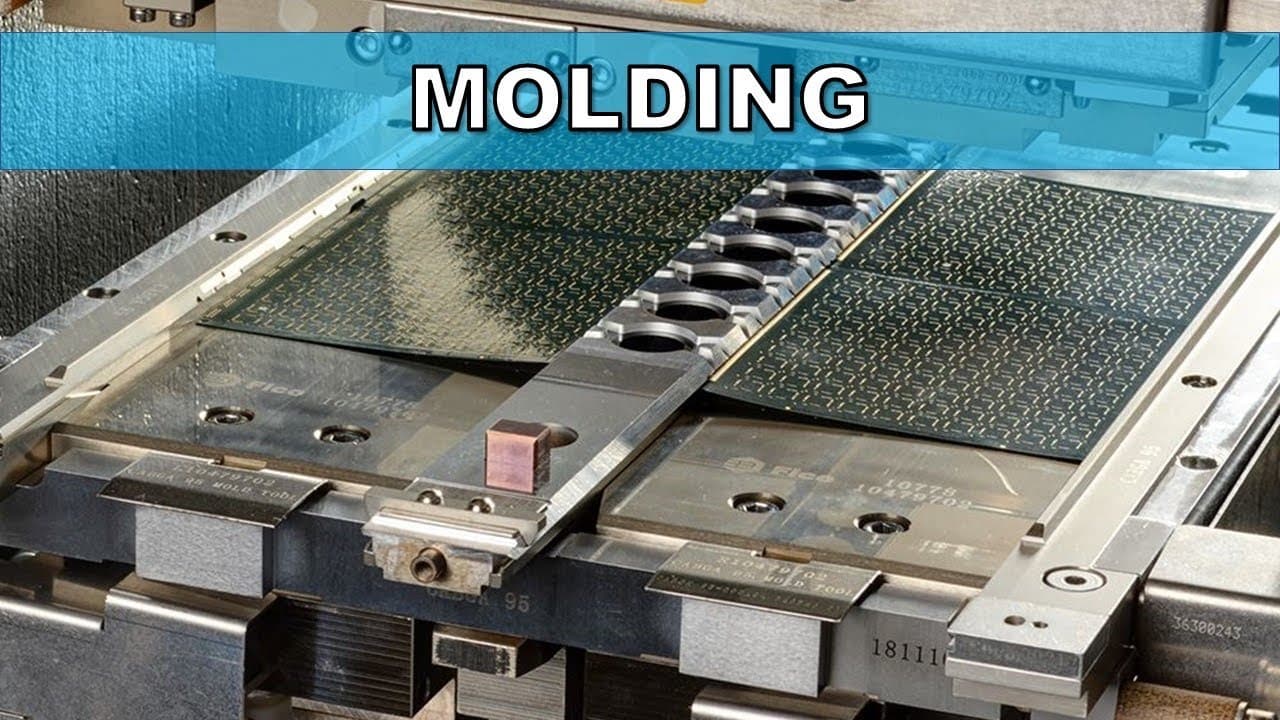
Molding processes in semiconductor packaging involve protecting dies and wires with polymer materials using methods like transfer and compression molding. Transfer molding is the most common due to its simplicity and lower cost, while compression molding caters to packages prone to voids. Additionally, mold chase designs like corner and center gate molds are tailored for specific package requirements.
Transcript
Today, let’s talk about molding process. Molding process is to cover die and wires with polymer material to protect from environment. Environment can be mechanical damage and chemical damage as well. For mold process, we need mold chase which is made of metal and define mechanical outline of package especially for mold side. Mold compound is use... Read More
Key Insights
- Molding processes in semiconductor packaging protect die and wires from mechanical and chemical damage using polymer materials.
- Mold chase, made of metal, defines the mechanical outline of the package and is critical in the molding process.
- Mold compound, typically in pellet form, consists of filler, base resin, hardener, flame retardant, and other components.
- Transfer molding involves heating the mold chase, transferring mold compound, filling the mold chase, and curing the compound.
- Air release via vents is crucial to avoid voids in the mold, ensuring proper flow of the liquid mold compound.
- Transfer mold is cost-effective with a simple structure, while compression mold is used for packages prone to voids.
- Corner gate molds are economical but unsuitable for packages with long wires due to potential electrical shorts.
- Center gate molds, also known as pin gate molds, are suitable for packages with long wires but are more complex and costly.
Install to Summarize YouTube Videos and Get Transcripts
Explore YouTube Video Summarizer or Get YouTube Transcript Extractor
Questions & Answers
Q: What is the purpose of the molding process in semiconductor packaging?
The molding process in semiconductor packaging is designed to protect the die and wires from environmental damage, including mechanical and chemical threats. By covering these components with polymer material, the molding process ensures the longevity and reliability of semiconductor devices, preventing damage that could negatively affect their performance.
Q: What are the main components of mold compound used in the molding process?
Mold compound used in the molding process is typically composed of several key components, including filler, base resin, hardener, flame retardant, cure promoter, wax, and colored agents. Silicon dioxide is commonly used as a filler material, while epoxy serves as the base resin, providing the necessary properties for effective protection and durability.
Q: How does transfer molding differ from compression molding?
Transfer molding and compression molding differ primarily in their application and cost. Transfer molding is more popular due to its simpler machine structure and lower cost, making it suitable for general applications. Compression molding, on the other hand, is used for packages more prone to voids, though it is more expensive due to its complexity and the need for precise control during the process.
Q: Why is air release important during the molding process?
Air release is crucial during the molding process to prevent the formation of voids, which are empty spaces that can occur if air is trapped within the mold chase. Proper air release ensures that the liquid mold compound flows smoothly into all areas of the mold chase, resulting in a solid, defect-free final product that maintains the desired mechanical and electrical properties.
Q: What are the advantages and disadvantages of corner gate molds?
Corner gate molds are advantageous due to their cost-effectiveness and simple machine structure. However, they have a significant disadvantage when used for packages with long wires, as the liquid mold compound filling from the corner can cause the wires to sweep and potentially touch each other, leading to electrical shorts. This limitation makes them unsuitable for certain applications.
Q: What makes center gate molds suitable for packages with long wires?
Center gate molds, also known as pin gate molds, are particularly suitable for packages with long wires because they allow the liquid mold compound to fill the mold chase symmetrically from the center. This reduces the pressure on the wires, minimizing the risk of sweeping and electrical shorts. However, the complexity and cost of center gate molds are higher compared to corner gate molds.
Q: What is the role of the mold chase in the molding process?
The mold chase plays a critical role in the molding process by defining the mechanical outline of the package. It is made of metal and is essential for ensuring that the mold compound forms the desired shape and dimensions. The design of the mold chase is crucial in preventing voids and ensuring the final product's structural integrity and performance.
Q: What is film assist mold (FAM) used for in the molding process?
Film assist mold (FAM) is used in the molding process to expose specific parts of the package, such as the die or other components. This method involves using a film over the mold chase and is particularly useful for applications like optical sensors, MEMS, and exposed die packages. While it offers specialized capabilities, FAM is generally more expensive than other molding methods.
Summary & Key Takeaways
-
The molding process in semiconductor packaging involves covering dies and wires with polymer materials to protect them from environmental damage. The process requires a metal mold chase to define the package's mechanical outline and a mold compound made of various components like filler and base resin.
-
Transfer molding is the most common method due to its simplicity and lower cost. It involves heating the mold chase, transferring the mold compound, filling the mold chase, and curing the compound. Air release is essential to prevent voids, ensuring the mold compound flows properly.
-
Different mold chase designs, such as corner gate and center gate molds, cater to specific package requirements. Corner gate molds are cost-effective but not ideal for packages with long wires. Center gate molds are suitable for such packages but involve a more complex structure and higher costs.
Read in Other Languages (beta)
Share This Summary 📚
Summarize YouTube Videos and Get Video Transcripts with 1-Click
Try YouTube Summary with ChatGPT & Claude or YouTube Transcript Generator
Explore More Summaries from Semicon Talk 📚


Summarize YouTube Videos and Get Video Transcripts with 1-Click
Try YouTube Summary with ChatGPT & Claude or YouTube Transcript Generator