What Are the Methods for Wafer Sawing in Semiconductors?
TL;DR
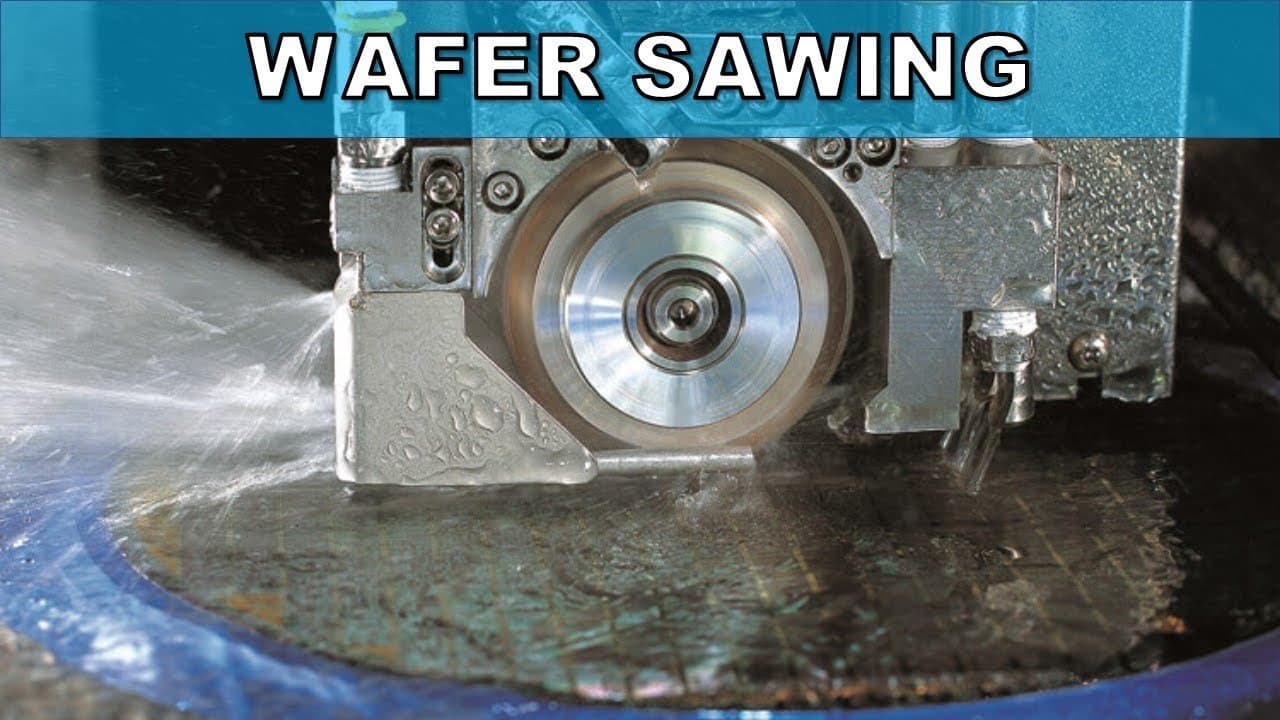
Wafer sawing, or dicing, separates semiconductor dies using three methods: blade sawing, laser sawing, and plasma sawing. Blade sawing cuts along a 'saw street' with a blade, while laser sawing evaporates the material using focused laser light, and plasma sawing etches the saw street with plasma. Each method is designed to minimize damage and ensure die integrity during separation.
Transcript
Today I’m gonna talk about wafer sawing process. It is also called wafer dicing. In previous episode, we talked about wafer backgrinding process which is to remove backside of wafer through grinding. Now we need to separate each die to proceed packaging process. Before we start, what is a die? Die is a small piece of semiconductor in wafer and ... Read More
Key Insights
- Wafer sawing, also known as wafer dicing, is crucial in separating semiconductor dies for packaging, ensuring each die is isolated for further processing.
- Dies are small semiconductor pieces on a wafer, typically containing identical electrical circuits, and are essential components in electronic devices.
- Blade sawing involves using a saw blade to cut along the saw street or scribe line between dies, minimizing damage to the circuit patterns.
- Chipping during sawing can weaken the die's mechanical strength, potentially leading to die cracking, thus precision in this process is critical.
- Water or deionized water is used during blade sawing to cool the blade and remove debris, maintaining the integrity of the wafer and the saw blade.
- Laser sawing uses focused laser spots to evaporate the saw street, ideal for advanced circuit technology that might be damaged by mechanical blades.
- Plasma sawing employs plasma to etch away the saw street, allowing for more flexibility in die shapes beyond the typical rectangular form.
- Each sawing method—blade, laser, and plasma—has its advantages, with plasma offering the most versatility in die shape and minimal mechanical stress.
Install to Summarize YouTube Videos and Get Transcripts
Explore YouTube Video Summarizer or Get YouTube Transcript Extractor
Questions & Answers
Q: What is wafer sawing and why is it important?
Wafer sawing, also known as wafer dicing, is the process of separating individual semiconductor dies from a wafer. It is crucial because it allows each die to be isolated for packaging, which is necessary for the assembly of electronic devices. Proper sawing ensures that the dies are not damaged and maintain their integrity for further processing.
Q: How does blade sawing work in the wafer sawing process?
Blade sawing involves using a saw blade to cut along the saw street or scribe line, which is the area between semiconductor dies on a wafer. This area does not contain circuit patterns, minimizing damage risk. Water or deionized water is used to cool the blade and remove debris, ensuring precision and maintaining the integrity of both the wafer and the blade.
Q: What are the advantages of laser sawing over blade sawing?
Laser sawing offers significant advantages over blade sawing, particularly for advanced circuit technology. It uses focused laser spots to evaporate the saw street, avoiding mechanical contact and reducing the risk of damaging delicate circuits. This method is ideal for wafers that are sensitive to mechanical stress, ensuring precision and reducing the potential for defects.
Q: How does plasma sawing differ from other sawing methods?
Plasma sawing differs from blade and laser methods by using plasma to etch away the saw street. This process does not involve mechanical contact, reducing stress on the wafer. Plasma sawing allows for more flexibility in die shapes, not limited to rectangles, and is ideal for complex die designs, providing versatility and reducing the risk of mechanical damage.
Q: What role does water play in the blade sawing process?
In blade sawing, water or deionized water is essential for cooling the saw blade and removing debris generated during cutting. It helps maintain the blade's temperature, preventing overheating and ensuring precision. The water also clears away particles that could interfere with the sawing process, ensuring clean cuts and preserving the wafer's integrity.
Q: Why is minimizing chipping important during wafer sawing?
Minimizing chipping during wafer sawing is critical because chipping can weaken the mechanical strength of the dies, leading to potential cracking. This damage can compromise the integrity of the integrated circuits, affecting the performance and reliability of the semiconductor devices. Precision in sawing helps maintain the structural and functional quality of the dies.
Q: What is the significance of the saw street in wafer sawing?
The saw street, or scribe line, is a critical area in wafer sawing as it is the space between dies where cutting occurs. This area does not contain circuit patterns, minimizing the risk of damage to the dies' functional components. Accurate cutting along the saw street ensures that each die is separated cleanly without affecting the surrounding circuitry.
Q: Can plasma sawing accommodate non-rectangular die shapes?
Yes, plasma sawing can accommodate non-rectangular die shapes, which is one of its significant advantages over traditional sawing methods. Unlike blade and laser sawing, which are typically limited to rectangular cuts, plasma sawing's etching process allows for greater flexibility in die shapes. This capability is beneficial for advanced and custom semiconductor designs requiring unique geometries.
Summary & Key Takeaways
-
Wafer sawing, or dicing, separates semiconductor dies for packaging. Blade sawing uses a saw blade, while laser and plasma sawing offer alternatives. Laser sawing is suitable for advanced circuits, and plasma sawing allows for flexible die shapes. Each method aims to minimize damage and ensure die integrity.
-
Blade sawing involves cutting along the saw street, using water to cool and clean. Chipping can occur, affecting die strength. Laser sawing evaporates the saw street with heat, ideal for sensitive circuits. Plasma sawing etches the street, offering shape flexibility and minimal mechanical stress.
-
Dies are semiconductor pieces on a wafer, essential for electronic devices. Wafer sawing is crucial in isolating these dies. Blade, laser, and plasma methods each have specific benefits, with plasma sawing providing the most versatility in die shapes and minimal physical damage.
Read in Other Languages (beta)
Share This Summary 📚
Summarize YouTube Videos and Get Video Transcripts with 1-Click
Try YouTube Summary with ChatGPT & Claude or YouTube Transcript Generator
Explore More Summaries from Semicon Talk 📚
Summarize YouTube Videos and Get Video Transcripts with 1-Click
Try YouTube Summary with ChatGPT & Claude or YouTube Transcript Generator