How to Analyze Facebook Ads for Ecommerce
TL;DR
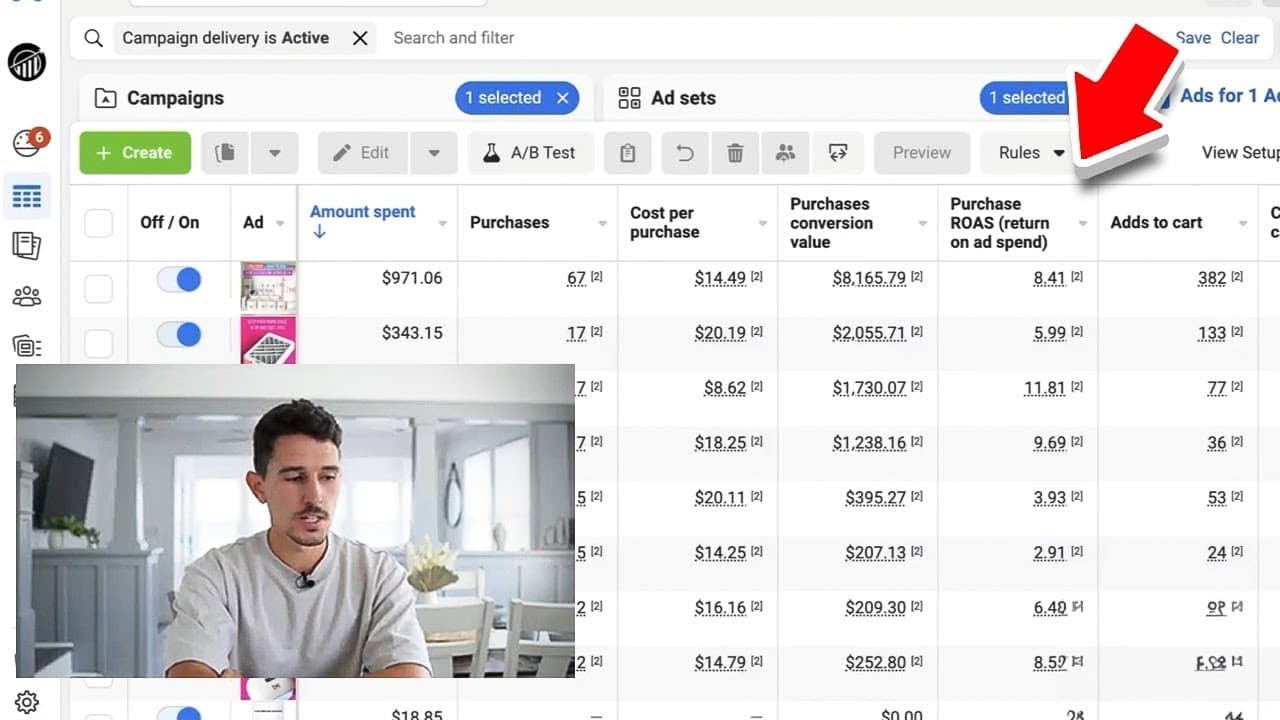
Wait until campaigns have enough data before changing ads, then assess purchases, cost per purchase, and return on ad spend before diagnosing supporting metrics. Add-to-cart activity, initiated checkouts, outbound-click costs, frequency, and CPM reveal where performance improves or breaks down, while low-value orders or tracking problems can make purchase counts misleading.
Transcript
you're running ads on Facebook and Instagram and you need to figure out exactly how to analyze your results to get the best return possible in this video we're going to break down exactly how we analyze every single metric in the Facebook ad platform we are going to be looking inside of account over a 30-day time frame the one thing I want to menti... Read More
Key Insights
- Campaign decisions require sufficient data because results from only a few days or a campaign with $35 in spend may not be reliable. Changing copy, deleting ads, or replacing images and videos too early prevents the algorithm from working and encourages conclusions based on limited evidence.
- Primary metrics are purchases, cost per purchase, and return on ad spend because they directly describe acquisition volume, acquisition cost, and revenue efficiency. These outcomes should be examined first, followed by secondary metrics that reveal why one campaign produces stronger or weaker commercial results.
- Five to ten purchases can provide a practical starting point for campaign analysis, although Facebook’s stated ideal scenario is 25 purchases. Waiting for the larger threshold may require too much spending, while evaluating campaigns with zero purchases or minimal spend can lead to premature decisions.
- Cost per purchase must be interpreted alongside return on ad spend because cheap acquisitions are not necessarily valuable. A $9 purchase cost paired with very low return may indicate pixel problems or customers buying inexpensive accessories instead of a store’s higher-priced hero product.
- Low cost per add to cart is a positive leading indicator because inexpensive and numerous cart additions typically precede more purchases. If a campaign has few purchases but many add-to-cart events, customers may still convert, or the checkout experience may need targeted improvements.
- Initiated checkout signals stronger purchase intent than an add-to-cart event because the shopper has reached the stage where billing, address, and credit-card information are entered. In the example, the campaign with the cheaper initiated-checkout cost also produces higher return on ad spend and more revenue.
- Cost per outbound click is more useful than general cost per click because ordinary clicks can include comments, profile visits, likes, or other interactions. Outbound clicks specifically represent visits to the website, and higher outbound-click costs usually correspond with somewhat weaker campaign or creative performance.
- Frequency and CPM reveal delivery efficiency and possible fatigue. Frequency measures how often the same people see ads, and spending should be reduced for an audience when it rises above 10. Rising CPM can indicate fatigued creative or a weak website experience, especially when campaign CPMs differ substantially.
Install to Summarize YouTube Videos and Get Transcripts
Explore YouTube Video Summarizer or Get YouTube Transcript Extractor
Questions & Answers
Q: How long should Facebook ads run before analyzing results?
Facebook and Instagram ads should run long enough to collect meaningful data before major decisions are made. Ads launched yesterday should generally receive a couple of days so the algorithm can work. The presenter also avoids judging campaigns with only $35 in spend and begins examining results after roughly 5–10 purchases, rather than immediately deleting ads or changing copy and creative.
Q: What Facebook ad metrics should ecommerce businesses analyze first?
Ecommerce businesses should begin with primary outcome metrics: purchases, cost per purchase, and return on ad spend. These measures show how many orders were generated, how much each order cost to acquire, and how much revenue the advertising produced. Secondary metrics such as add-to-cart cost, initiated-checkout cost, outbound-click cost, frequency, and CPM should then be used to explain those outcomes.
Q: How many purchases are needed before evaluating a Facebook campaign?
Facebook’s ideal scenario, as presented, is 25 purchases before making a decision, but reaching that level can require too much time and money. A more practical point for beginning analysis is roughly 5–10 purchases. Campaigns with zero purchases or very little spend should receive more time because their early results may not contain enough evidence for reliable optimization decisions.
Q: Why should cost per purchase and ROAS be analyzed together?
Cost per purchase shows how much advertising spend was required for one order, while return on ad spend shows the revenue generated from that investment. A low acquisition cost can still produce poor business results if customers purchase low-priced accessories instead of a higher-priced hero product. Low cost paired with unusually weak return can also suggest pixel or tracking issues.
Q: What does a low cost per add to cart indicate?
A low cost per add to cart indicates that campaigns are efficiently moving shoppers toward a possible purchase. Numerous inexpensive cart additions typically lead to more completed orders. When a campaign has many add-to-cart events but only a few purchases, the signal remains positive, although the store may need checkout adjustments or additional time for those shoppers to complete their transactions.
Q: Why is initiated checkout important for Facebook ad analysis?
Initiated checkout is important because it indicates stronger intent than casual browsing or adding an item to a cart. The shopper has reached the stage where billing details, an address, and credit-card information are entered. Comparing cost per initiated checkout across campaigns can therefore help predict purchase and revenue performance. In the example, the cheaper campaign also achieves higher return on ad spend.
Q: What is the difference between a click and an outbound click?
A general click can represent several interactions, including clicking a comment button, liking an Instagram ad, visiting a profile, or performing another action around the advertisement. An outbound click specifically means the person went to the advertiser’s website. Cost per outbound click is therefore more relevant for ecommerce analysis, and a higher cost usually indicates that the campaign or creative may perform somewhat worse.
Q: How do frequency and CPM identify Facebook ad problems?
Frequency measures how many times the same people saw an ad, while CPM measures the cost of 1,000 impressions. Repeatedly showing ads to the same audience can waste money, and the presenter recommends pulling back audience spend when frequency exceeds 10. Rising CPM may signal creative fatigue or an unsatisfactory website experience, while major CPM differences between campaigns justify reviewing spend and creative.
Summary & Key Takeaways
-
Facebook and Instagram ad analysis should begin only after campaigns have collected enough data. The account example covers 30 days, $31,000 in spend, and 2,000 purchases. Although Facebook’s ideal scenario is 25 purchases, the presenter starts examining campaign data after roughly 5–10 purchases to avoid waiting too long.
-
Primary metrics reveal business outcomes, while secondary metrics explain how those outcomes were produced. Purchases, cost per purchase, and return on ad spend should be reviewed together. Add-to-cart costs, initiated-checkout costs, outbound clicks, impressions, reach, frequency, and CPM then help locate creative, audience, website, checkout, or tracking problems.
-
Campaign and ad-set analysis use similar metric relationships, but ad-level analysis focuses on how images, videos, GIFs, slideshows, and other creative formats affect results. Higher outbound-click costs usually indicate weaker creative, excessive frequency can waste spend, and large CPM differences require reviewing both budget allocation and the ads inside each campaign.
Read in Other Languages (beta)
Share This Summary 📚
Summarize YouTube Videos and Get Video Transcripts with 1-Click
Try YouTube Summary with ChatGPT & Claude or YouTube Transcript Generator
Explore More Summaries from Sam Piliero 📚



Summarize YouTube Videos and Get Video Transcripts with 1-Click
Try YouTube Summary with ChatGPT & Claude or YouTube Transcript Generator