How to Find and Scale Winning Facebook Ads
TL;DR
Find durable Facebook ad concepts by reviewing 20–30 relevant competitors in the Facebook Ad Library and prioritizing ads that have remained active for months. Test adapted versions in a prospecting campaign, graduate proven high-spend revenue drivers into a scale campaign every one to two weeks, and use varied creative in retargeting and retention to reduce audience fatigue.
Transcript
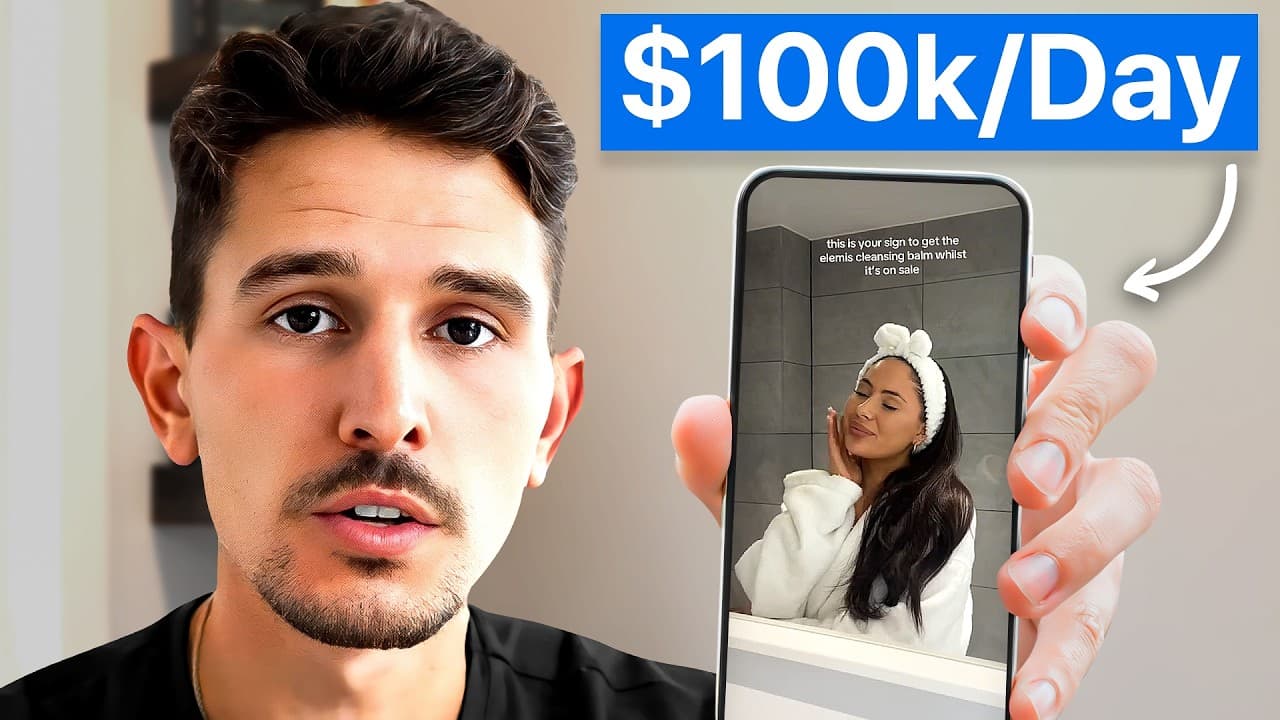
I helped this e-commerce business drive over $1.47 to million in Revenue using Facebook ads in fact they drove over $4 million in Shopify Revenue so in this video I'm going to show you how to find winning ads how to steal the best ads from your competitors and make them better how to put those ads in a perfect structure how to graduate Those ads so... Read More
Key Insights
- Competitor research is the first step in finding stronger Facebook ad concepts. The recommended process builds a list of roughly 20–30 direct and adjacent brands, mixing established companies with smaller rising brands that are more comparable to the advertiser's current size and market position.
- A North Star brand is most useful when it represents the advertiser's next attainable stage. A small athletic-wear company should study brands such as Girlfriend Collective, 10,000, Reigning Champ, or YoungLA instead of relying exclusively on globally recognized companies such as Nike.
- The Facebook Ad Library reveals every ad a competitor is actively running. Removing the active-status filter also makes it possible to inspect older launches and identify advertisements that have remained live for extended periods, which can indicate creative the advertiser is reluctant to pause.
- Long-running active ads are treated as stronger signals than visually appealing new ads. The example highlights a YoungLA advertisement launched on January 16, 2024, that was still active near the December 4, 2024 recording date, suggesting sustained value to the advertiser.
- Creative adaptation works by taking a proven format, identifying why it attracts attention, and applying a distinct brand-specific spin. The approach is described as stealing like an artist: use successful work as inspiration, preserve the useful template, and attempt to improve its execution.
- The campaign structure separates scale, prospecting testing, retargeting, and retention functions. Prospecting testing discovers viable ads, the scale campaign receives graduates, retargeting addresses site visitors who have not converted, and retention reaches customers who have already purchased or transacted.
- The graduation process prioritizes ads with meaningful spending and revenue. Every one to two weeks, the strongest prospecting ads are duplicated into the scale campaign, while an ad that spent only $10 and reported a 45 return on ad spend is not treated as reliable scaling evidence.
- Creative variety is essential in retargeting and retention campaigns because audience frequency is high. Loading these campaigns with many ads reduces repeated exposure to one creative, which can otherwise cause fatigue, spam reports, negative comments, or frustration with the brand.
Install to Summarize YouTube Videos and Get Transcripts
Explore YouTube Video Summarizer or Get YouTube Transcript Extractor
Questions & Answers
Q: How do you find competitors for Facebook ad research?
Generate a list of roughly 20–30 competitors that specifically serve the same niche. The suggested prompt asks for the top 30 competitors associated with the brand's website, mixing large and small companies that have a history of running Facebook ads. Review the results for both obvious leaders and rising brands that may be closer to the company's current scale.
Q: What is a North Star brand for Facebook ad research?
A North Star brand is a company representing the next meaningful stage the advertiser hopes to reach. It should be aspirational but still relevant. A smaller athletic-wear company, for example, could study Girlfriend Collective, 10,000, Reigning Champ, or YoungLA. Gymshark might reasonably study Nike because its scale makes that comparison more appropriate.
Q: How can the Facebook Ad Library reveal winning ads?
Search each competitor in the Facebook Ad Library, remove the active-status restriction, and inspect advertisements launched far in the past that remain active. The method assumes advertisers tend to keep successful ads running. Long active duration is therefore used as a practical signal, alongside any available impression details and recurring patterns observed across multiple brands.
Q: Why should advertisers study long-running Facebook ads?
Long-running advertisements offer evidence that a brand has chosen not to pause the creative over an extended period. The transcript highlights a YoungLA ad launched on January 16, 2024, that remained active near December 4, 2024. That longevity does not disclose exact profitability, but it provides a stronger research signal than appearance or personal preference alone.
Q: How should a brand adapt a competitor's successful ad?
Use the competitor's advertisement as creative inspiration rather than treating it as a finished asset for direct reuse. Identify the format, template, visual device, or message pattern that appears effective, then apply the advertiser's own product and brand-specific spin. The stated method is to begin with something already good and try to make the execution better.
Q: What campaign structure supports rapid Facebook ad scaling?
The proposed account structure contains four campaigns: a scale campaign, a prospecting testing campaign, a retargeting campaign, and a retention campaign. Prospecting tests new advertisements before the best performers move into scale. Retargeting reaches visitors who have not converted, while retention reaches people who have already purchased or otherwise transacted with the business.
Q: When should a Facebook ad graduate into the scale campaign?
Review the prospecting testing campaign every one to two weeks and identify the advertisements producing the most meaningful spending and revenue. Duplicate those ads into the scale campaign. Do not prioritize an advertisement merely because it spent $10 and produced a reported 45 return on ad spend, since such limited spending is treated as cherry-picked evidence rather than scale readiness.
Q: Why do retargeting and retention campaigns need many ads?
Retargeting and retention audiences can encounter the brand at high frequency, so they need an abundance of creative variations. Showing the same top-performing advertisement repeatedly, potentially several times in a person's Instagram feed, can create fatigue. The transcript warns that excessive repetition may lead people to report the ad, mark it as spam, or leave negative comments.
Summary & Key Takeaways
-
Start by generating a list of roughly 30 competitors, including both large and small brands with histories of running Facebook ads. Select competitors and North Star brands that are only a reasonable stage ahead. This produces more relevant creative references than studying only globally recognized companies such as Nike, Adidas, or Under Armour.
-
Search each competitor in the Facebook Ad Library and inspect both active and older ads. Long-running active ads are useful signals because advertisers tend to preserve creative that continues producing results. Record recurring formats and themes, then use those patterns as inspiration while applying the brand's own message, product, and creative spin.
-
Organize advertising into scale, prospecting testing, retargeting, and retention campaigns. Every one to two weeks, duplicate the prospecting ads with the strongest spending and revenue into the scale campaign. Review that campaign on a two-week cycle, pause significant underperformers, and maintain creative variety for warmer audiences exposed at higher frequency.
Read in Other Languages (beta)
Share This Summary 📚
Summarize YouTube Videos and Get Video Transcripts with 1-Click
Try YouTube Summary with ChatGPT & Claude or YouTube Transcript Generator
Explore More Summaries from Sam Piliero 📚

Summarize YouTube Videos and Get Video Transcripts with 1-Click
Try YouTube Summary with ChatGPT & Claude or YouTube Transcript Generator