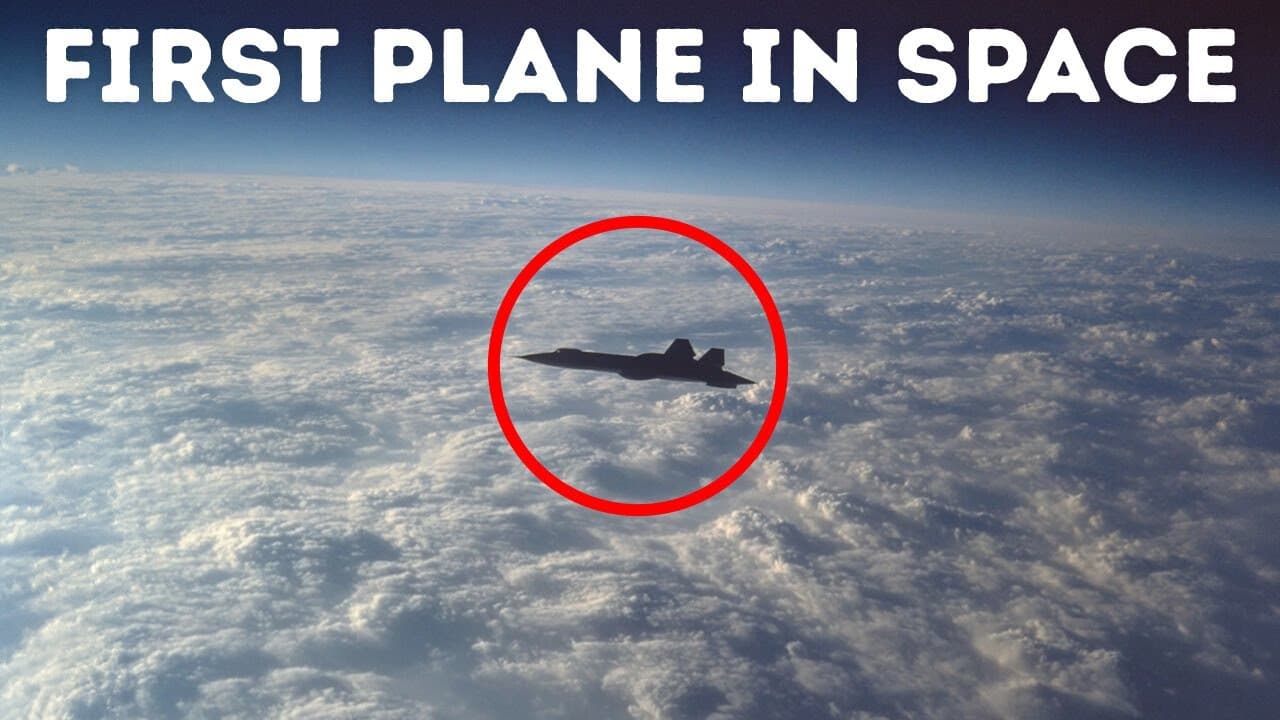
How did the X-15 reach space and land safely?
TL;DR
The X-15 rocket plane, flown by Joseph Walker, launched from a B-52 and ascended to space, performing a successful parabola before reentry and a controlled glide landing. The program demonstrated hypersonic stability, advanced inertial guidance, and spaceflight techniques that influenced later space programs, while highlighting pilot courage and engineering teamwork at the edge of flight limits.
Transcript
Joseph Walker is about to have an historic flight, but he does not know of it yet. He smiles at his chase pilot, showing the okay sign and closes the cockpit of his steel friend, the newest unpowered rocket plane X-15. It's placed under the wing of a B-52 bomber. They take off and go up to 45,000 ft. Joseph is calm and full of joy because he has be... Read More
Key Insights
- The X-15 was built of Iconel X steel to withstand temperatures up to 1,200 degrees Fahrenheit, enabling flights at hypersonic speeds.
- The aircraft relied on inertial data for most of the flight outside the atmosphere, with traditional instruments used mainly during landing.
- Launch sequence involved a free fall followed by rocket ignition, which minimized the risk of early thrust failure and allowed controlled energy management.
- The X-15’s propulsion used a powerful XLR99 rocket engine delivering 57,000 pounds of thrust, enabling rapid ascent to near space within a single flight.
- Pilot visibility from the cockpit was limited by design, leaving reference to the window frame rather than the aircraft itself, creating a unique situational awareness challenge.
- The mission demonstrated that a suborbital plane could survive high heating, sustain control at hypersonic speeds, and reenter the atmosphere safely.
- A small number of X-15s were built, making each flight a high-stakes test of materials, aerodynamics, and pilot skill.
- The X-15 program contributed to later spaceflight development and NASA’s moon mission planning by refining piloting and operational techniques.
- More videos from this channel:
- More from this channel: BRIGHT SIDE
Install to Summarize YouTube Videos and Get Transcripts
Explore YouTube Video Summarizer or Get YouTube Transcript Extractor
Questions & Answers
Q: How did the X-15 launch sequence work and why was it staged this way?
The X-15 launch sequence started with the aircraft attached to a B-52 bomber, where it would be hoisted and then released. After a brief freefall, the rocket engine ignited and propelled the plane to hypersonic speeds. This staging reduced the risk of early rocket failure during takeoff, allowed precise energy management, and provided a controlled transition from subsonic to hypersonic flight in a test environment. The approach also enabled engineers to assess stability and control in the high-energy regime while maintaining a safer test protocol for pilots.
Q: What materials enabled the X-15 to withstand hypersonic heating, and how were they used?
The X-15 was constructed from Iconel X, a high strength nickel steel alloy, chosen for its ability to endure extreme heating encountered at Mach 6 and beyond. This material provided structural integrity during the high temperatures of reentry and sustained high-speed flight. Its robustness helped maintain overall aircraft stability and integrity, which were critical for achieving and surviving the intense aerothermal environment faced during hypersonic travel.
Q: What role did the inertial platform play in the X-15’s guidance system?
The X-15 relied on an inertial platform for navigation outside the atmosphere, as traditional barometric instruments were ineffective at high altitude. The inertial data provided the essential guidance and attitude information during most of the flight, ensuring that the aircraft could be directed accurately toward mission objectives. Only when approach and landing required precise altitude reference were standard instruments used.
Q: How did Joseph Walker respond to the challenge of piloting the X-15 at such speeds and altitudes?
Joseph Walker demonstrated extraordinary courage, dedication, and skill as a test pilot. His ability to manage the unprecedented flight envelope required deep understanding of the aircraft, anticipation of dynamic instabilities at high speeds, and composure in transitioning from space to reentry. His leadership and teamwork with engineers were pivotal to the program’s success, earning him recognition and placeholders in aerospace history.
Q: What is significant about the X-15’s reentry and landing capabilities?
The X-15 featured highly effective speed brakes and robust energy management, allowing precise control of descent energy during unpowered glide phases. This capability was vital for a safe return from space-like conditions and ensured the pilot could execute a precise landing despite extreme velocity changes and atmospheric conditions. The design confidence came from a combination of aerodynamic stability and control authority.
Q: How did the X-15 influence later space programs and engineering approaches?
The X-15 program helped develop piloting techniques, control strategies, and instrumentation for high-energy flight that informed later NASA missions and the space shuttle program. It demonstrated the feasibility of reaching space with a rocket-powered airframe, refined aerothermal knowledge, and validated the concept of using a booster aircraft to reach release altitude and speed, accelerating progress toward manned spaceflight.
Q: What does the video describe about the X-15’s altitude and speed capabilities?
The video notes that the X-15 could reach hypersonic speeds up to Mach 6 and fly to the edge of space, performing a long parabola before reentry. It highlights the twin purpose of the design to achieve extreme altitude and rapid, safe return to Earth, underscoring the balance of propulsion, materials, and control needed for such performance.
Q: What was unique about the X-15’s window visibility and pilot reference during flight?
A unique feature described is that the pilot could not see any part of the aircraft through its windows; the window frame was the only reference. This unusual perspective required pilots to rely on instrumentation and training for attitude awareness, while offering panoramic views of the horizon that underscored the vast separation between Earth and space.
Summary & Key Takeaways
-
The X-15 program pushed hypersonic flight to its limits, showing how a manned rocket plane could reach the edge of space and return safely.
-
The design emphasized stability at extreme speeds, inertial guidance, and robust materials to handle extreme heating and atmospheric reentry.
-
The documentary ties the X-15 achievements to later NASA programs and highlights the human factors that drive test pilots to accept extraordinary risk.
Read in Other Languages (beta)
Share This Summary 📚
Summarize YouTube Videos and Get Video Transcripts with 1-Click
Try YouTube Summary with ChatGPT & Claude or YouTube Transcript Generator
Explore More Summaries from BRIGHT SIDE 📚






Summarize YouTube Videos and Get Video Transcripts with 1-Click
Try YouTube Summary with ChatGPT & Claude or YouTube Transcript Generator