New Photos of Mars, And They Found a Door
TL;DR
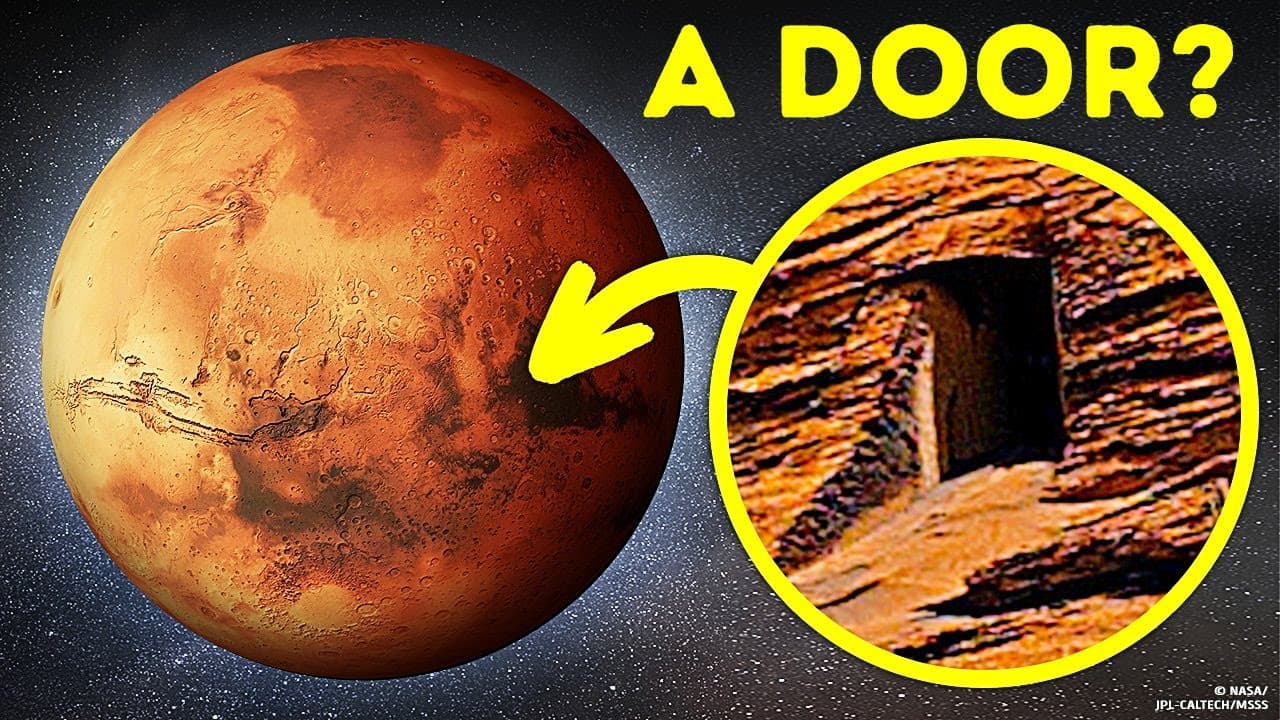
The apparent three-foot-high “door” photographed on Mars by NASA’s Curiosity rover is a natural rock opening, not evidence of another civilization. Astronomers say intersecting fractures likely loosened a boulder, while wind and erosion exposed strata that may have formed around four billion years ago. Mars also has planet-wide dust storms, an atmosphere one percent as dense as Earth’s, and extreme temperatures. Read on for the specific evidence and conditions.
Transcript
have we found another civilization is that a door to someone's home on another planet can we peek through the windows after all it was nasa's curiosity rover that sent this image to earth and right now this rover is exploring the surface of mars unfortunately astronomers were fast to disappoint us they claimed that it was just a natural part of the... Read More
Key Insights
- 👨🎤 The "door" on Mars is a natural rock formation, debunking the idea of a man-made structure.
- 🔡 Mars experiences intense dust storms, but they are not as strong as hurricanes on Earth, thanks to the planet's lower atmospheric density.
- 💄 Mars has a thin atmosphere, consisting mostly of carbon dioxide, making it inhospitable for human survival.
- 🌙 The planet's two moons, Deimos and Phobos, are shaped like potatoes and may have once been asteroids caught in Mars' gravitational field.
- ⬛ Mars' largest moon, Phobos, will eventually be torn apart by gravitational forces, resulting in the formation of a planetary ring.
- ⬛ Mars features Valles Marineris, a canyon system 10 times larger than the Grand Canyon on Earth, and Olympus Mons, the largest volcano in the solar system.
- 💧 Evidence suggests that Mars had water in the past, with ancient river valley networks, lake beds, and rock formations only possible through the presence of liquid water.
Install to Summarize YouTube Videos and Get Transcripts
Explore YouTube Video Summarizer or Get YouTube Transcript Extractor
Questions & Answers
Q: Is the door-like structure photographed on Mars a real door?
No. Astronomers say the three-foot-high feature photographed by NASA’s Curiosity rover is an opening in a rock created by natural forces such as wind, erosion, weathering, and gravity.
Q: How did the door-shaped opening on Mars form?
Several fractures probably crossed layers of rock called strata, allowing a fairly large boulder to fall out under its own weight. The transcript identifies a nearby rock with a smooth vertical edge as the possible fallen piece.
Q: What evidence suggests that the Mars “door” is a natural rock formation?
The visible strata continue into the opening, and nearby cracks resemble the way rocks weather on Mars. A rock to the right also has a smooth vertical edge, supporting the explanation that it fell from the opening.
Q: How old are the rock layers around the Mars opening?
The strata likely formed around four billion years ago in a river or a wind-blown dune. Powerful Martian winds later eroded the exposed layers further.
Q: How powerful are dust storms on Mars?
Annual Martian dust storms can cover continent-sized areas, last for weeks, and produce enough dust to be seen through a telescope on Earth. Rarer global dust storms are larger and encircle the entire planet, although wind speeds in the worst storms reach only about 60 miles per hour.
Q: Why do Martian winds feel weaker than winds on Earth?
Mars’s atmosphere is only one percent as dense as Earth’s atmosphere, so its winds exert less force. Even the worst Martian storms top out at about 60 miles per hour, while hurricane-force winds on Earth can be twice that speed.
Q: Why is Mars called the red planet?
Mars is covered in dust, soil, and rock rich in iron oxide. That iron oxide gives the planet’s surface its characteristic red hue.
Q: What temperatures occur on Mars?
Mars has an average surface temperature of minus 81 degrees Fahrenheit. Winter temperatures at its poles can fall to minus 220 degrees, while some regions can reach 70 degrees during summer.
Summary & Key Takeaways
-
Astronomers debunk the idea of a door on Mars, explaining it as a natural rock formation created by wind and erosion.
-
Mars experiences intense dust storms that can be seen from Earth, but the wind speed is not as strong as on Earth due to the planet's thin atmosphere.
-
Mars features extreme temperatures, with an average surface temperature of -81 degrees Fahrenheit and temperatures dropping to -220 degrees in its poles during winter.
Read in Other Languages (beta)
Share This Summary 📚
Summarize YouTube Videos and Get Video Transcripts with 1-Click
Try YouTube Summary with ChatGPT & Claude or YouTube Transcript Generator
Explore More Summaries from BRIGHT SIDE 📚





Summarize YouTube Videos and Get Video Transcripts with 1-Click
Try YouTube Summary with ChatGPT & Claude or YouTube Transcript Generator