How Scientists Built a Fake Universe Simulation
TL;DR
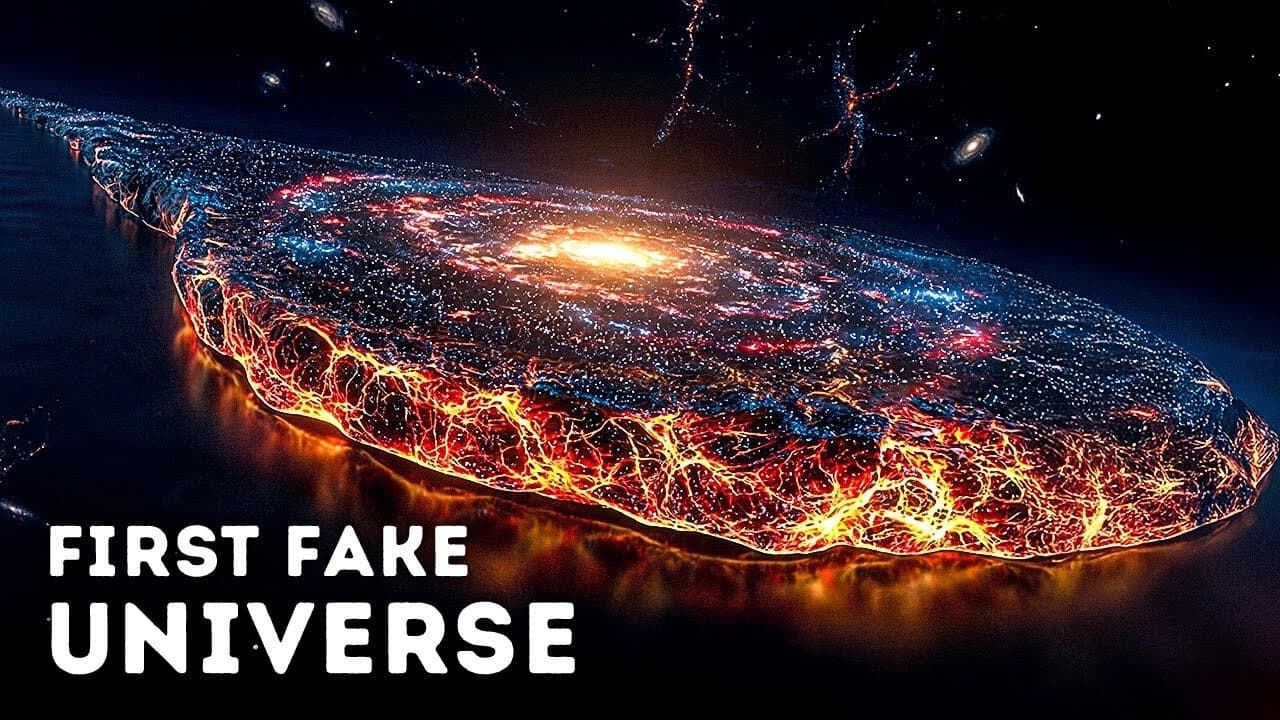
Scientists spent nearly 10 years building a computer simulation, the Calibbra project, that recreated the universe from the first billion years after the Big Bang to today. Its synthetic galaxies became indistinguishable from real ones, matching their numbers, brightness, colors, and sizes, yet the model still couldn't explain the mysterious little red dots.
Transcript
Scientists spent almost 10 years building a computer simulation of the universe. Then it got weird. The simulations became so perfect that they couldn't be distinguished from reality. But even with their perfect fake galaxies, they still couldn't explain one of the biggest mysteries of all, the little red dots. The Calibbra project had one simple i... Read More
Key Insights
- The Calibbra project spent almost 10 years building a computer simulation of the universe, originally intended to test theories about how supermassive black holes exist, how stars form, and what happens when stars lose mass.
- The simulation worked by solving the key equations of physics and using them to model how cold gas and dust move, collapse, and form stars and galaxies, running from the first billion years after the Big Bang to today.
- The simulated galaxies became indistinguishable from real ones, sharing the same numbers, brightness, colors, and sizes that astronomers observe in actual data, suggesting the current model of the universe explains galaxy formation well.
- Little red dots are bright, apparently massive objects that appeared across the universe when it was less than a billion years old but are nowhere to be found today, and Calibbra could not explain them.
- Scientists speculate the little red dots could be extremely compact galaxies or a stage of supermassive black hole growth never seen before, but the answer remains unknown.
- Black hole cosmology proposes our observable universe may be tucked inside a black hole that exists within another parent universe or multiverse, which could itself be part of a bigger one.
- If all matter in the universe were packed together it would fill only about 1 billion cubic light-years, a cube roughly a thousand light-years per side, showing the universe is about 99% empty space.
- The Einstein-Cartan theory suggests matter falling into a singularity might form a wormhole, an Einstein-Rosen bridge, connecting a black hole on one side to a whole new universe forming on the other.
Install to Summarize YouTube Videos and Get Transcripts
Explore YouTube Video Summarizer or Get YouTube Transcript Extractor
Questions & Answers
Q: What is the Calibbra project?
The Calibbra project is a computer simulation that scientists spent almost 10 years building to recreate the universe. It started with one simple idea: to test theories about how the universe works, including how supermassive black holes exist, how stars form, and what really happens when stars lose mass. To do this the team needed to simulate the birth of the first galaxies, which led them to create a fake universe inside a computer simulation.
Q: How did scientists create a fake universe in a computer?
The team basically solved the key equations of physics and used them to simulate how cold gas and dust move, collapse, and eventually help form stars and galaxies. They simulated this process from the first billion years after the Big Bang all the way to today, producing a whole synthetic universe. Apparently it was much easier than they thought, and out came galaxies that looked indistinguishable from the real thing.
Q: Why are the simulated galaxies concerning to scientists?
The simulated galaxies looked indistinguishable from real ones, sharing the same numbers, brightness, colors, and sizes as real galaxies. On one hand this is great news because it shows the current model of the universe might explain galaxy formation even better than thought. On the other hand it is concerning because even with a perfectly fake universe created, some things remain a huge mystery, such as the little red dots the team still cannot explain.
Q: What are the little red dots in the universe?
The little red dots are bright, apparently massive objects that showed up across the universe when it was less than a billion years old, but they are nowhere to be found today. Now they look more like tiny intense red specks in space. Scientists have a few ideas about what they could be, such as extremely compact galaxies or maybe a stage of supermassive black hole growth never seen before, but they do not know yet, and Calibbra could not explain them either.
Q: What is black hole cosmology?
Black hole cosmology is a theory suggesting our observable universe and everything around us might be tucked inside a black hole, which exists inside another parent universe or even a multiverse. This multiverse could then be part of a bigger one, and so on, like a stacking doll. Though it sounds like pure science fiction, it is based on curious facts, including that both the universe and black holes are thought to originate from a singularity.
Q: How empty is the universe according to the video?
The universe is about 99% empty space, with trillions of miles of nothingness between the stars. If you packed all the matter in the universe together, including galaxies, stars, planets, and dust, it would only fill about 1 billion cubic light-years, a cube roughly a thousand light-years on each side. For comparison, the Milky Way alone is 100,000 light-years in size, showing how sparse the universe really is. At that density the mass would likely collapse into a black hole.
Q: What is the Einstein-Cartan theory of universe formation?
The Einstein-Cartan theory suggests universes could be born inside black holes. It says that instead of matter collapsing into an infinitely dense dot, the matter might create a wormhole, a tunnel through space and time also known as an Einstein-Rosen bridge. This wormhole could connect two different places, where one side of the tunnel is the black hole and on the other side a whole new universe would be forming, working somewhat like a teleport once you pass the event horizon.
Q: What is a white hole?
A white hole is a hypothetical exit of a wormhole, invented by some scientists, that would serve as the opposite of a black hole. It does not literally exist as far as we know, but it could be possible somewhere on the other side of a wormhole. It would be an area where matter is always ejected instead of pulled in, meaning you cannot throw anything into it because it would get expelled immediately. This concept also appears in shockwave cosmology, where an expanding black hole eventually transforms into a white hole.
Summary & Key Takeaways
-
The Calibbra project spent nearly 10 years building a computer simulation of the universe to test theories about black holes, star formation, and stellar mass loss. By solving key physics equations, the team modeled how cold gas and dust collapse into stars and galaxies from the first billion years after the Big Bang to today.
-
The synthetic galaxies became so realistic they were indistinguishable from real observations, matching the same numbers, brightness, colors, and sizes astronomers see. This validated the current model of galaxy formation, yet the simulation still could not explain the little red dots, bright massive objects that appeared in the early universe but vanished today.
-
The video then explores black hole cosmology, the idea our universe sits inside a black hole. It notes eerie coincidences: packed matter would collapse into a black hole roughly the universe's size, and the Hubble radius resembles an event horizon. Related theories include Einstein-Cartan wormholes, the big bounce, and shockwave cosmology, all speculative.
Read in Other Languages (beta)
Share This Summary 📚
Summarize YouTube Videos and Get Video Transcripts with 1-Click
Try YouTube Summary with ChatGPT & Claude or YouTube Transcript Generator
Explore More Summaries from BRIGHT SIDE 📚





Summarize YouTube Videos and Get Video Transcripts with 1-Click
Try YouTube Summary with ChatGPT & Claude or YouTube Transcript Generator