What Titanic Sinking Really Looked Like: Real Story
TL;DR
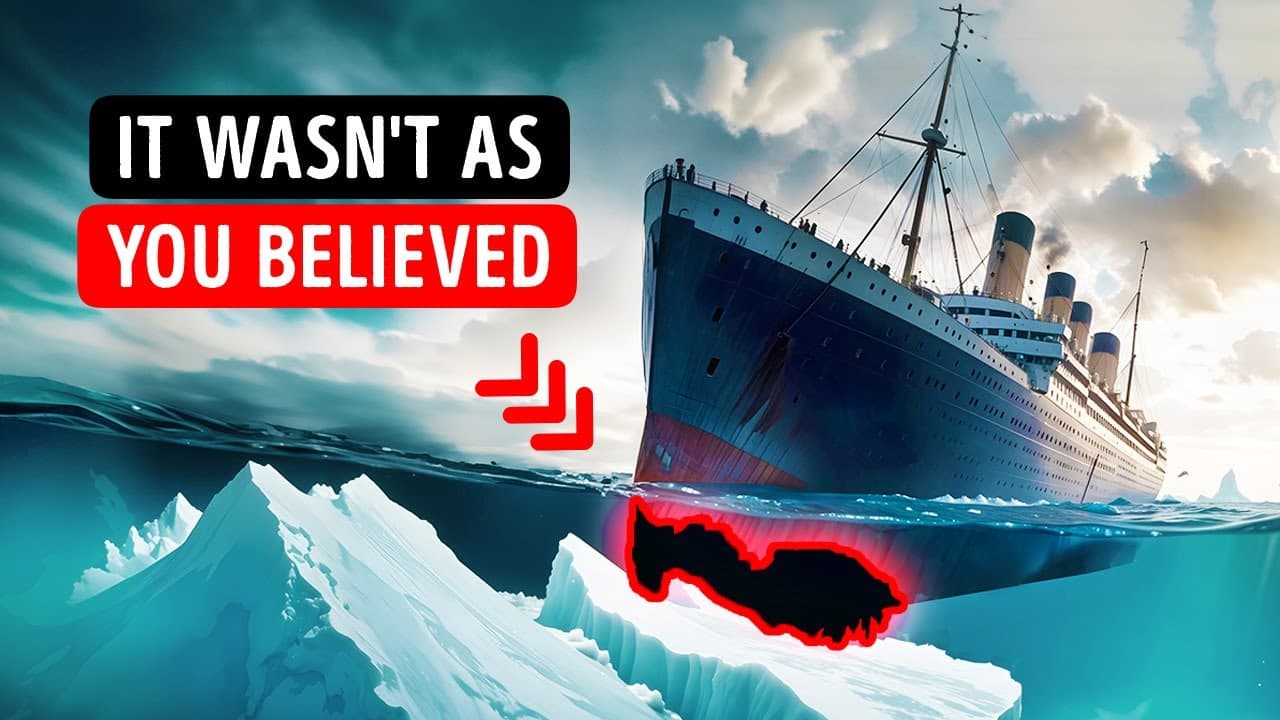
The real sinking involved damage below the waterline and not a dramatic impact. Lifeboats were too few for all passengers and some went unused or were delayed. The ship broke apart in a dark, freezing night, causing panic and a desperate scramble to survive, far from the movie’s depiction.
Transcript
the lookout shouts Iceberg right ahead the Titanic strikes the ice water starts flooding in third class passengers are locked up there aren't enough lifeboats for everyone Panic sets in violins are playing the ship sinks well we all know the story of the movie Titanic like the back of our Hand by now but what if I told you that Hollywood lied to us... Read More
Key Insights
- Iceberg impact did not feel like a single hard hit, but the damage was below the waterline and created a long gash in the hull.
- Lifeboats were insufficient for all on board, and some were launched under capacity, contributing to the high loss of life.
- Third class passengers faced more obstacles reaching lifeboats, though some crew and passengers helped them.
- There was confusion about the sound of the explosion, with varied survivor reports describing a loud boom or a series of blasts.
- The ship did not sink all at once; the lights went out by 2:18 am and the stern rose before breaking apart.
- There were conflicting eyewitness accounts about whether the ship split while intact or broke in two, until the wreck was found in 1985.
- Musicians reportedly played to calm passengers, but some survivors did not witness the band, complicating popular belief.
- Darkness on the lifeboats and around the ship made the disaster feel even more terrifying than in films or series.
- More videos from this channel:
- More from this channel: BRIGHT SIDE
Install to Summarize YouTube Videos and Get Transcripts
Explore YouTube Video Summarizer or Get YouTube Transcript Extractor
Questions & Answers
Q: How did the iceberg damage Titanic according to the video?
The iceberg interaction produced damage below the waterline that created a 300 ton gash in Titanic’s hull. The collision triggered immediate distress calls and the realization that the ship was severely damaged, prompting a rapid shift to safety planning and lifeboat preparations, while the surface impact was less dramatic than the public might expect.
Q: Why were lifeboats insufficient for everyone on board?
There were 20 lifeboats with a capacity to carry about half of the ship’s 2200 people, and some lifeboats left with far fewer passengers than they could hold. This shortage, combined with delays and passenger hesitation, left many people without timely access to rescue equipment during the sinking.
Q: What does the video say about third class passengers and lifeboats?
Third class passengers faced barriers to reaching lifeboats due to their locations at the ends of the ship and attachment to belongings, but some accounts describe crew members and first class passengers helping them up to the deck. This mix of obstacles and assistance shaped the survival distribution across classes.
Q: What are the conflicting sound reports during the sinking?
Survivors described a variety of sounds, from a single explosion to a series of smaller blasts that could be imagined as bulkhead failures, or simply a rumbling. This lack of a single, consistent sound report reflects the chaotic and subjective nature of the event as it unfolded.
Q: Did the Titanic break apart, and what is said about the timing?
The video explains that the ship split into two during the sinking, with witnesses giving conflicting impressions about whether it happened while intact or after breaking apart. The wreck later verified a break at some point, though the exact angle and timing varied among accounts.
Q: What role did darkness play in the disaster?
Darkness made the lifeboats and decks hard to navigate, increasing fear and confusion. The ship’s lights went out by 2:18 am, amplifying the danger as passengers tried to find lifeboats and survive in freezing conditions.
Q: What is described about the musicians on board?
The video notes that musicians reportedly played to calm passengers for over two hours after the impact, though some survivors say they did not see or hear the band, highlighting differing perceptions of what happened and when the music occurred during the crisis.
Q: How does the video compare film representations to reality?
The video argues that Hollywood and later productions did not fully capture the darkness and terror of the night, including the true acoustic and visual environment, and even notes that certain series portrayed the event more convincingly in parts, though neither fully represents the actual experience.
Summary & Key Takeaways
-
The disaster featured a jagged gash below the waterline after the iceberg contact, not a visible crash. The crew recognized severe damage and sent distress calls as the ship began to flood. Passengers faced a long, perilous night with limited time before the hull split and the bow sank.
-
Lifeboat availability and usage differed from popular belief, with many boats not reaching capacity and third class passengers facing additional barriers to safety. Panic was tempered by rumors and the absence of light in the dark, cold ocean.
-
The wreck confirmed the ship broke in two and then disappeared into the dark waters, contradicting some eyewitness accounts. The experience was described as terrifying, with musicians playing to calm passengers, though some survivors reported not seeing them.
Read in Other Languages (beta)
Share This Summary 📚
Summarize YouTube Videos and Get Video Transcripts with 1-Click
Try YouTube Summary with ChatGPT & Claude or YouTube Transcript Generator
Explore More Summaries from BRIGHT SIDE 📚



Summarize YouTube Videos and Get Video Transcripts with 1-Click
Try YouTube Summary with ChatGPT & Claude or YouTube Transcript Generator