How to spot optical illusions and trick your eyes
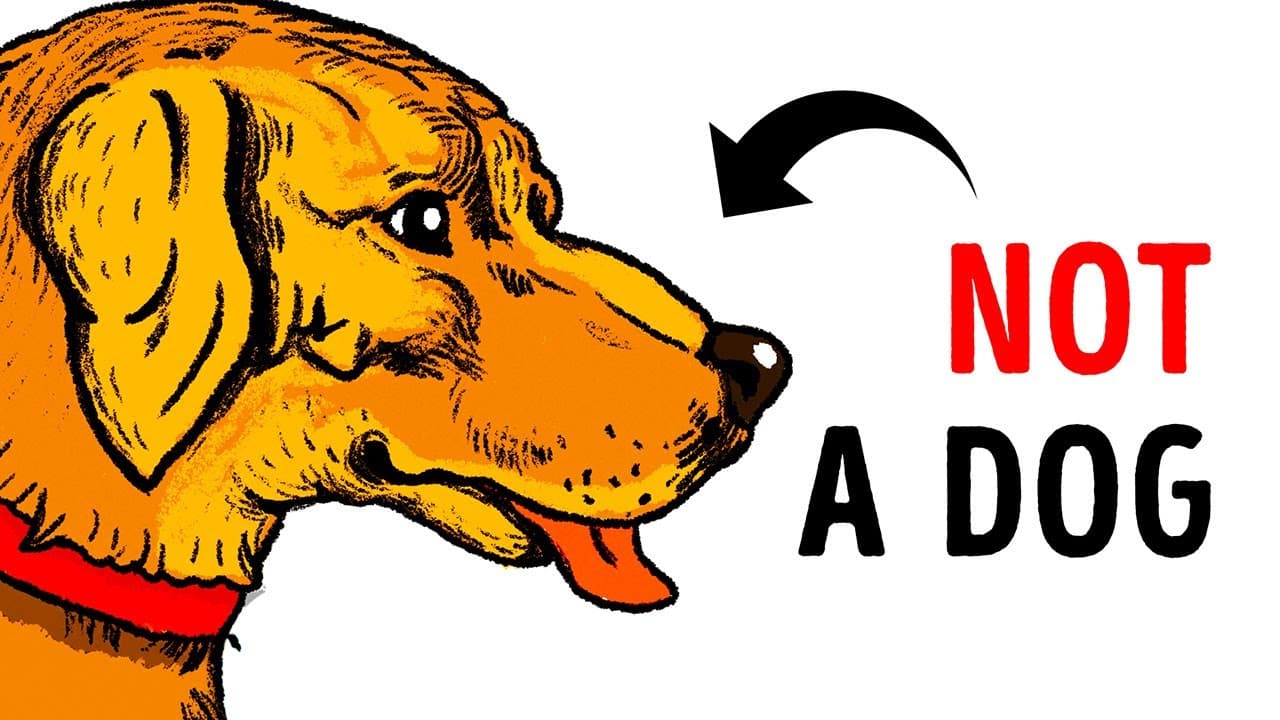
TL;DR
The video explains that optical illusions use color, light and pattern tricks to fool the brain, challenging visual perception. You are shown 11 illusions including a famous Vanishing figure, a café wall illusion and an impossible triangle. It guides viewers to observe carefully and test their own perception with time challenges.
Transcript
they say seeing is believing or not get ready for 11 optical illusions that will trick your eyes those who create optical illusions use combinations of colors lights or particular patterns that can really trick the brain so get ready to check your visual perception with this fun challenge and don't forget to click the subscribe button and turn on n... Read More
Key Insights
- Illusions leverage color and pattern to distort perception.
- The brain uses contextual clues to interpret spatial relationships.
- Hidden details test observer vigilance and have social sharing value.
- Motion illusions rely on micro eye movements and cortical processing.
- Some figures appear to move due to conflicting cues rather than actual motion.
- Spatial grids can create false dots or color changes at intersections.
- Perspective distortions can transform recognizable objects into impossible shapes.
- Illusions have historical roots in art and mathematics that explain their effects.
- More videos from this channel:
- More from this channel: BRIGHT SIDE
Install to Summarize YouTube Videos and Get Transcripts
Explore YouTube Video Summarizer or Get YouTube Transcript Extractor
Questions & Answers
Q: Question 1: How do optical illusions trick the brain and what is the basic mechanism behind them?
Illusions trick the brain by exploiting how visual information is processed in the eye and the brain. They use contrast, alignment, motion cues and context to create mismatches between what is seen and what is inferred. The brain fills in gaps based on surroundings, leading to misperceptions such as seeing movement where there is none or misjudging depth and shape. This process hinges on the way retinal signals are multiplexed and interpreted in the visual cortex, creating reliable but sometimes surprising results.
Q: Question 2: What is the café wall illusion and why do parallel lines appear not to be parallel?
The café wall illusion is a pattern where black and white tiles arranged in a staggered brick layout create the impression that the horizontal lines between tiles are sloped. This arises from local contrast and the way the visual system integrates lines and borders. The small offsets produce a perception of tilt due to lateral inhibition and the brain’s attempt to interpret parallel structures within a grid, leading to a strong but illusory tilt effect.
Q: Question 3: How does the Penrose triangle demonstrate an impossible object and what makes it impossible?
The Penrose triangle is an impossible object because it blends three 2D representations into a 3D illusion that cannot exist in Euclidean space. Each edge appears to join in a way that would require inconsistent geometry if traced in three dimensions. The illusion relies on a single viewpoint reading of the figure that conflicts with real spatial relations, making a coherent construction physically unreal.
Q: Question 4: Why do rotating spokes in some images not produce real motion and how does the illusion work?
Rotating spokes can appear to move due to the brain's processing of rapid light changes and micro eye movements. The visual system interprets patterns of alternating colors as motion signals, even if the image itself is static. This phenomenon, often called motion aftereffect or illusory motion, arises from how neural populations respond to consecutive frames and how attention shifts over time.
Q: Question 5: What is the Hermann grid illusion and what causes the gray dots at intersections?
The Hermann grid illusion creates gray spots at the intersections of a white grid on a dark background. These spots vanish when you look directly at an intersection and reappear when you shift gaze. The effect occurs due to lateral inhibition in retinal cells, where neighboring receptors suppress each other, producing darker spots at high-contrast junctions and brighter surroundings elsewhere.
Q: Question 6: How do hidden faces within a pattern test observational skills and social engagement?
Hidden faces within patterns challenge observers to scan textures and branches carefully beyond obvious shapes. Finding more faces requires sustained attention, pattern recognition and cognitive flexibility. Sharing discoveries with others creates social engagement, invites speculation about who the figures might be, and reinforces how perception is influenced by context and prior experiences.
Q: Question 7: What is the all is vanity illusion and why can it look different to different viewers?
All is vanity is a famous illustration where viewers may first notice either a woman at a vanity or a skeleton in the mirror. The perception shifts because the image is designed with ambiguous lines and shading that allow multiple interpretations. The brain selects a dominant interpretation based on cues and prior experience, leading to different initial impressions.
Q: Question 8: How can viewers use these illusions to improve their visual awareness in everyday life?
To improve visual awareness, viewers can practice slowing down and testing competing interpretations of a scene. Try focusing on edges, contrasts and a single element at a time. Replaying the illusion with a critical eye can reveal how easily perception can be biased by context, coloring, lighting and arrangement, teaching more precise observation for real world tasks.
Summary & Key Takeaways
-
The video introduces multiple classic and modern optical illusions, explaining how colors, lines and shapes mislead perception. It encourages careful observation and provides quick challenges to test what you see. Viewers are invited to comment on what tricks their eyes the most.
-
A set of illusions explores faces hidden in branches, moving figures and rotating elements. The content emphasizes that perception can differ from reality and that brain processing plays a key role in visual tricks. It also references historical and mathematical explanations for some effects.
-
The final segment presents a thought provoking box illusion and a discussion of grid and motion effects, highlighting how simple patterns can create complex perceptual experiences. The video invites continued exploration and sharing of findings.
Read in Other Languages (beta)
Share This Summary 📚
Summarize YouTube Videos and Get Video Transcripts with 1-Click
Try YouTube Summary with ChatGPT & Claude or YouTube Transcript Generator
Explore More Summaries from BRIGHT SIDE 📚




Summarize YouTube Videos and Get Video Transcripts with 1-Click
Try YouTube Summary with ChatGPT & Claude or YouTube Transcript Generator