How Does ThredUp Scale the Secondhand Fashion Market?
TL;DR
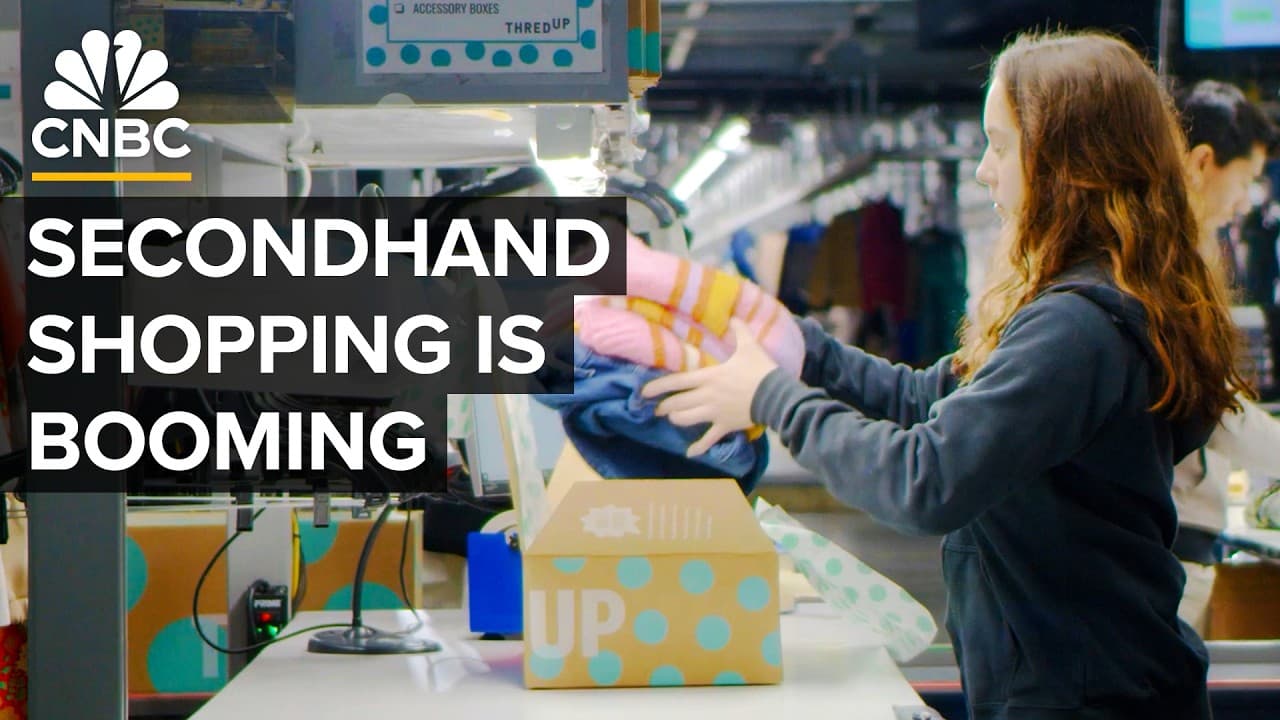
ThredUp runs a massive garment on hanger system that processes tens of thousands of items daily, turning used clothing into a scalable online resale operation. The company combines logistics, automation, and AI driven search to offer a seamless shopping experience while tariffs and rising prices push more Americans toward resale, expanding the market.
Transcript
This here is the largest garment-on-hanger system in the world. We can house roughly up to 3.5 million items in this facility. Here at ThredUp's warehouse in Suwanee, Georgia, roughly 40,000 articles of used clothing are given a second life each day. We receive more than 100,000 pieces of clothing every day, so it's a business operating at s... Read More
Key Insights
- ThredUp runs one of the world’s largest garment on hanger systems capable of housing roughly 3.5 million items.
- The Suwanee, Georgia facility processes about 40,000 items per day and receives over 100,000 pieces daily, indicating scale and throughput.
- ThredUp operates four facilities across the US, creating a nationwide resale logistics network.
- The company emphasizes quality control with a final check by packers who touch items before delivery to customers.
- Automation has significantly reduced manual data entry, dropping barcode work to a single team member per item.
- The US secondhand apparel market is projected to reach 74 billion by 2029 with about 9 percent annual growth.
- AI tools like Phia are used to compare thousands of listings and improve deal discovery for shoppers.
- Gen Z and millennials see resale as both affordable and sustainable, driving demand and redefining value in fashion.
- More videos from this channel:
- More from this channel: CNBC
Install to Summarize YouTube Videos and Get Transcripts
Explore YouTube Video Summarizer or Get YouTube Transcript Extractor
Questions & Answers
Q: What is ThredUp's scale and main operation model?
ThredUp operates a large scale resale platform with a network of four facilities in the US, processing hundreds of thousands of secondhand items weekly. It combines a logistics network with an e-commerce experience, letting buyers shop like on any internet site while sellers send a clean out kit and items are sorted, photographed, and uploaded for sale. This model prioritizes efficiency, turnaround speed, and scale to meet rising demand for affordable, sustainable fashion.
Q: How does ThredUp manage item processing and quality control?
Items pass through a multi stage process: they are sourced, sorted, photographed in studios, then moved to mezzanine storage for placement on carousels. Packers perform a crucial final quality check before items are shipped to customers. This workflow ensures consistency and quality across hundreds of thousands of items weekly, maintaining customer trust and brand standards.
Q: What role do tariffs play in the secondhand fashion market according to the video?
Tariffs are described as increasing prices and creating inflationary pressure, which drives more consumers toward resale platforms as a way to save money. The video notes that rising costs from tariffs push Americans to seek value in secondhand clothing, potentially expanding the market as people offset higher prices through resale.”
Q: How is AI used to enhance the resale experience?
AI tools in the resale space, including Phia, are used to compare thousands of listings across retail and resale quickly, helping shoppers discover the best deals whether items are new or used. AI also supports discovery by enabling image based search attributes and themed queries, broadening the universe of items shoppers can find.
Q: Who are the main demographic drivers of secondhand fashion growth?
Gen Z and millennials are identified as the driving force behind growth in fashion resale, valuing affordability and sustainability in their purchases. This demographic tends to view resale not as a trade down but as a way to access value and personalization, contributing to a broader shift in consumer behavior toward secondhand platforms.
Q: What is the market outlook for the secondhand apparel sector?
The global secondhand apparel market is projected to reach hundreds of billions by 2029, with growth outpacing the overall apparel market. In the U.S., the secondhand market is expected to reach around 74 billion by 2029, growing on average about 9 percent annually, signaling strong momentum driven by price sensitivity and sustainability concerns.
Q: How does ThredUp position itself against traditional fast fashion?
ThredUp markets itself as a sustainable, value oriented alternative to traditional fashion by promoting reuse and reducing waste. It emphasizes that resale offers similar quality and style at lower prices, appealing to consumers seeking affordable fashion while also addressing environmental concerns, a narrative that resonates with younger shoppers and complements AI based discovery tools.
Q: What future trends are highlighted for the resale sector?
The video points to increased adoption of AI discovery tools, a growing share of new customers, and continued expansion of resale platforms like Phia and ThredUp. It suggests that tariffs, evolving consumer expectations, and a broader shift toward value and sustainability will continue to fuel growth and reshape how people shop for clothing.
Summary & Key Takeaways
-
ThredUp operates multiple large facilities with automated processes to handle hundreds of thousands of secondhand items weekly.
-
AI tools and rapid sorting improve efficiency and discovery for shoppers, supporting faster resales.
-
Gen Z and millennials drive growth in secondhand fashion, valuing affordability and sustainability, which resale platforms leverage to expand market share.
Read in Other Languages (beta)
Share This Summary 📚
Summarize YouTube Videos and Get Video Transcripts with 1-Click
Try YouTube Summary with ChatGPT & Claude or YouTube Transcript Generator
Explore More Summaries from CNBC 📚





Summarize YouTube Videos and Get Video Transcripts with 1-Click
Try YouTube Summary with ChatGPT & Claude or YouTube Transcript Generator