Why Is Ticketmaster Facing Monopoly Scrutiny?
TL;DR
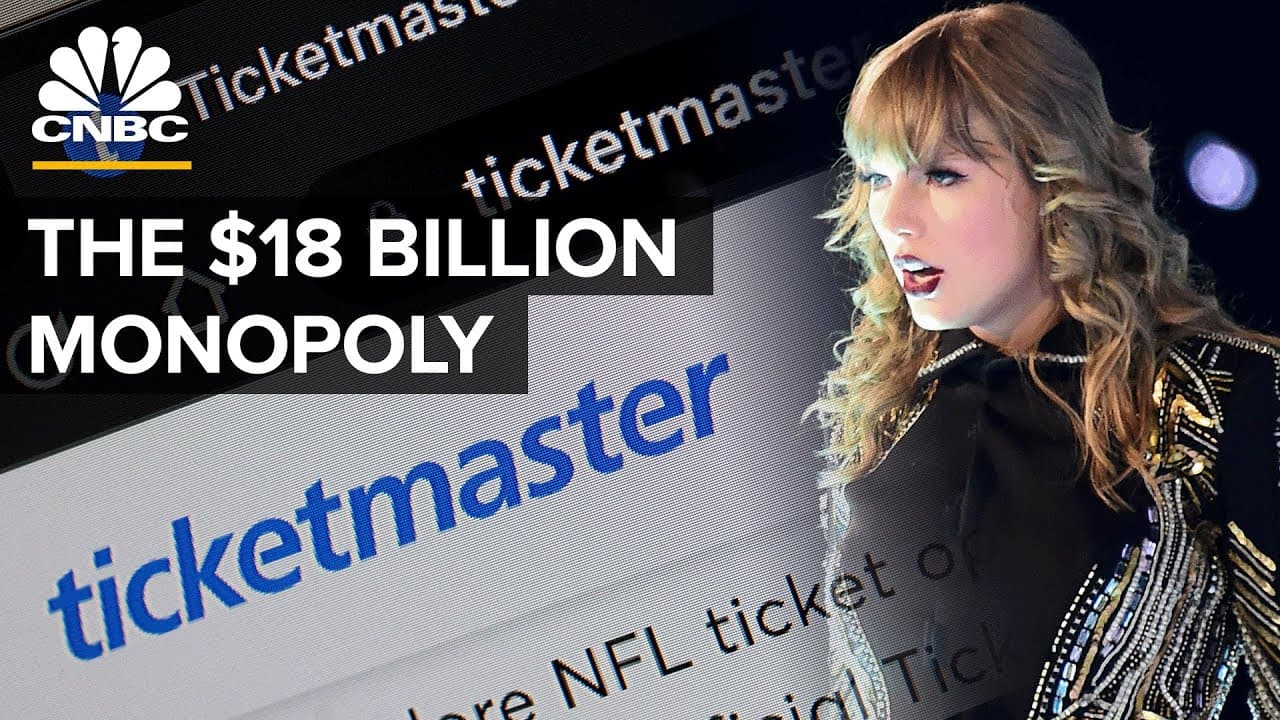
Ticketmaster faces renewed antitrust scrutiny because its dominance in ticketing, combined with Live Nation’s promotion and venue operations, may restrict meaningful competition. The chaotic Taylor Swift Eras Tour presale intensified concern after millions encountered delays and errors, the public sale was canceled, and a competitor said exclusive venue agreements left it no practical alternative to Ticketmaster.
Transcript
4000 touring artists performing at more than 200 venues across 40 countries. 98 million fans buying 500 million tickets to 40,000 concerts each year. That's Live Nation Entertainment composed of Live Nation, a live entertainment promoter and venue operator, and Ticketmaster a ticketing platform. The two companies merged in 2010. That merger... Read More
Key Insights
- Live Nation Entertainment is a vertically integrated company combining concert promotion, venue operation, and Ticketmaster’s ticketing platform. The company works with 4,000 touring artists, operates at more than 200 venues across 40 countries, and serves millions of ticket buyers annually.
- Ticketmaster’s market power is reinforced by exclusive venue agreements. AEG Presents, the promoter for Taylor Swift, said Ticketmaster agreements covering most Eras Tour venues required tickets to be sold through its system, leaving AEG without another practical choice.
- The Taylor Swift presale failure involved demand far beyond the planned audience. Ticketmaster said the sale was intended for 1.5 million verified fans, but 14 million users, including bots, reached the site before 2 million tickets were sold and the public sale was canceled.
- A monopoly is not inherently illegal under United States antitrust law. The central legal concern is whether a dominant company establishes or maintains its position through improper conduct that excludes competitors, restricts market entry, or deprives customers and business partners of meaningful choices.
- The 2010 merger was approved subject to a consent decree that prohibited Live Nation from retaliating against venues choosing another ticketing provider. In 2019, the Justice Department alleged repeated violations, and Live Nation settled while the decree was extended.
- Verified Fan registration is intended to limit scalpers and automated bots, but the Swift and Bruce Springsteen sales raised doubts about its effectiveness. Marked-up tickets appeared on secondary markets within hours despite Ticketmaster having introduced the registration system in 2017.
- Dynamic pricing adjusts ticket prices according to demand and contributed to criticism surrounding premium seats sold through Ticketmaster’s Official Platinum feature. The platform also faced scrutiny for revolving barcodes that can prevent fans from reselling tickets through other channels.
- Competition exists across promotion, venues, primary ticketing, and resale, but no rival has achieved Live Nation’s scale. Smaller companies include SeatGeek, Eventbrite, AXS, StubHub, and Vivid Seats, while AEG is described as the closest comparable integrated competitor.
Install to Summarize YouTube Videos and Get Transcripts
Explore YouTube Video Summarizer or Get YouTube Transcript Extractor
Questions & Answers
Q: Why is Ticketmaster facing monopoly scrutiny?
Ticketmaster faces scrutiny because it holds a dominant position in ticketing while its parent company, Live Nation Entertainment, also promotes concerts and operates venues. Critics argue that this combination can limit alternatives for artists, promoters, venues, and consumers. The concern is not dominance alone, but whether exclusive agreements, implied pressure, or control over concert access improperly protects that dominance.
Q: What happened during the Taylor Swift Eras Tour presale?
The presale was designed for 1.5 million verified Taylor Swift fans, but Ticketmaster said 14 million users reached the site, including bots that were not supposed to participate. Fans encountered hours-long waits, glitches, and error messages. Although 2 million tickets were sold, Ticketmaster canceled the planned general public sale, prompting congressional questions and renewed antitrust scrutiny.
Q: Why did AEG Presents use Ticketmaster for Taylor Swift tickets?
AEG Presents said it used Ticketmaster because exclusive Ticketmaster agreements covered the vast majority of venues on the Eras Tour. According to AEG, those contracts required the promoter to sell tickets through Ticketmaster’s system, so it did not have a genuine choice. The account supports concerns that Ticketmaster’s venue relationships can restrict competitors even when another company promotes the tour.
Q: Is operating a monopoly illegal in the United States?
Operating a monopoly is not automatically illegal in the United States. Antitrust concern arises when a company establishes or maintains monopoly power through improper conduct, such as excluding smaller rivals, preventing market entry, or limiting competition. The distinction matters because a highly successful company can lawfully hold substantial market share, while abusing that position can create grounds for government action or litigation.
Q: What restrictions governed the Live Nation and Ticketmaster merger?
The 2010 merger was approved under a consent decree that included a prohibition against Live Nation retaliating against venues for selecting a ticketing provider other than Ticketmaster. The remedy was intended to protect competition after combining promotion, venue operations, and ticketing. In 2019, the Justice Department alleged that Live Nation repeatedly violated this provision, leading to a settlement and an extension of the decree.
Q: How does Ticketmaster’s Verified Fan system work?
Ticketmaster began asking consumers to register as verified fans in 2017 as an attempt to keep scalpers and bots out of high-demand ticket sales. The Swift and Bruce Springsteen controversies raised questions about the system’s effectiveness because enormous traffic disrupted sales and marked-up tickets appeared on secondary markets within hours. Verification therefore did not eliminate either technical pressure or rapid resale activity.
Q: Why is Ticketmaster’s dynamic pricing controversial?
Ticketmaster’s Official Platinum feature uses dynamic pricing for premium seats, meaning ticket prices change according to demand. The approach became controversial because highly sought-after tickets could reach prices that shocked customers, as illustrated by criticism surrounding the Bruce Springsteen sale. The debate connects ticket affordability and transparency with Ticketmaster’s broader market power, although Live Nation emphasized that average concert tickets remained affordable.
Q: What evidence suggests Ticketmaster’s competitors struggle to gain scale?
The transcript identifies several competitors, including AEG, Eventbrite, AXS, SeatGeek, StubHub, and Vivid Seats, but says none has reached Live Nation’s scale. AEG, described as the closest comparable integrated competitor, still used Ticketmaster for Taylor Swift’s tour. Barclays Center also returned to Ticketmaster in January 2023 after switching to SeatGeek in 2021, illustrating the difficulty rivals face in becoming meaningful alternatives.
Summary & Key Takeaways
-
Live Nation Entertainment combines a major concert promoter and venue operator with Ticketmaster, a dominant ticketing platform. Although possessing monopoly power is not automatically illegal in the United States, regulators examine whether the company uses exclusive contracts, control of concert content, or pressure on venues to preserve its position and impede smaller competitors.
-
The Taylor Swift Eras Tour presale became a catalyst for renewed scrutiny when 14 million users, including bots, reportedly hit a sale intended for 1.5 million verified fans. Ticketmaster sold 2 million tickets but canceled the general public sale after customers experienced long queues, technical failures, and error messages.
-
The controversy extends beyond one artist or sale. Bruce Springsteen pricing, failed attempts by Pearl Jam to avoid Ticketmaster venues, complaints from independent promoters, and the Justice Department’s 2019 allegations all illustrate persistent concerns about competition, consumer choice, fees, dynamic pricing, resale restrictions, and the effectiveness of the merger’s consent decree.
Read in Other Languages (beta)
Share This Summary 📚
Summarize YouTube Videos and Get Video Transcripts with 1-Click
Try YouTube Summary with ChatGPT & Claude or YouTube Transcript Generator
Explore More Summaries from CNBC 📚




Summarize YouTube Videos and Get Video Transcripts with 1-Click
Try YouTube Summary with ChatGPT & Claude or YouTube Transcript Generator