How Did Hyundai Become a Top Automaker?
TL;DR
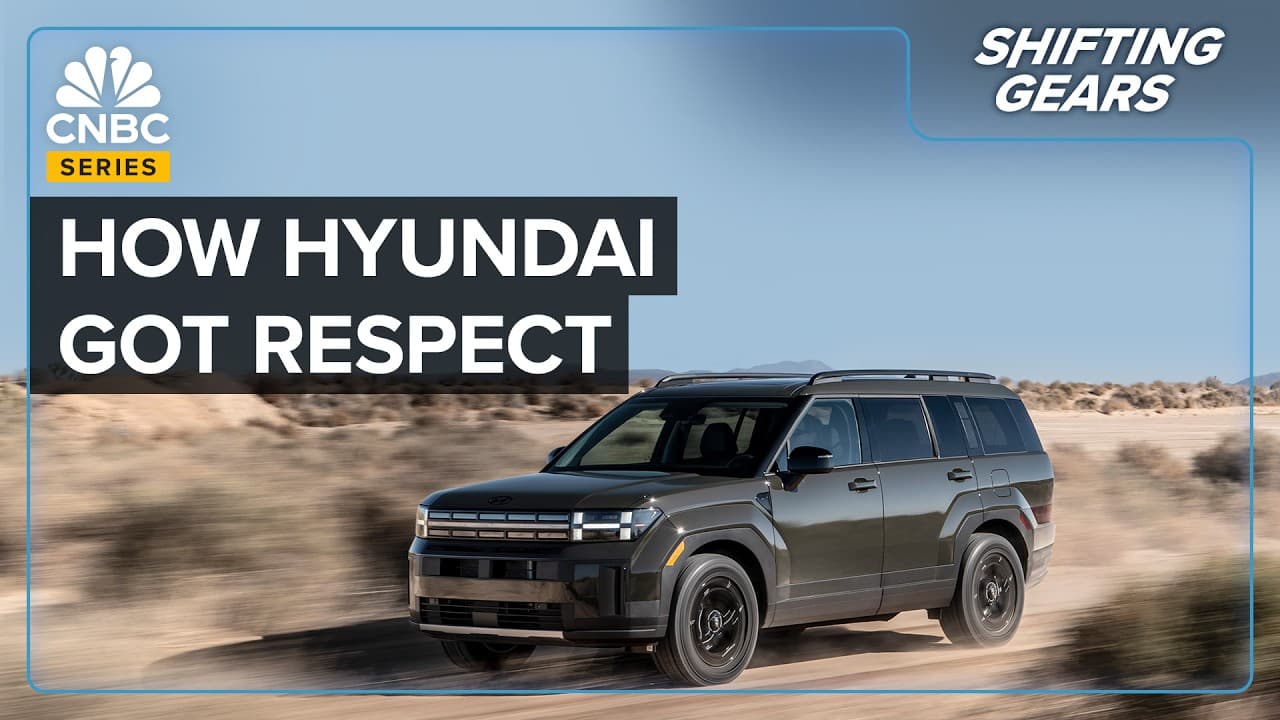
Hyundai Motor Group has become the world's third-largest automaker by volume, overcoming past perceptions of low quality. The company has made significant strides in the electric vehicle market, challenging industry leaders like Tesla. Hyundai is also investing heavily in future technologies, including robotics and autonomous vehicles, despite facing challenges such as vehicle recalls and labor union pressures.
Transcript
Hyundai Motor Group is the third largest automaker in the world by volume. This is no mean feat for a company that just some years ago was considered a low quality copycat. Now, the three auto brands in Hmg's stable are nipping at the heels of well-established competitors and winning award after award. The Hyundai that we see today, especially from... Read More
Key Insights
- Hyundai Motor Group is the third-largest automaker globally by volume.
- Hyundai's past reputation was marred by perceptions of low quality, which it overcame through strategic improvements.
- The company has made significant progress in the electric vehicle market, with its Ioniq 5 model seeing a 90% sales increase in 2023.
- Hyundai is investing in future technologies like robotics, autonomous vehicles, and flying taxis, despite setbacks.
- The company's E-GMP platform is a flexible, advanced electric vehicle architecture.
- Hyundai's quality improvements were driven by adopting best practices from leading automakers like Toyota.
- Hyundai faces challenges like vehicle recalls due to fire risks and thefts, and labor union pressures in the U.S.
- Hyundai's strategic investments include a $12.6 billion plant in Georgia for vehicle assembly and battery manufacturing.
Install to Summarize YouTube Videos and Get Transcripts
Explore YouTube Video Summarizer or Get YouTube Transcript Extractor
Questions & Answers
Q: How did Hyundai become a top automaker?
Hyundai became a top automaker by overcoming its past reputation for low quality through strategic improvements and adopting best practices from leading automakers like Toyota. The company focused on enhancing quality, launching a ten-year, 100,000-mile powertrain warranty, and investing in advanced technologies, including electric vehicles and future innovations like robotics and autonomous driving.
Q: What are Hyundai's key innovations in electric vehicles?
Hyundai's key innovations in electric vehicles include its E-GMP platform, a flexible and advanced architecture designed for a wide range of vehicle shapes. This platform supports rapid charging and cutting-edge technology, contributing to significant sales increases, particularly in models like the Ioniq 5. Hyundai is also investing in hydrogen vehicles and exploring hybrid options to meet diverse consumer demands.
Q: What challenges has Hyundai faced in recent years?
Hyundai has faced several challenges, including vehicle recalls due to fire risks and thefts, labor union pressures in the U.S., and trade policy issues affecting federal tax credits for electric vehicles. Despite these challenges, Hyundai remains committed to addressing these issues and maintaining its reputation for quality and innovation.
Q: How is Hyundai investing in future technologies?
Hyundai is investing in future technologies by focusing on robotics, autonomous vehicles, and flying taxis. The company is committed to revolutionizing manufacturing processes and has established a highly automated innovation center in Singapore. Despite setbacks in areas like autonomous driving, Hyundai continues to pursue advancements that position it as a leader in automotive innovation.
Q: What is the significance of Hyundai's E-GMP platform?
Hyundai's E-GMP platform is significant because it represents a flexible and advanced electric vehicle architecture capable of supporting a wide range of vehicle shapes. It is equipped with cutting-edge technology, including rapid charging capabilities, making it one of the best electric vehicle platforms on the market. This innovation has contributed to Hyundai's success in the electric vehicle sector.
Q: How has Hyundai's quality improvement strategy impacted its reputation?
Hyundai's quality improvement strategy, which involved adopting best practices from leading automakers and implementing rigorous quality checks, has significantly enhanced its reputation. The introduction of a ten-year, 100,000-mile powertrain warranty communicated Hyundai's commitment to quality, transforming its image from a purveyor of cheap, poorly made cars to a manufacturer of reliable, well-built vehicles.
Q: What are Hyundai's strategic investments in the U.S.?
Hyundai's strategic investments in the U.S. include a $12.6 billion plant in Georgia, which will encompass vehicle assembly and battery manufacturing. These investments are part of Hyundai's efforts to expand its market presence and adapt to changing consumer demands. The company aims to qualify for federal tax credits and maintain its competitive edge in the automotive industry.
Q: How does Hyundai plan to address labor union pressures?
Hyundai plans to address labor union pressures by offering competitive wages and maintaining open communication with its workforce. The company has proposed raising wages by 25% through 2028 and is prepared to respect workers' decisions regarding unionization. Hyundai is committed to providing a supportive work environment and collaborating with local and state authorities to ensure fair labor practices.
Summary & Key Takeaways
-
Hyundai Motor Group has achieved the status of the third-largest automaker globally by volume, overcoming a past reputation for low quality. The company has excelled in the electric vehicle market, challenging industry leaders like Tesla, and is investing heavily in future technologies such as robotics and autonomous vehicles. Despite facing challenges such as vehicle recalls and labor union pressures, Hyundai continues to innovate and expand its market presence.
-
Hyundai's transformation involved adopting best practices from leading automakers and focusing on quality improvements. The company's E-GMP platform is a testament to its advanced electric vehicle technology, contributing to significant sales increases, particularly in its Ioniq 5 model. Hyundai's strategic investments in the U.S., including a $12.6 billion plant in Georgia, underscore its commitment to growth and innovation.
-
While Hyundai has faced challenges, including vehicle recalls due to fire risks and thefts, it remains committed to addressing these issues and maintaining its reputation for quality. The company's focus on future technologies, such as flying taxis and autonomous vehicles, positions it as a forward-thinking leader in the automotive industry, ready to adapt to changing consumer demands and regulatory landscapes.
Read in Other Languages (beta)
Share This Summary 📚
Summarize YouTube Videos and Get Video Transcripts with 1-Click
Try YouTube Summary with ChatGPT & Claude or YouTube Transcript Generator
Explore More Summaries from CNBC 📚




Summarize YouTube Videos and Get Video Transcripts with 1-Click
Try YouTube Summary with ChatGPT & Claude or YouTube Transcript Generator