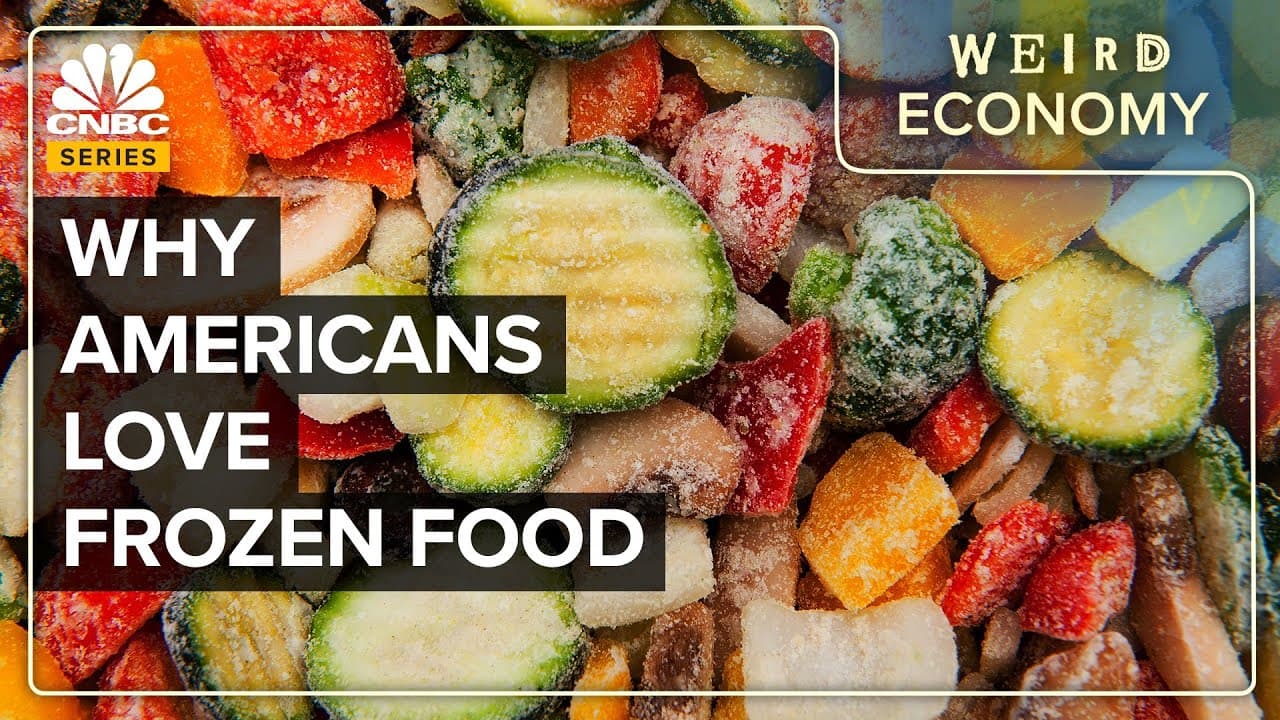
What drives frozen food demand and how is the cold chain kept safe?
TL;DR
Frozen food demand is rising due to bulk buying and long shelf life, while the cold chain must keep perishables at the right temperatures. Techniques include flash freezing, IKF, and cryogenic freezing, but energy costs and logistics remain challenges that could constrain growth without better storage capacity and optimized delivery.
Transcript
In 2022, frozen food sales in the U.S. reached over $72 billion. Demand has been rapidly growing. Throughout Covid, we had among the highest sales in all of the food space. Behind this seemingly simple idea, there's a sophisticated supply chain keeping perishables frozen. Each step is very critical. The products have to maintain proper temperature ... Read More
Key Insights
- Frozen food demand is growing in the United States and globally, supported by a sophisticated cold chain.
- The main driver for consumers is cost, enabling bulk purchases and reduced waste through freezing.
- Frozen products require maintaining proper temperature along a complex network of transport and storage.
- Flash freezing preserves texture by rapidly lowering temperature and reducing ice crystal size.
- IKF freezes individual pieces to speed up the process and protect quality.
- Cryogenic freezing uses liquid nitrogen or CO2 for very fast freezing, but costs are higher.
- Faster freezing lowers energy use per unit and improves efficiency in warehouses.
- Cold chain weaknesses and energy costs are major risks to the frozen food market growth.
- More videos from this channel:
- More from this channel: CNBC
Install to Summarize YouTube Videos and Get Transcripts
Explore YouTube Video Summarizer or Get YouTube Transcript Extractor
Questions & Answers
Q: How does the video describe the demand trend for frozen foods in the U.S.?
The video states that frozen food sales in the U.S. reached over 72 billion dollars in 2022 and that demand has been rapidly growing, with COVID-era spikes showing peak sales in the food space. It notes that nearly all households buy frozen foods at least once a year and that the pandemic boosted growth, with double digit increases in many products.
Q: What role does bulk buying and storage play in frozen foods growth?
Bulk buying emerged during the pandemic as consumers invested in longer shelf life items, including frozen foods. The video explains that this behavior supported a surge in demand, with frozen foods accounting for significant sales during the pandemic and continuing growth as consumers seek convenience and long-term storage options.
Q: What is flash freezing and why is it important?
Flash freezing is a method that quickly cools foods to very low temperatures, preserving texture and flavor by preventing large ice crystal formation. The video explains that it remains a common method today alongside other freezing techniques and is essential for maintaining quality in frozen products.
Q: What is IKF and how does it affect product quality?
IKF stands for individual quick freezing, which freezes each piece of food separately. This speeds up freezing, reduces ice crystal size, and helps preserve the integrity of the food when thawed or cooked, leading to higher overall product quality.
Q: How does cryogenic freezing differ from mechanical freezing, and what are the trade-offs?
Cryogenic freezing uses liquid nitrogen or carbon dioxide to reach extremely low temperatures quickly, making it faster than mechanical freezing. However, it is more expensive due to the cost of nitrogen and equipment, which is a trade-off between speed and cost.
Q: What challenges does the video identify for the cold chain in the online grocery era?
The video notes that online grocery growth increases the need for efficient, temperature-controlled logistics and end-to-end visibility. It highlights the higher costs of shipping frozen goods online and the complexity of moving products from warehouses to customers while maintaining safe temperatures.
Q: Which companies are highlighted as leaders in cold storage and innovation?
Lineage Logistics is highlighted for expanding frozen and chilled warehousing with a large network and focus on waste reduction. Phononic is noted for solid state cooling and reusable cold chain totes with IoT connectivity to track orders. These players illustrate how private investment drives cold chain innovation.
Q: Why is reducing food waste emphasized in the frozen food narrative?
Reducing food waste is emphasized as a major benefit of frozen foods, with data suggesting that frozen options make consumers less likely to waste food. The video cites a Cornell study indicating frozen food reduces waste by comparison to fresh, which in turn lowers emissions and supports sustainability in the global food system.
Summary & Key Takeaways
-
The video explains that global frozen food demand is growing and relies on a robust cold storage system to prevent waste and maintain safety. It highlights how advanced freezing techniques reduce ice crystal size and preserve quality, and how supply chain efficiency is crucial to meet online grocery demand.
-
The narrative traces the evolution from early flash freezing to modern methods like IKF and cryogenic freezing, noting energy use and cost as key factors. It also points to Lineage Logistics and Phononic as players advancing the cold chain and reducing waste.
-
The piece concludes that improving cold storage infrastructure and logistics is essential to sustain the frozen foods market and minimize waste, with technology and private investment playing central roles.
Read in Other Languages (beta)
Share This Summary 📚
Summarize YouTube Videos and Get Video Transcripts with 1-Click
Try YouTube Summary with ChatGPT & Claude or YouTube Transcript Generator
Explore More Summaries from CNBC 📚




Summarize YouTube Videos and Get Video Transcripts with 1-Click
Try YouTube Summary with ChatGPT & Claude or YouTube Transcript Generator