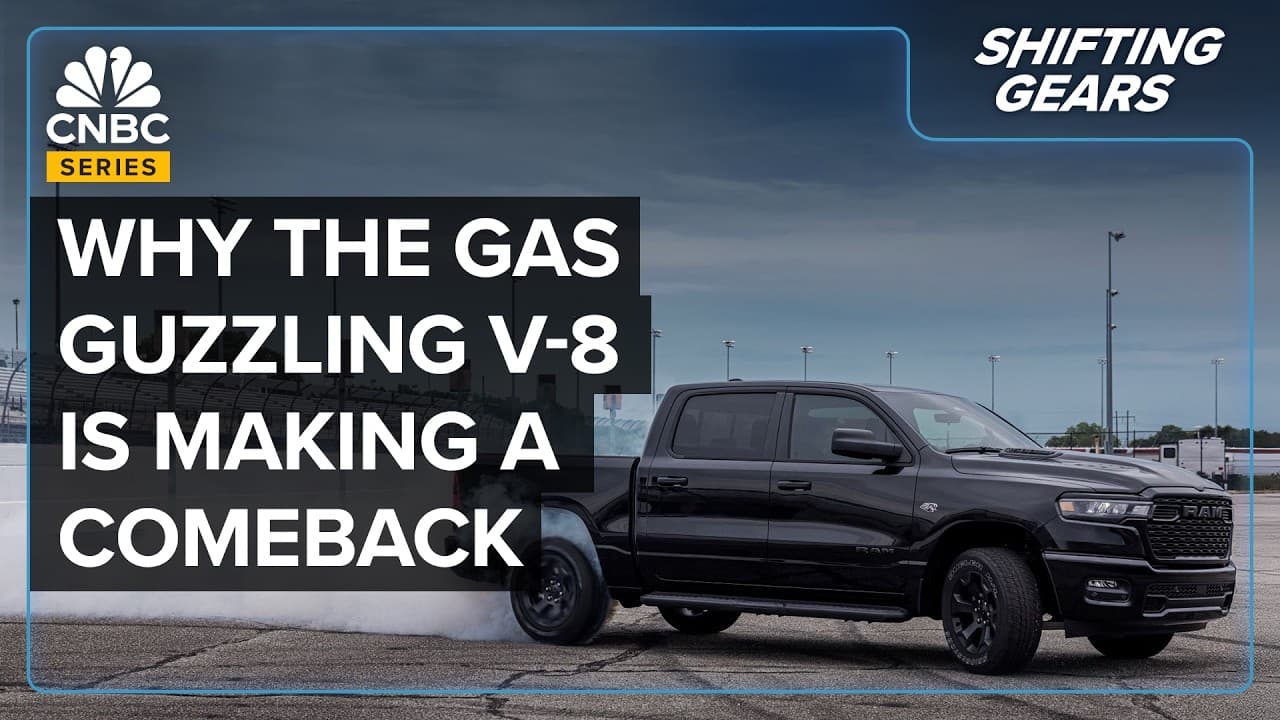
Why Ram Reinstated the HEMI V8 Engine Explained
TL;DR
The HEMI revival was sparked by fan demand after Ram replaced the V8 with the Hurricane inline six, which hurt sales. Ram later brought back the HEMI to keep existing customers and win back buyers who won’t shop without a V8. About 3.6 million Ram buyers own a HEMI, and roughly 30,000 units a year are at stake from loyalty losses.
Transcript
In the world of American muscle cars, SUVs, and pickups, the HEMI is an icon. A big, loud eight cylinder engine found in many of the vehicles collectively known by the Mopar or Chrysler names. Hey. This ain't got a HEMI. Yeah, sweet. Even if you don't know what a HEMI is, you know the term. Oh, it's got a HEMI. It's associated with a muscle ca... Read More
Key Insights
- The HEMI name is a strong brand element for Mopar, with fans associating it with a V8 and performance heritage.
- Replacing the HEMI with the Hurricane inline six initially hurt Ram sales and customer loyalty.
- Kuniskis notes about 3.6 million Ram buyers own a HEMI engine, influencing retention strategies.
- About 6 to 8 percent of Ram buyers purchase a new truck each year, creating sensitive loyalty dynamics.
- 40 percent of current HEMI owners said they would not shop Ram if the HEMI option were removed.
- Ram expects roughly 40 percent of buyers to eventually choose the HEMI, higher than Ford but below some GM offerings.
- The Hurricane V6 is not a pure replacement for the HEMI in performance terms; many customers still value the V8 sound and torque.
- EV strategies remain in play with Ram planning two new trucks, including a fully electric model and a gas generator variant.
- More videos from this channel:
- More from this channel: CNBC
Install to Summarize YouTube Videos and Get Transcripts
Explore YouTube Video Summarizer or Get YouTube Transcript Extractor
Questions & Answers
Q: A real search query question about the video (e.g. 'How to...', 'What is...', 'Why does...', 'When should...'). Question 1
Why did Ram bring back the HEMI V8 after replacing it with the Hurricane inline six? Ram faced a drop in sales and a backlash from enthusiasts who value the traditional V8 sound and performance identity. The restoration of the HEMI was aimed at retaining existing customers and attracting buyers who insist on a V8 option, recognizing the HEMI as more than just an engine. The strategy leverages brand heritage to stabilize volume and loyalty in a shifting market while balancing electrification plans for future models.
Q: Question 2
What evidence is given that the HEMI matters to Ram customers? The video cites 3.6 million Ram owners with a HEMI engine, and notes that 6 to 8 percent of Ram buyers purchase a new truck each year. Importantly, 40 percent of those with the HEMI would not shop Ram without an opportunity to consider the V8, indicating strong loyalty tied to the engine option.
Q: Question 3
How did Stellantis respond to customer demand for the HEMI after the V8 was substituted? Stellantis under Carlos Tavares pushed for cost cuts and more EVs, but the backlash and loyalty risk led Ram to reintroduce the HEMI under Tim Kuniskis. The transition illustrates the tension between green initiatives and maintaining a product identity that resonates with a core customer base.
Q: Question 4
What role does the Hurricane inline six play alongside the HEMI after the comeback? The Hurricane offers high horsepower and torque on paper and serves as the modern alternative, while the HEMI remains the traditional option for customers who crave V8 sound, torque characteristics, and a specific brand feel. Both engines are positioned to provide choice without eliminating either path.
Q: Question 5
What did analysts and insiders say about the changes to Ram under Stellantis? Critics argued that the moves were too swift and did not align with the US market. The SRT division’s status and the broader electrification push created a mixed reception among fans who preferred performance-focused, non-electric offerings in Ram and Dodge products.
Q: Question 6
How does the video describe the market impact of the HEMI revival on Ram’s sales? The revival aims to recover customer loyalty and prevent loss of a significant portion of the HEMI loyal base. It is presented as a strategic move to stem customer churn and maintain Ram’s standing in the highly competitive North American pickup market by offering a familiar engine option.
Q: Question 7
What does the video say about the broader trend toward electrification versus maintaining traditional gasoline engines? It acknowledges electrification as a long-term trend but argues that gasoline enthusiasts want the most expressive versions of those engines now. Ram plans EV trucks while keeping gas-burning options to satisfy current demand for V8 heritage.
Q: Question 8
What is the future tone for Ram in terms of engine and powertrain strategy? The video suggests Ram will continue to offer the HEMI alongside the Hurricane and pursue two new EV trucks, signaling a dual-track approach that preserves heritage while embracing electrification, with a focus on keeping a choice-driven relationship with customers.
Summary & Key Takeaways
-
Ram briefly dropped the HEMI to pursue greener goals, but that move coincided with a sales decline and brand backlash from performance enthusiasts. The revival was driven by the belief that customers value a V8 option and the identity of the HEMI brand, not just horsepower on paper.
-
Industry dynamics around Stellantis and Ram show how brand heritage and market preferences can clash with corporate efficiency drives, leading to a partial pivot back to traditional engines while still pursuing electrification on other models and trims.
-
The comeback strategy focuses on balancing performance heritage with modern needs, offering a Hurricane inline six alongside the legacy HEMI V8 to preserve choice for buyers while moving toward electrification in future products.
Read in Other Languages (beta)
Share This Summary 📚
Summarize YouTube Videos and Get Video Transcripts with 1-Click
Try YouTube Summary with ChatGPT & Claude or YouTube Transcript Generator
Explore More Summaries from CNBC 📚






Summarize YouTube Videos and Get Video Transcripts with 1-Click
Try YouTube Summary with ChatGPT & Claude or YouTube Transcript Generator