How to reframe problems to make life easier
TL;DR
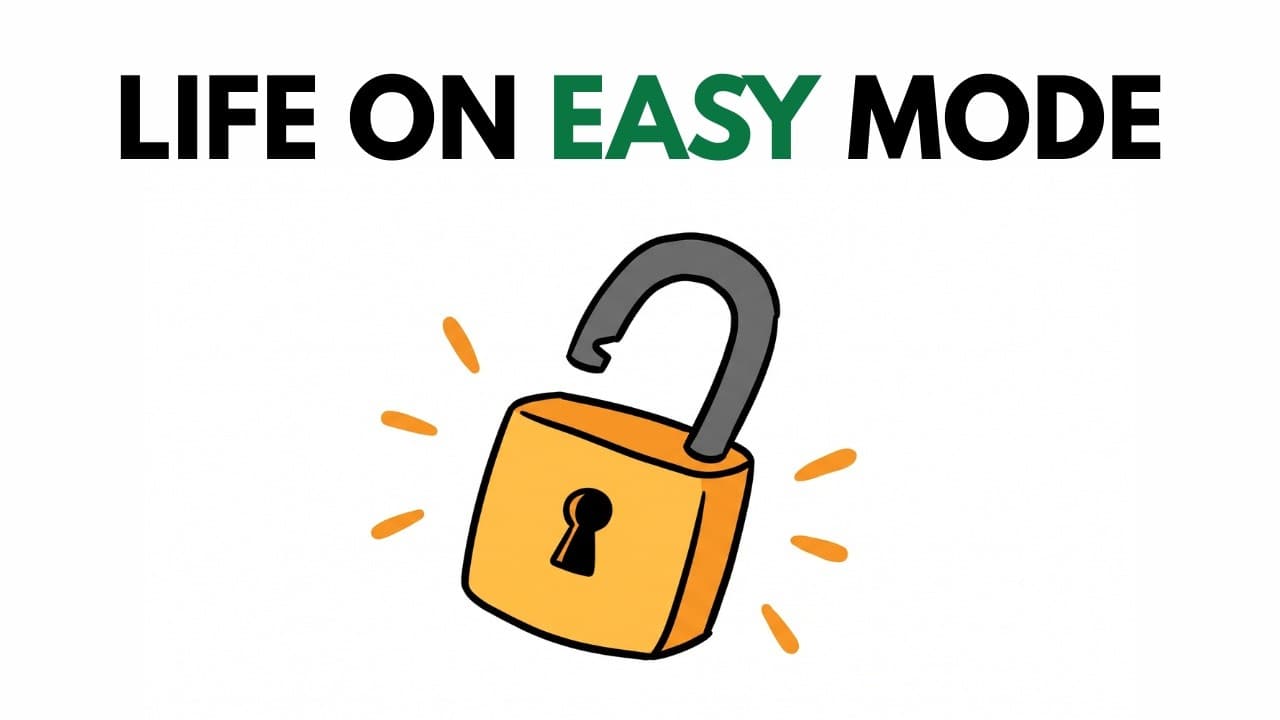
The key is to redefine the problem before solving it. You can move from hard to easy mode by focusing on problem finding, not immediate answers, and by using techniques like writing the problem as a testable sentence, imagining your solution from a third person, and performing a premortem to anticipate failure. These steps shift you from rushing to answers to clarifying what actually needs solving.
Transcript
Look closely at anyone whose life seems to run on easy mode, and you'll notice something that doesn't add up. Their problems aren't smaller than yours. They get sick, they get dumped, their projects collapse, their money runs out. The difference isn't the size of what lands on them, and the assumption almost everyone makes about this is wrong. We a... Read More
Key Insights
- Problem finding shifts focus from immediate answers to understanding the problem itself.
- The Einstellung effect causes mind to lock onto familiar solutions, hindering better options.
- Write the problem as a single testable sentence to make it actionable and solvable.
- Distrust your first good idea and generate multiple alternatives before judging them.
- Explain problems aloud step by step to expose hidden gaps in understanding.
- Reason about your own situation from a distance or as another person to gain clarity.
- Use premortems to imagine failure and identify causes before committing.
- Start from failure and work backwards to uncover broader safeguards and risks.
Install to Summarize YouTube Videos and Get Transcripts
Explore YouTube Video Summarizer or Get YouTube Transcript Extractor
Questions & Answers
Q: What is the central shift proposed for moving from hard mode to easy mode?
The central shift is reframing the problem before attempting to solve it. By focusing on problem finding rather than rushing to an answer, you set up the thinking process to identify what exactly is wrong, what constraints exist, and what would count as a true solution. This approach helps avoid premature commitments and yields better long term results.
Q: How does the Einstellung effect affect problem solving?
The Einstellung effect makes people stick with the first workable solution and defend it, even when a better option exists. It happens because attention locks onto the already found solution, narrowing search and eliminating consideration of superior alternatives. Recognizing this helps in strategies that keep the search open and prevent early closure.
Q: Why is writing the problem down as one sentence useful?
Writing the problem as one testable sentence creates a concrete, verifiable target. It allows you to ask what evidence would prove the sentence false, turning a vague feeling into a measurable issue. If nothing could falsify it, you do not yet have a real problem, only a mood, which cannot be solved by strategy alone.
Q: What does explaining a problem aloud reveal?
Explaining a problem aloud exposes gaps in understanding known as the illusion of explanatory depth. When people try to articulate step by step how something works, they uncover missing links and bare facts, revealing the true mechanisms that are not yet understood. This helps pinpoint where the real difficulty lies.
Q: How can thinking about problems in the third person help decision making?
Thinking about your problem in the third person or describing it with your own name helps detach ego and bias from the situation. This distancing makes it easier to see multiple perspectives, recognize limits in knowledge, and consider alternative courses of action more calmly and honestly, leading to wiser judgments.
Q: What is a premortem and why is it useful?
A premortem asks you to imagine that a project or decision has already failed and then to list all possible reasons for that failure. This technique expands the range of considered risks, makes the failure feel less personal, and helps you identify protective measures or contingencies before committing to a course of action.
Q: Why should you distrust the first good idea you have?
The first good idea often ends the search prematurely, because it marks a cognitive turning point where the mind stops looking further. By forcing yourself to generate multiple viable options before evaluating them, you keep the problem framing flexible and increase the chances of finding a superior solution.
Q: How do you use a backward reasoning approach to problem solving?
Starting from failure and working backwards helps reveal what could go wrong and why. This approach creates a richer, more concrete list of obstacles and safeguards, turning potential problems into actionable insights. It helps prevent optimistic biases and improves the overall resilience of your planned solution.
Summary & Key Takeaways
-
This video argues that easy mode comes from how a problem is stated, not from higher intelligence. It introduces the concept of problem finding and explains that people often jump to solutions due to Einstellung, the mind locking onto familiar answers. The methods proposed alter thinking conditions before solving.
-
The speaker presents ten strategies to change the problem setting before thinking begins. Each strategy aims to keep the search open, prevent premature commitment, and improve judgment by distancing, testing, and reframing. Real-world exercises like writing a single testable sentence are recommended.
-
The overall message is practical and evidence-based, drawing on studies from psychology and cognitive science. By using techniques such as premortems, third-person self-talk, and explaining mechanisms aloud, individuals can enhance decision quality without becoming more intelligent, merely more mindful about how problems are framed.
Read in Other Languages (beta)
Share This Summary 📚
Summarize YouTube Videos and Get Video Transcripts with 1-Click
Try YouTube Summary with ChatGPT & Claude or YouTube Transcript Generator
Explore More Summaries from PsychToons 📚

Summarize YouTube Videos and Get Video Transcripts with 1-Click
Try YouTube Summary with ChatGPT & Claude or YouTube Transcript Generator