How to rewire your brain to crave discipline
TL;DR
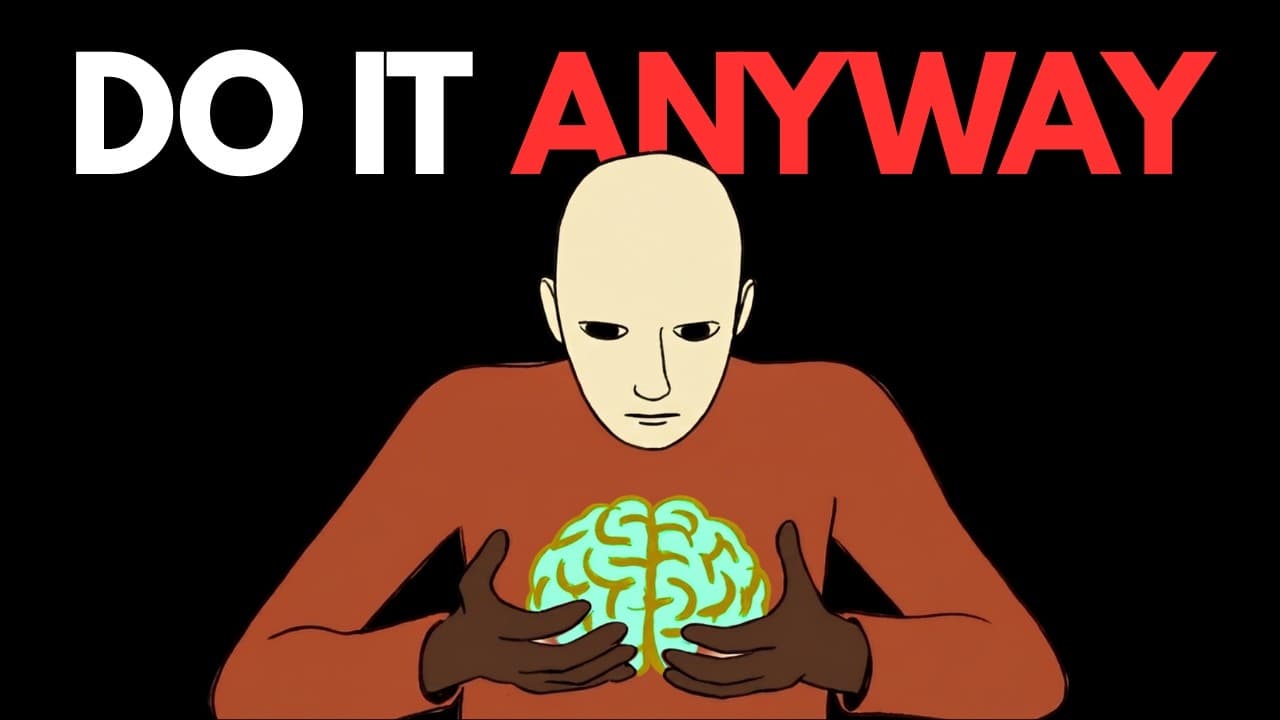
Discipline is not about forcing willpower, it is about reconditioning what effort predicts. Your brain learns to associate effort with reward when done repeatedly, and this can be redirected by changing when rewards occur and how tasks are framed. The five methods reveal how to make hard work feel valuable rather than punitive, starting with immediate, unconditional rewards.
Transcript
There are about 40 seconds every morning that quietly decide your entire day. Your alarm goes off. Your eyes open in the dark. And before you have a single conscious thought, some part of your brain has already run the numbers. The cold floor, the long day ahead, that thing you swore you'd finally start. And it has already made the decision for you... Read More
Key Insights
- Effort is a sensation and can be conditioned just like other senses.
- Discipline comes from how effort is rewarded, not from willpower alone.
- The brain learns to predict rewards from cues rather than outcomes from performance.
- Dopamine signals move from reward to the predictor cue, which shapes behavior.
- Most people have learned to value outcomes over the effort that creates them.
- The five methods reframe tasks so that effort itself becomes rewarding.
- Rewards should be linked to the act of working, not the final result.
- Introducing rewards at the doorway helps sustain engagement through hard tasks.
Install to Summarize YouTube Videos and Get Transcripts
Explore YouTube Video Summarizer or Get YouTube Transcript Extractor
Questions & Answers
Q: What is the core idea behind reworking discipline according to the video
The core idea is that discipline is not about forcing yourself to act through willpower, but about reconditioning what effort predicts. By linking effort to immediate rewards and changing the cues that trigger motivation, you can make hard work feel rewarding rather than dreaded. This reframing shifts the brain from avoidance to consistent engagement.
Q: How does learned industriousness differ from a simple willpower approach
Learned industriousness suggests that effort can be trained like a sense, and the reward system can adapt to consider effort as inherently valuable. It contrasts with willpower by emphasizing conditioning over brute force. People can train their nervous system to associate effort with positive outcomes, reducing resistance and increasing persistence without relying solely on motivation.
Q: What role does dopamine play in predicting rewards
Dopamine does not just respond to rewards; it shifts to the predictor cue that reliably signals a reward. When a cue predicts a reward, the brain produces the dopamine burst at the cue rather than the reward itself. This mechanism explains why triggers like a desk or a phone can become powerful motivators if linked to desired outcomes.
Q: Why do many people feel worse after forced study sessions
Forced, punitive study sessions train the brain to associate effort with negative feelings and self criticism. Each tough session can reinforce aversion, making future starts harder. The video argues that this punitive loop is counterproductive, and recommends changing the reward structure to avoid creating this negative association.
Q: What is the first method to retrain the brain and why it helps
The first method is paying the effort, not the outcome. Reward the act of showing up within seconds of finishing a session, regardless of performance. This unconditional reward helps pair the effort with a positive sensation, making future efforts feel more worthwhile and decreasing the aversion to starting.
Q: How can you move rewards to the doorway and what is the purpose
Move rewards to the doorway by placing something enjoyable at the entry of the hard task so the reward is linked to starting rather than finishing. This creates a strong initial hook, making the act of beginning easier. Over time the effect may fade, so it should be used as a starter strategy rather than a long term sole method.
Q: What does shrinking the entry to the task mean in practice
Shrinking the entry means making the initial part of the task so small that refusing becomes absurd. By starting with tiny, almost effortless steps, you reduce the natural resistance the brain feels toward beginning. As each small step is completed, you build momentum and the larger task becomes more approachable.
Q: What is the fifth strategy and how does it work
The fifth strategy is designing the environment to support discipline rather than relying on willpower. This involves arranging surroundings to reduce friction, produce consistent cues of effort, and connect those cues to rewards. The aim is to create a system where the right behaviors occur with minimal mental resistance and maximal automaticity.
Q: Why is it important to reflect on your missing piece and apply a plan
Identifying which of the five strategies to apply helps tailor a personal plan that fits your tendencies. The video emphasizes that discipline is trainable, not a fixed trait, and encourages viewers to test which strategy most effectively shifts their perception of effort. Applying the plan creates sustainable changes in motivation and habit formation.
Summary & Key Takeaways
-
A high level look shows discipline is learned, not innate, and starts with conditioning the effort feel to produce a positive result.
-
The core mechanism involves dopamine shifting to cues that predict rewards, which can be redirected to cues that predict the right effort.
-
The five strategies provide practical steps to retrain the brain to prefer the hard work over avoidance and self-criticism.
Read in Other Languages (beta)
Share This Summary 📚
Summarize YouTube Videos and Get Video Transcripts with 1-Click
Try YouTube Summary with ChatGPT & Claude or YouTube Transcript Generator
Explore More Summaries from PsychToons 📚




Summarize YouTube Videos and Get Video Transcripts with 1-Click
Try YouTube Summary with ChatGPT & Claude or YouTube Transcript Generator