How to keep conversations flowing with four moves
TL;DR
Small talk is not the problem. The supply of material is finite on the base of the pyramid, so you run dry when you do not move up to deeper topics. The four moves unlock infinite material by using tailored talk and deep talk, while attention or self focus undermines your ability to record what others share.
Transcript
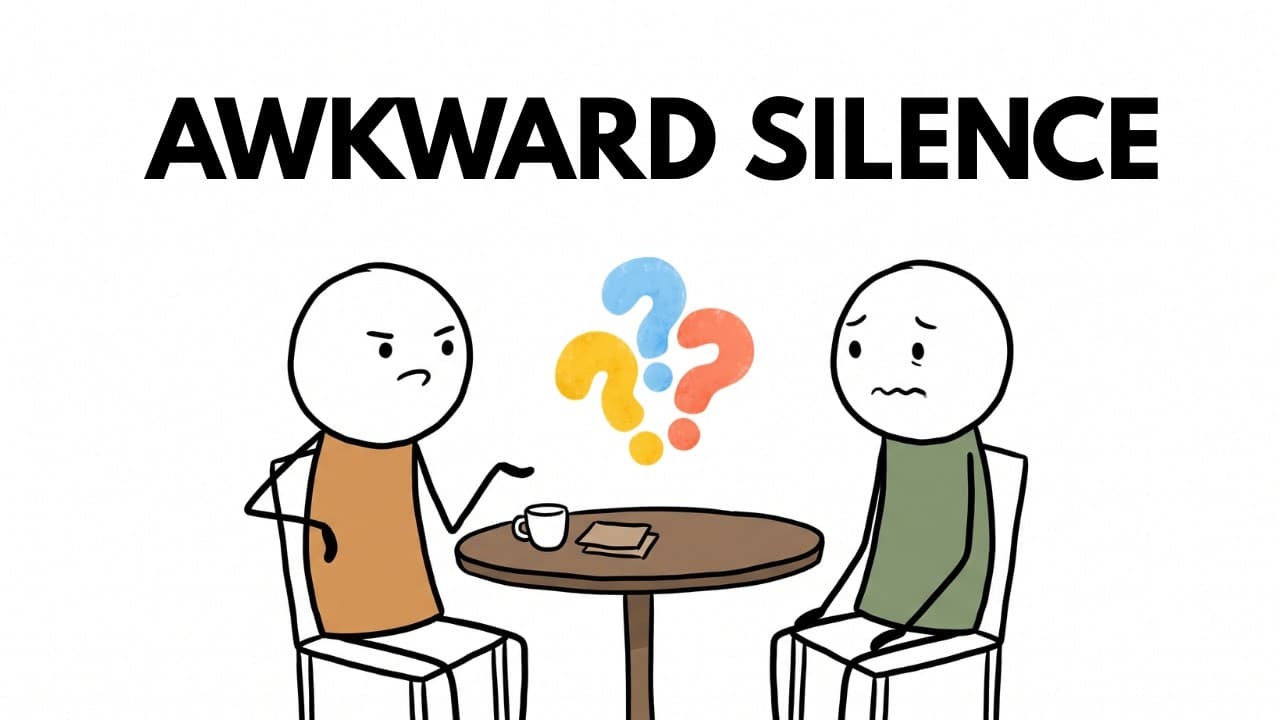
This might shock you, but you have actually never run out of things to say, not once. Not in the elevator, not in the car, not in the fourth minute of coffee with someone new when the awkward silence lands. Whatever happened in those moments, it was not an empty head. And until you understand what actually happened, every piece of advice you have e... Read More
Key Insights
- The topic pyramid has three levels: small talk, tailored talk, and deep talk.
- Small talk acts as a doorway to establish safety but can exhaust material if you stay there.
- Attention determines how much you record from what others say and how well you respond.
- Boomerasking often backfires by turning questions into self focused statements.
- Mirror questions close loops and waste conversational turns.
- Deep talk creates more material than it consumes when you share meaningful thoughts or experiences.
- People misjudge how much the other person cares about real topics, leading to superficial exchanges.
- Ending conversations is misread; partners usually want to continue, so ask for deeper topics to extend the exchange.
Install to Summarize YouTube Videos and Get Transcripts
Explore YouTube Video Summarizer or Get YouTube Transcript Extractor
Questions & Answers
Q: How can I move a conversation from small talk to deeper topics without awkwardness?
To move beyond small talk you need to recognize that weather and weekend are low risk but also low reward topics. Look for doors in what the other person says, such as a move you can build on. When someone mentions a choice or experience, respond with a deeper question that explores the cost, motivation, or outcome of that choice. This creates material that can feed itself and extend the conversation rather than deplete it.
Q: What is boomerasking and why does it harm the conversation?
Boomerasking is when you ask a question but immediately answer it yourself instead of engaging with what the other person said. This pattern can come across as insincere or self centered. It typically yields a worse impression because the question was not an opening but a springboard for your own agenda. To avoid it, listen first and respond to what the other person shared.
Q: Why does attention affect how well conversations go?
Attention matters because when you focus inward, you monitor yourself and doubt your words, which degrades performance and blocks incoming information from the other person. The person across from you is handing you material aloud, but if your attention is in a back room drafting your next line you miss doors to deeper topics and the flow stalls.
Q: How can I recognize doors that lead to deeper topics during talk?
Doors appear when someone shares something they have thought about, felt, or decided. The moment you hear a lead like moving to help a parent or a personal challenge, you have a door. The trick is to resist the urge to switch back to safe topics, and instead ask a follow up that probes the experience, motivation, or implications.
Q: What should I do when I fear I am boring someone?
The fear often comes from staying on the base of the pyramid and not exploring topics that matter to the other person. You should not try to force more talk, but rather extend the doorway by listening for a thread and asking a meaningful follow up that invites them to share more about their life, fears, or goals.
Q: How long should a meaningful conversation last before you end it?
Research shows conversations often end when one person wants to end, not when both do. The gap between desired length and actual length is wide. To keep it going, you can propose a deeper topic or share a real experience that invites reciprocity, ensuring both people remain engaged rather than one person carrying the conversation.
Q: What is the base problem with most small talk exchanges?
The base problem is that small talk can exhaust material quickly because it uses a fixed set of safe topics. Without moving to mid and deep talk, the conversation reaches a floor where there are no new doors to open. The cure is to deliberately move to tailored talk and deep talk when appropriate, using the other person’s signals as anchors.
Q: What role does realism about others’ interest play in conversation quality?
People often overestimate how awkward a deep topic will be and underestimate how much the other person cares about real topics. By assuming the other person does care and is capable of meaningful exchange, you invite more authentic conversation. This mindset helps you share something real and invite the other person to respond with depth.
Summary & Key Takeaways
-
In the video the speaker explains a model called the topic pyramid with three levels: small talk, tailored talk, and deep talk. The base is finite and tends to exhaust material quickly, while mid and deep levels generate more material because they connect to the other person’s experiences and goals.
-
The talk stresses that attention is the gate to conversation. When you focus on yourself you miss what the other person is saying and fail to record doors that lead to deeper topics. Boomerasking and mirror questions often waste conversational turns.
-
The four moves are presented as practical strategies to move beyond the base of the pyramid, listen for doors, and choose topics that expand the conversation rather than deplete it. The goal is to create a self reinforcing flow of dialogue.
Read in Other Languages (beta)
Share This Summary 📚
Summarize YouTube Videos and Get Video Transcripts with 1-Click
Try YouTube Summary with ChatGPT & Claude or YouTube Transcript Generator
Explore More Summaries from PsychToons 📚




Summarize YouTube Videos and Get Video Transcripts with 1-Click
Try YouTube Summary with ChatGPT & Claude or YouTube Transcript Generator